


Nuclear envelope mechanobiology: linking the nuclear structure and function
- PMID: 34455929
- PMCID: PMC8432354
- DOI: 10.1080/19491034.2021.1962610
Nuclear envelope mechanobiology: linking the nuclear structure and function
Abstract
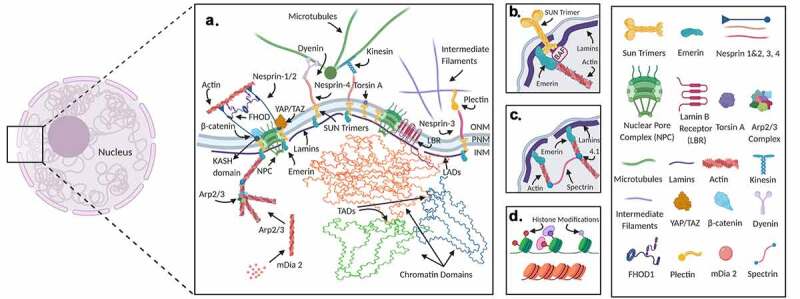
The nucleus, central to cellular activity, relies on both direct mechanical input as well as its molecular transducers to sense external stimuli and respond by regulating intra-nuclear chromatin organization that determines cell function and fate. In mesenchymal stem cells of musculoskeletal tissues, changes in nuclear structures are emerging as a key modulator of their differentiation and proliferation programs. In this review we will first introduce the structural elements of the nucleoskeleton and discuss the current literature on how nuclear structure and signaling are altered in relation to environmental and tissue level mechanical cues. We will focus on state-of-the-art techniques to apply mechanical force and methods to measure nuclear mechanics in conjunction with DNA, RNA, and protein visualization in living cells. Ultimately, combining real-time nuclear deformations and chromatin dynamics can be a powerful tool to study mechanisms of how forces affect the dynamics of genome function.
Keywords: Nuclear envelope; chromatin; live imaging; mechanobiology; nuclear mechanics.
Conflict of interest statement
No potential conflict of interest was reported by the authors.
Figures
References
-
- Burridge K, Fath K, Kelly T, et al. Focal adhesions: transmembrane junctions between the extracellular matrix and the cytoskeleton. Annu Rev Cell Biol. 1988;4(1):487–525. - PubMed
Publication types
MeSH terms
Substances
Grants and funding
LinkOut - more resources
Full Text Sources
