


SARS-CoV-2 messenger RNA vaccine antibody response and reactogenicity in heart and lung transplant recipients
- PMID: 34456108
- PMCID: PMC8349311
- DOI: 10.1016/j.healun.2021.07.026
SARS-CoV-2 messenger RNA vaccine antibody response and reactogenicity in heart and lung transplant recipients
Abstract
Background: While several studies have observed that solid organ transplant recipients experience diminished antibody responses to SARS-CoV-2 mRNA vaccination, data specific to heart and lung transplant (HT/LT) recipients remains sparse.
Methods: US adult HT and LT recipients completed their vaccine series between January 7 and April 10, 2021. Reactogencity and SARS-CoV-2 anti-spike antibody were assessed after a priming dose (D1) and booster dose (D2). Modified Poisson regression with robust variance estimator was used to evaluate associations between participant characteristics and antibody development.
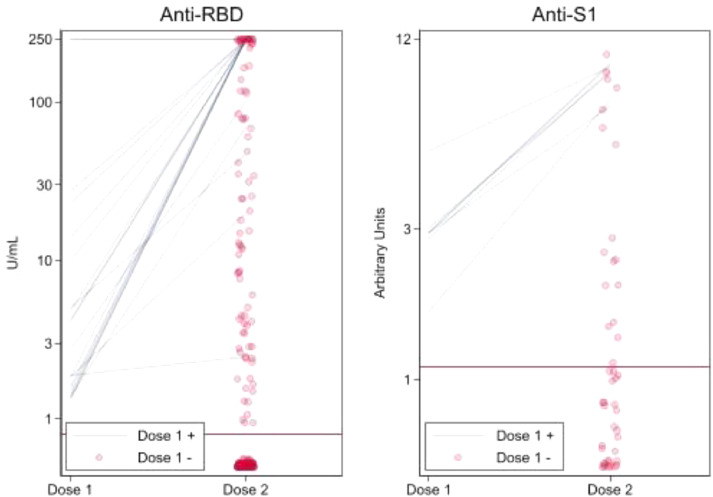
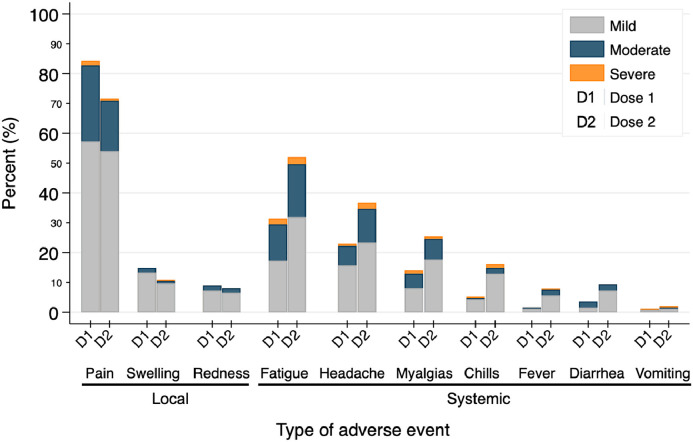
Results: Of 134 heart recipients, there were 38% non-responders (D1-/D2-), 48% booster responders (D1-/D2+), and 14% priming dose responders (D1+/D2+). Of 103 lung recipients, 64% were non-responders, 27% were booster responders, and 9% were priming dose responders. Lung recipients were less likely to develop antibodies (p < .001). Priming dose antibody response was associated with younger recipient age (p = .04), transplant-to-vaccination time ≥6 years (p < .01), and lack of anti-metabolite maintenance immunosuppression (p < .001). Pain at injection site was the most commonly reported reaction (85% after D1, 76% after D2). Serious reactions were rare, the most common being fatigue (2% after D1 and 3% after D2). No serious adverse events were reported.
Conclusions: HT and LT recipients experienced diminished antibody response following vaccination; reactogenicity was comparable to that of the general population. LT recipients may exhibit a more impaired antibody response than HT recipients. While current recommendations are to vaccinate eligible candidates and recipients, further studies characterizing the cell-mediated immune response and clinical efficacy of these vaccines in this population are needed.
Keywords: COVID-19; SARS-CoV-2; heart transplant; lung transplant; mRNA vaccination.
Copyright © 2021 International Society for Heart and Lung Transplantation. Published by Elsevier Inc. All rights reserved.
Figures
References
Publication types
MeSH terms
Substances
Grants and funding
LinkOut - more resources
Full Text Sources
Medical
Miscellaneous
