


Ultrasound-Guided Thoracic Paravertebral Block Enhances the Quality of Recovery After Modified Radical Mastectomy: A Randomized Controlled Trial
- PMID: 34456586
- PMCID: PMC8385420
- DOI: 10.2147/JPR.S325627
Ultrasound-Guided Thoracic Paravertebral Block Enhances the Quality of Recovery After Modified Radical Mastectomy: A Randomized Controlled Trial
Abstract
Purpose: Ultrasound-guided thoracic paravertebral block (TPVB) has become increasingly popular for postoperative analgesia after breast surgery. We designed this prospective, randomized, double-blind, placebo-controlled trial to test the hypothesis that TPVB is superior to placebo in improving the patient quality of recovery following modified radical mastectomy.
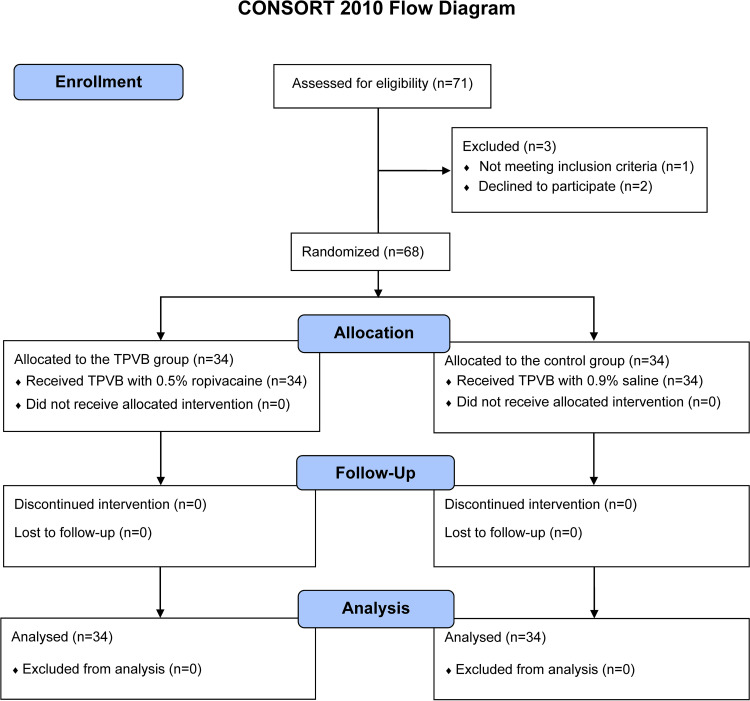
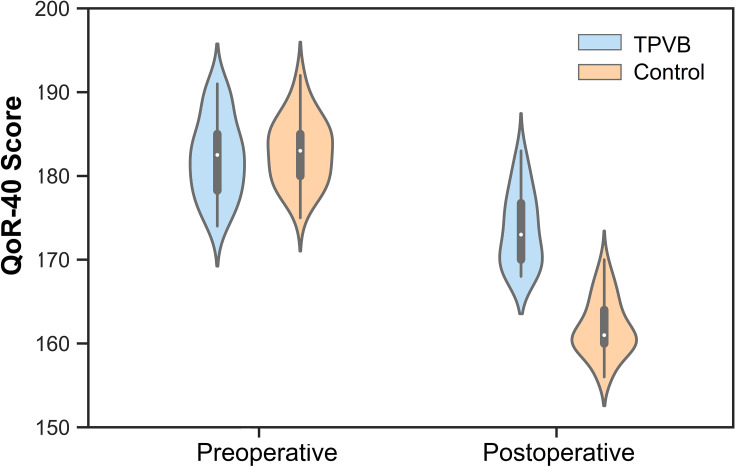
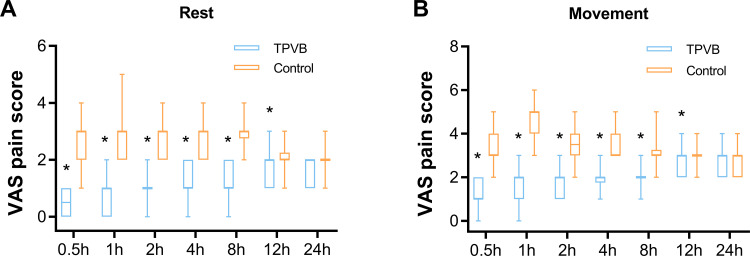
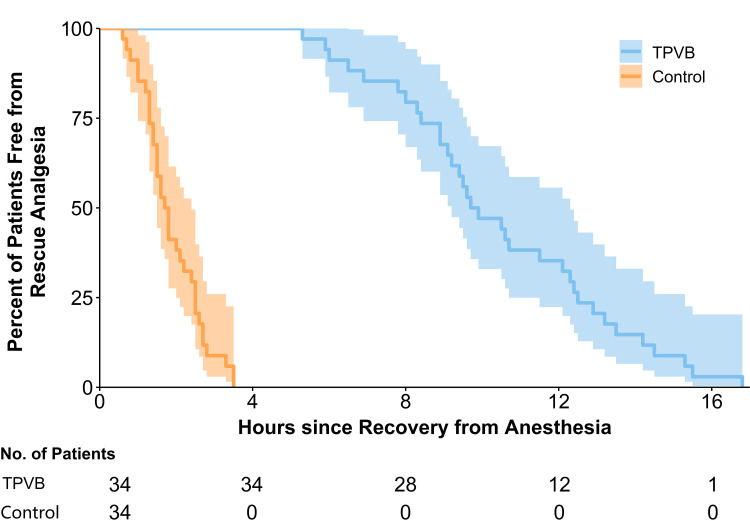
Patients and methods: Sixty-eight female patients undergoing elective unilateral modified radical mastectomy were enrolled. Patients were randomized to receive preoperative ultrasound-guided TPVB with 0.5% ropivacaine (TPVB group, n=34) or 0.9% saline (Control group, n=34). The primary outcome was quality of recovery, measured 24 h after surgery using the 40-item Quality of recovery questionnaire (QoR-40). Secondary outcomes were the area under the curve of the visual analog scale pain scores over 24 h, postoperative 24-h morphine consumption, time to first rescue analgesia, length of post-anesthesia care unit stay, postoperative nausea and vomiting, and patient satisfaction.
Results: The global QoR-40 score 24 h postoperatively (median [interquartile range]) was 173 [170-177] in the TPVB group and 161 [160-164] in the control group (P<0.001), respectively, with a median difference (95% confidence interval) of 11 (9-14). Compared with the control group, preoperative TPVB decreased the area under the curve of the visual analog scale pain scores over 24 h, reduced postoperative 24-h morphine consumption, prolonged the time to first rescue analgesia, shortened the length of post-anesthesia care unit stay, lessened postoperative nausea and vomiting, and improved the patient satisfaction.
Conclusion: A single preoperative injection of TPVB with ropivacaine enhances the quality of recovery and postoperative analgesia in patients following modified radical mastectomy.
Keywords: breast cancer surgery; pain management; quality of recovery; regional anesthesia; thoracic paravertebral block; ultrasonography.
© 2021 Rao et al.
Conflict of interest statement
The authors report no conflicts of interest in this work.
Figures
References
Publication types
LinkOut - more resources
Full Text Sources
