


Sarcocystis cruzi infection in free-living European bison (Bison bonasus bonasus L.) from the Białowieża Forest, Poland - A molecular analysis based on the cox1 gene
- PMID: 34458088
- PMCID: PMC8377485
- DOI: 10.1016/j.ijppaw.2021.07.010
Sarcocystis cruzi infection in free-living European bison (Bison bonasus bonasus L.) from the Białowieża Forest, Poland - A molecular analysis based on the cox1 gene
Abstract
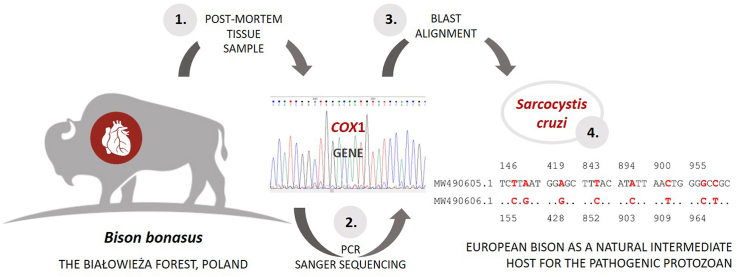
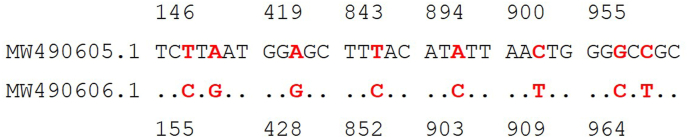
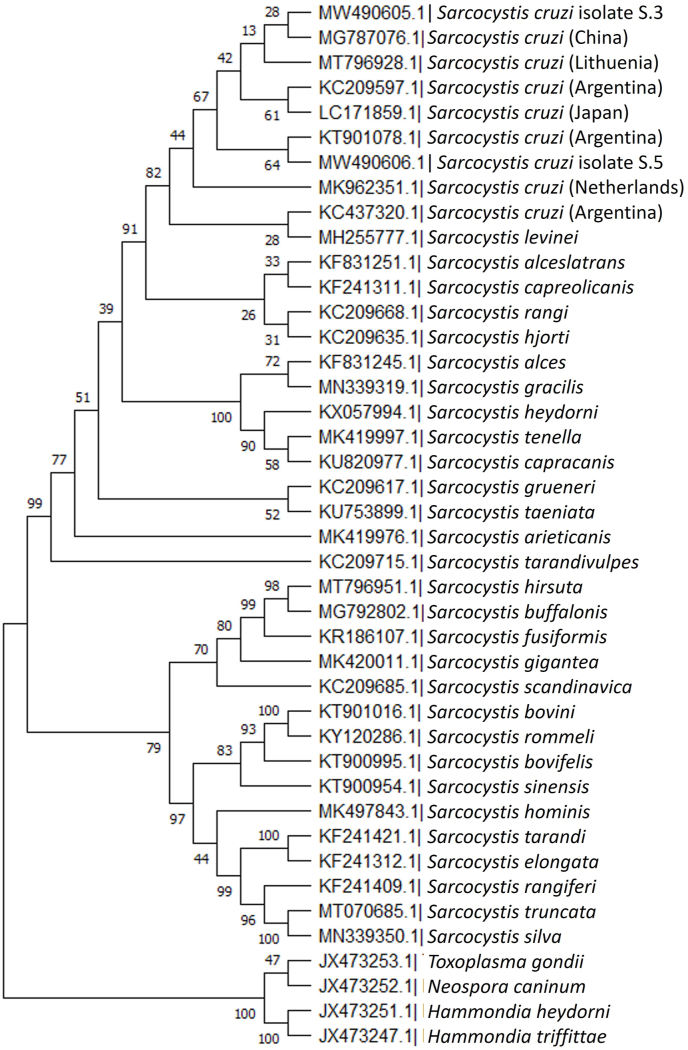
European bison are susceptible to a range of pathogens which may influence their health, and hence, to ensure their protection, it is essential to provide effective monitoring of potential exposure. This study presents the first molecular confirmation of Sarcocystis cruzi infection in European bison based on PCR amplification of the cytochrome c oxidase subunit I (cox1) gene. A sample of heart tissue taken from one fifteen-year-old European bison cow was examined by light microscopy for the presence of heart sarcocysts. The genomic DNA isolated from any identified sarcocysts was subjected to PCR to amplify cox1 gene sequences, and the obtained amplicons were sequenced by Sanger dideoxy sequencing. Two partial cox1 sequences were obtained; they were identified as S. cruzi and deposited in the GenBank™ database under the accession numbers MW490605 and MW490606. BLAST analysis found them to demonstrate the closest similarity to S. levinei (MH255771-MH255779 and KU247874-KU247884), sharing an identity of 93.14-93.8 %. This is the first report to identify sarcocysts isolated from heart tissue of infected European bison living in the Białowieża forest to species level using cox1 analysis. Our findings confirm that the European bison is a natural intermediate host for S. cruzi. As such, coordinators of future conservation programmes should consider the impact of these diseases on reintroduced animals.
Keywords: European bison; Sarcocystis cruzi; cox1 gene.
© 2021 The Authors.
Conflict of interest statement
The authors declare that they have no known competing financial interests or personal relationships that could have appeared to influence the work reported in this paper.
Figures
References
-
- Bień J., Moskwa B., Cabaj W. In vitro isolation and identification of the first Neospora caninum isolate from European bison (Bison bonasus bonasus L.) Vet. Parasitol. 2010;29:200–205. https://doi: 10.1016/j.vetpar.2010.06.038 - PubMed
-
- Cabaj W., Bień Kalinowska J., Goździk K., Basałaj K., Steiner Bogdaszewska Ż., Bogdaszewski M., Moskwa B. Molecular identification of sarcocysts from tissue of fallow deer (Dama dama) farmed in the open pasture system based on ssu rRNA gene. Acta Parasitol. 2020;65:354–360. doi: 10.2478/s11686-019-00159-0. - DOI - PMC - PubMed
-
- Cabaj W., Moskwa B., Pastusiak K., Gill J. Antibodies to Neospora caninum in the blood of European bison (Bison bonasus bonasus L.) living in Poland. Vet. Parasitol. 2005;128:63–68. https://doi: 10.1016/j.vetpar.2004.09.033 - PubMed
-
- Druet T., Oleński K., Flori F., Bertrand F.B., Olech W., Tokarska M., Kaminski S., Gautier M. Genomic footprints of recovery in the European Bison. J. Hered. 2020;111:194–203. https://doi: 10.1093/jhered/esaa002 - PubMed
LinkOut - more resources
Full Text Sources
Research Materials
Miscellaneous
