


Historical perspectives on using sham acupuncture in acupuncture clinical trials
- PMID: 34458094
- PMCID: PMC8379290
- DOI: 10.1016/j.imr.2021.100725
Historical perspectives on using sham acupuncture in acupuncture clinical trials
Abstract
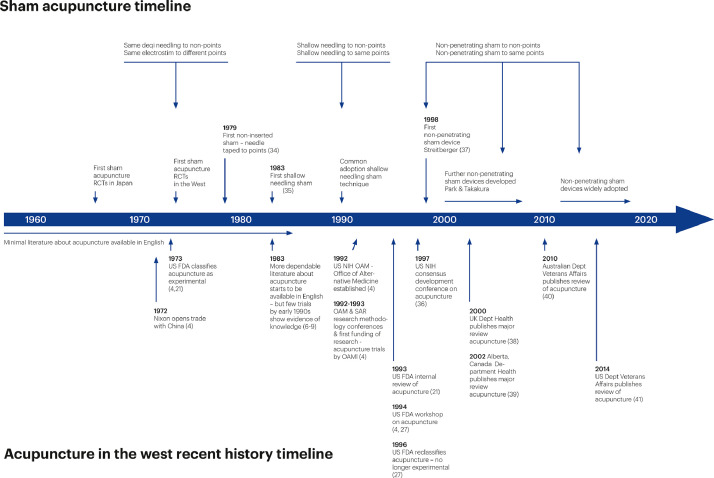
Background: Trials of acupuncture in the West began before textbooks about acupuncture were generally available. This placed trials at risk of possible faulty assumptions about the practice of acupuncture and adoption of problematic research assumptions and methods. Further, this lack of information has had an influence on the theories of developing a valid and reliable sham control treatment in clinical trials of acupuncture. This commentary explores these issues.
Methods: Literature review focussing on the time line of developments in the field, developments of sham interventions and use thereof and knowledge of physiological effects of needling.
Results: Early trials demonstrated a lack of knowledge about acupuncture. As the methodology of trials improved, new sham treatment methods were developed and adopted; however, the sham treatment methods were implemented without physiological studies exploring their potential physiological effects and without examining the broader practice of acupuncture internationally.
Conclusions: Mistaken assumptions about the practice of acupuncture reinforced by paucity of physiological investigations are factors that led to use of inappropriate sham interventions for acupuncture trials. These not only lead to confusing or misleading trial results, they, as far as we can see underestimate the effects of acupuncture leading to bias against acupuncture. There are significant problems with sham interventions and how they are applied in trials of acupuncture. Further research is needed to explore the effects of this both for future trials and for interpreting existing evidence.
Keywords: Acupuncture; History sham acupuncture; Sham interventions.
© 2021 Korea Institute of Oriental Medicine. Published by Elsevier B.V.
Conflict of interest statement
The authors declare no conflict of interests.
Figures
References
-
- Birch S., Lewith G., MacPherson H., Hammerschlag.R Lewith G, Schnyer R. Elsevier; London: 2007. Acupuncture Research: Strategies for Building an Evidence Base; pp. 15–35. Acupuncture research, the story so far.
-
- Birch S., Tsutani K. Survey of English-language publications on acupuncture. Complem Ther Med. 1996;4:172–177.
-
- Birch S., Felt R. Churchill Livingstone; London: 1999. Understanding Acupuncture.
-
- Lu G.D., Needham J. Cambridge University Press; Cambridge: 1980. Celestial Lancets, a History and Rationale of Acupuncture and Moxibustion.
Publication types
LinkOut - more resources
Full Text Sources
Research Materials
