. 2017 Mar 20;7(6):e2191.
doi: 10.21769/BioProtoc.2191.

Rubisco Extraction and Purification from Diatoms

Affiliations

Rubisco Extraction and Purification from Diatoms

Jodi N Young et al. Bio Protoc. .

Abstract

This protocol describes a method to extract ribulose-1,5-bisphosphate carboxylase oxygenase (Rubisco) from diatoms (Bacillariophyta) to determine catalytic performance. This protocol has been adapted from use in cyanobacteria and higher plants (Andrews, 1988; Whitney and Sharwood, 2007). First part (steps A1-A3) of the extraction provides a crude extract of Rubisco that is sufficient for carboxylation assays to measure the Michaelis constant for CO2 (KC) and the catalytic turnover rate ( kcat c ). However, the further purification steps outlined (steps B1-B4) are needed for measurements of Rubisco CO2/O2 Specificity (SC/O, [ Kane et al., 1994 ]).

Keywords: Carbon fixation; Diatoms; Extraction; Phytoplankton; Rubisco.


Figures

Figure 1.
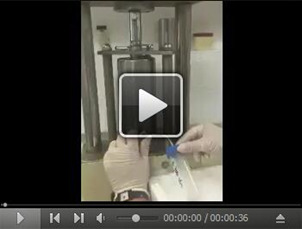
Figure 1.. Cell lysis using a French press.
Photo of a French Pressure Cell that can efficiently lyse microalgae cells, including diatoms. Algae cell extracts in ice cold buffer are placed in the ice-cold stainless steel French Pressure Cell and hydraulic pressure applied. Once at 140 MPa the outlet to the Cell is slowly opened. The cells lyse as they emerge from high to ambient pressure and the cell extract is collected into a 15 ml or 50 ml polypropylene tubes. A slow flow rate of sample out of the Cell (~1 to 2 drops sec-1) is maintained to ensure the pressure is maintained (see Video 1, acknowledgement Bratati Mukherjee).
Video 1.
Video 1.. Use of French press to lyse cells
Figure 2.
Figure 2.. Native-PAGE blot of crude extract to show fully intact Rubisco protein.
Total soluble cell extract (5 μg as determined by Bradford assay, Coomassie plus) was separated at 4 °C through a precast 4-12% Tris-glycine gel overnight (16 h) at 60 V. Gel was rinsed with deionized water, fixed for 30 min with 45% (v/v) H2O, 5% (v/v) acetic acid and 50% (v/v) methanol the extensively rinsed with multiple changes if deionized water. The proteins were visualized using Gelcode blue Coomassie stain (Invitrogen). Arrows indicate where the ~520 kDa Rubisco complex (L8S8) locates on the gel. Lane numbers indicate extract from different diatom species: (1) Thalassiosira weissflogii CCMP 1336, (2) Thalassiosira oceania CS-427, (3) Skeletonema marinoi CCMP 1332, (4) Chaetoceros calcitrans CCMP 1315, (5) Chaetoceros calcitrans CS-178, (6) Chaetoceros muelleri CCMP 1316, (7) Phaeodactylum tricornutum CCMP 642, (8) Phaeodactylum tricornutum UTEX 630, (9) Phaeodactylum tricornutum CS-29, (10) Bellerochea sp. CS-874/01, (11) Isochrysis sp. CS-177, (12) Pleurochrysis cartera CS-287. Last three lanes contain 5, 10 and 20 μl of crude cell extract from tobacco as a control. Shown are the Rubisco active site contents quantified for each sample by 14C-CABP binding (Whitney and Sharwood, 2014; Sharwood et al., 2008 ).
Figure 3.
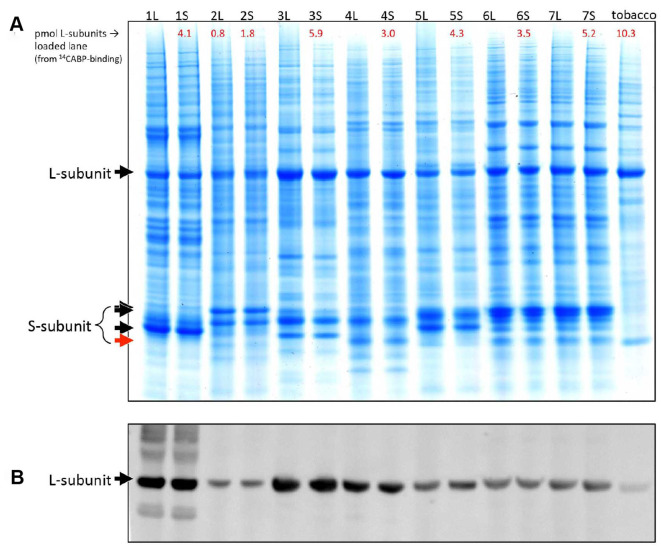
Figure 3.. SDS-PAGE analysis of Rubisco solubility, integrity and complete extraction by French Pressure Cell lysis.
A. Coomassie stain and B. Diatom Rubisco antibody blot (see Whitney et al., 2001 for details) of total cellular lysate (L, following French Pressure Cell lysis) and soluble cellular protein (S, following centrifugation) from the diatom species: (1) P. tricornutum CS-29, (2) Skeletonema ardens CS-348, (3) Pavlova lutheri CS-182, (4) Fragilariopsis cylindrus CCMP 1102, (5) Cylindrotheca fusiformis CS-13, (6) Thalassiosira oceania CS-427, and (7) Thalassiosira weissflogii CCMP 1336. 5 μl of tobacco soluble leaf protein was loaded for comparison. The equal intensity of the L-subunit in both the L and S protein fractions indicate all the Rubisco was extracted (complete cell lysis) and fully soluble with no L-subunit degradation evident in the Western blot. Sample preparation and electrophoresis: protein (L or S) extracts (150 μl) were added to 4x SDS-reducing buffer (50 μl) and boiled for 5 min then centrifuged (16,000 × g, 5 min) before separating by 4-12% Bis-Tris SDS-PAGE at 200 V for 45 min in MES buffer (50% methanol, 40% H2O and 10% glacial acetic acid). Duplicate gels were either (A) fixed and Coomassie stained (see Figure 2) or (B) the proteins transferred onto nitrocellulose membrane and probed with an antibody to P. tricornutum Rubisco (see Whitney et al., 2001 for further experimental details).
Figure 4.
Figure 4.. 3H-Elution profile of the HPLC fractions that are used to calculate SC/O from the amount of 3H incorporated into 3H-glycerate and 3H-glycolate (peaks 1 and 2 respectively) as described in step B4c.
Shown here are results of an SC/O assay using purified Rubisco from the diatoms, Thalassiosira weissflogii (T.w., red) and Phaeodactylum tricornutum (P.t., blue) showing two technical replicates (rep) for each.

References

    1. Andrews T. J.(1988). Catalysis by cyanobacterial ribulose-bisphosphate carboxylase large subunits in the complete absence of small subunits. J Biol Chem 263(25): 12213-12219. - PubMed
    1. Falkowski P. G. and Raven J. A.(2007). Aquatic photosynthesis. Princeton University Press.
    1. Galmes J., Kapralov M. V., Andralojc P. J., Conesa M. A., Keys A. J., Parry M. A. and Flexas J.(2014). Expanding knowledge of the Rubisco kinetics variability in plant species: environmental and evolutionary trends. Plant Cell Environ 37(9): 1989-2001. - PubMed
    1. Kane H. J., Viil J., Entsch B., Paul K., Morell M. K. and Andrews T. J.(1994). An improved method for measuring the CO2/O2 specificity of ribulosebisphosphate carboxylase-oxygenase . Aust J Plant Physiol 21(4): 449-461.
    1. Kane H. J., Wilkin J. M., Portis A. R. and John Andrews T.(1998). Potent inhibition of ribulose-bisphosphate carboxylase by an oxidized impurity in ribulose-1,5-bisphosphate. Plant Physiol 117(3): 1059-1069. - PMC - PubMed