Review
. 2022 Jan;480(1):109-126.
doi: 10.1007/s00428-021-03174-7. Epub 2021 Aug 30.

Triple-negative breast carcinomas of low malignant potential: review on diagnostic criteria and differential diagnoses

Affiliations
Review

Triple-negative breast carcinomas of low malignant potential: review on diagnostic criteria and differential diagnoses

L Cima et al. Virchows Arch. 2022 Jan.

Abstract

Triple-negative breast carcinomas constitute a wide spectrum of lesions, mostly being highly aggressive. Nevertheless, some special histologic subtypes can have low malignant potential. The purpose of the present paper is to review diagnostic criteria and prognostic parameters of breast neoplasms of special histotypes. Specifically, adenoid cystic carcinoma, adenomyoepithelioma, acinic cell carcinoma, mucoepidermoid carcinoma, tall cell carcinoma with reverse polarity, and secretory carcinoma will be discussed. For each tumour, definition and morphological and molecular features, together with prognostic parameters, will be presented. Paradigmatic cases will be illustrated.

Keywords: Acinic cell carcinoma; Adenoid cystic carcinoma; Adenomyoepithelioma; Mucoepidermoid carcinoma; Secretory carcinoma; Tall cell carcinoma with reverse polarity; Triple-negative breast carcinoma.


Conflict of interest statement

MPF received grants from Roche, Devicor Mammotome, as support for course organization and participation, and from MSD and Biocartis as speaker fee. CM has received personal consultancy fees from Roche, Bayer, Daiichi Sankyo, AstraZeneca, MSD.

Figures
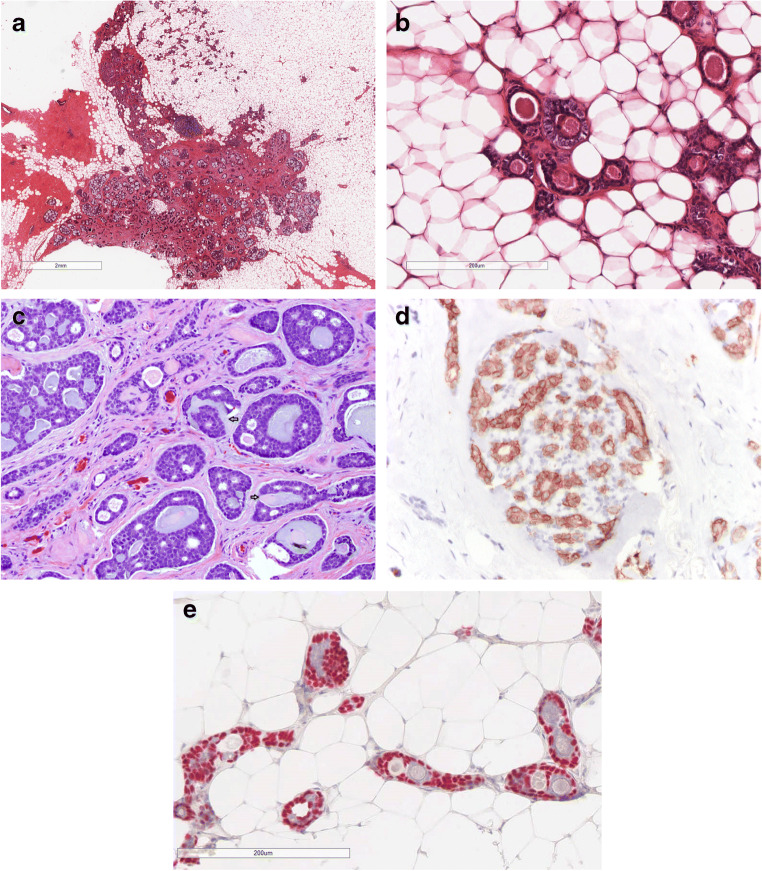
Fig. 1
Fig. 1
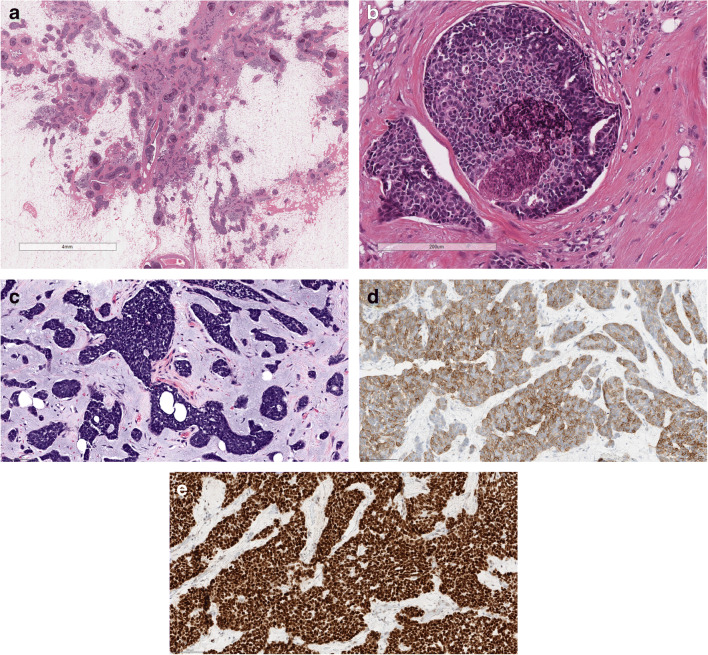
C-AdCC; a the central component of the tumor shows the typical cribrifom architecture, while in the peripheral part the tubular achitecture predominates. b AdCC with tubular architecture is composed of glands lined by epithelial and myoepithelial cells. The glands contain mucous or basal membrane. c C- AdCC with cribriform architecture is composed of neoplastic nests showing glandular structures containing mucous and of pseudoglandular spaced containing basal membrane invaginations (arrows); d The epithelial cells are CD117 positive; e p63 highlights the presence of myoepithelial cells in the tubular areas
Fig. 2
Fig. 2
SB-AdCC; a at low power view it is composed of multiple solid neoplastic nests; b at higher power the neoplastic nests are composed of markedly atipical cells, necrosis is often present; c SB AdCC is composed of cells with markedly atipica nucleus and scanty cytoplasm that must be differentiated from neuroendocrine carcinoma; d Neoplastic cells are diffusely CD117 positive; e Nuclear positivity for MYC
Fig. 3
Fig. 3
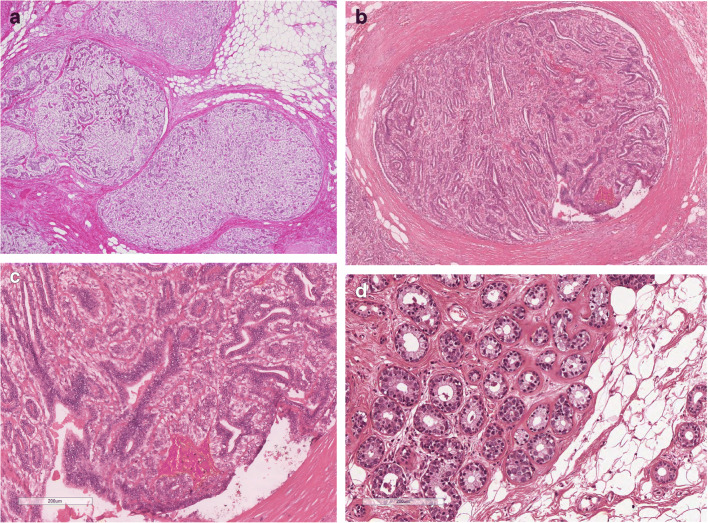
C-AME; a C-AME with lobulated architecture; b C-AME with intraductal papillary component; c At high power C-AME is composed of glandular strucutres lined by a inner layer of eosinophilic epithelial cells and by an outer layer of clear, myoepithelial cells; d C-AME with tubular architecture: at a variance of MGA, glands are lined by a double cell layer
Fig. 4
Fig. 4
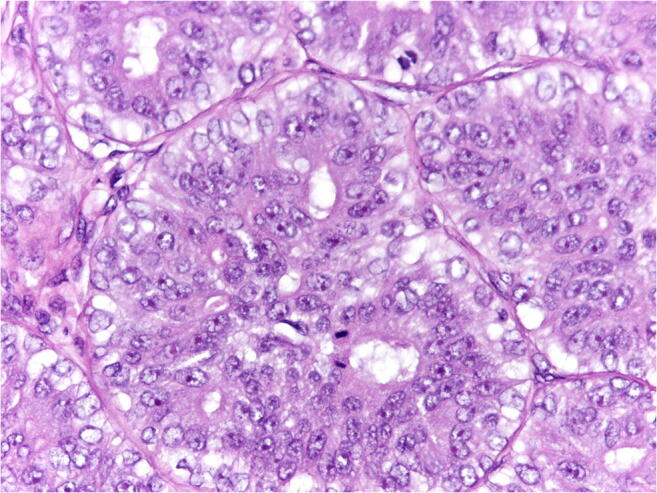
A-AME is composed of large cells, with atipical nucleous with coarse chromatin and evident nucleoli. Mitotic figures are frequent
Fig. 5
Fig. 5
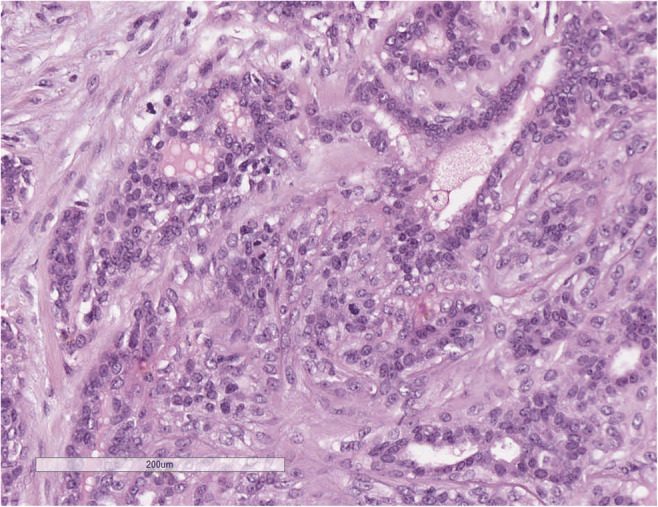
MA-AME has the same cell composition of C-AME, but presents frequent mitotic figures
Fig. 6
Fig. 6
MIS-AME; a malignant transformation of the epithelial componenti is seen; b Smooth muscle actin evidences the myoepithelial cells compressed by the epithelial proliferation
Fig. 7
Fig. 7
M-AME malignant transformation is evident in both, epithelial and myoepithelial component. a, b at low power view the myoepithelial cells predominate; c Both epithelial and myoepithelial cells show marked nuclear atypia
Fig. 8
Fig. 8
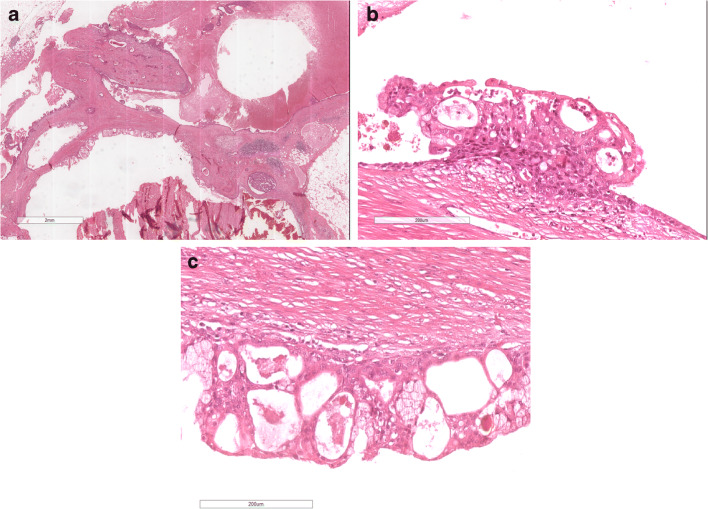
MEC: a Low power view of low-grade mucoepidermoid carcinoma with prominent cystic component; b and c at higher power the cysts are lined by epithelium with mucoid and epidermoid cells
Fig. 9
Fig. 9
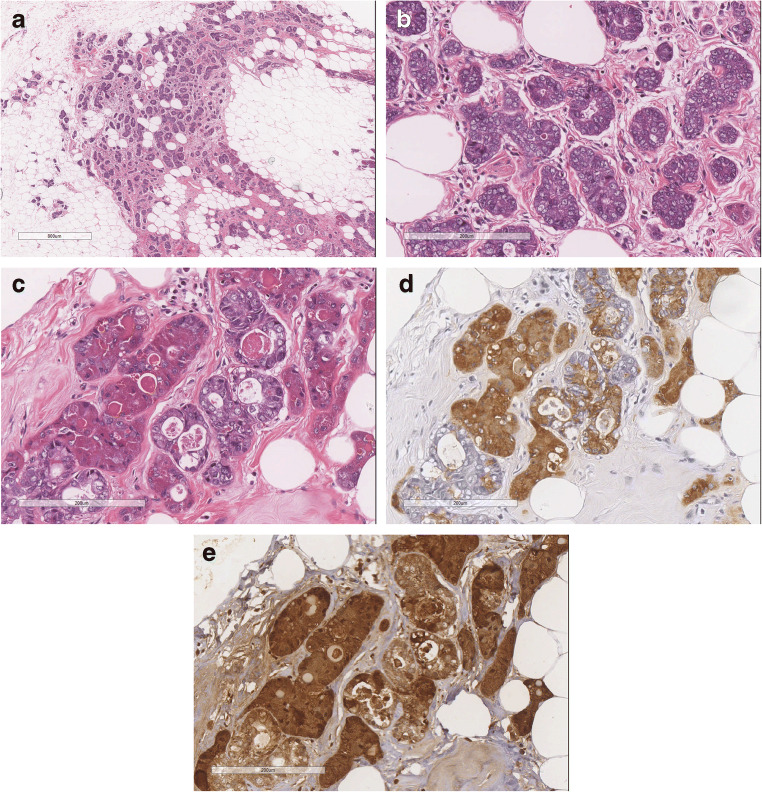
ACC; a ACC with prominent microglandular architecture is composed of small glands infiltrating the breast tissue. b the small glands are lined by atypical cells; c the neoplastic cells show a finely granular cytoplasm; d most of the neoplastic cells are EMA positive; e the neoplastic cells are strongly positive for Lysozyme
Fig. 10
Fig. 10
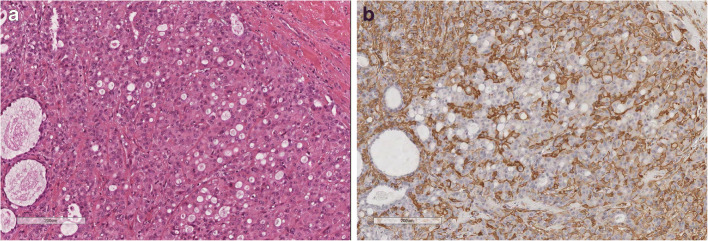
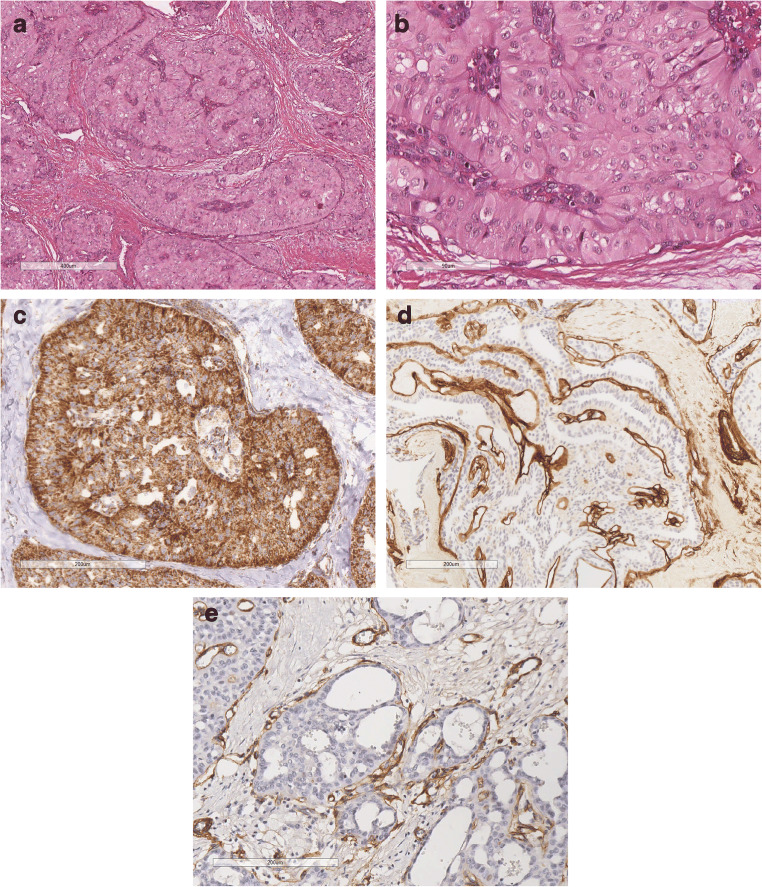
TCCRP; a TCCRP is composed of neoplastic nests with solid-papillary architecture; b at higher power the neoplastic cells are columnar, have granular and eosinophilic cytoplasm. Nuclei have fine chromatin and grooves; c Anti-mitochondrial antigen is strongly positive. Positivity is is condensed at the basal pole of the neoplastic cells; d Collagen IV surrounds the neoplastic nests, evidencing the basal membrane of small capillaries; e CD31 evidences small capillaries surrounding the neoplastic nests
Fig. 11
Fig. 11
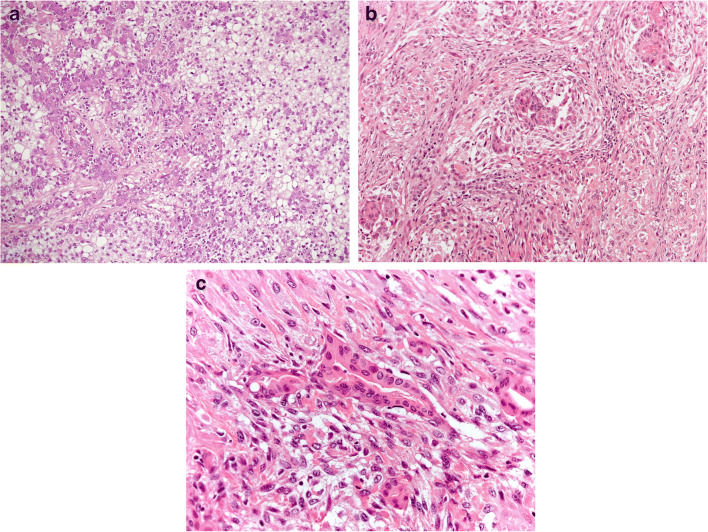
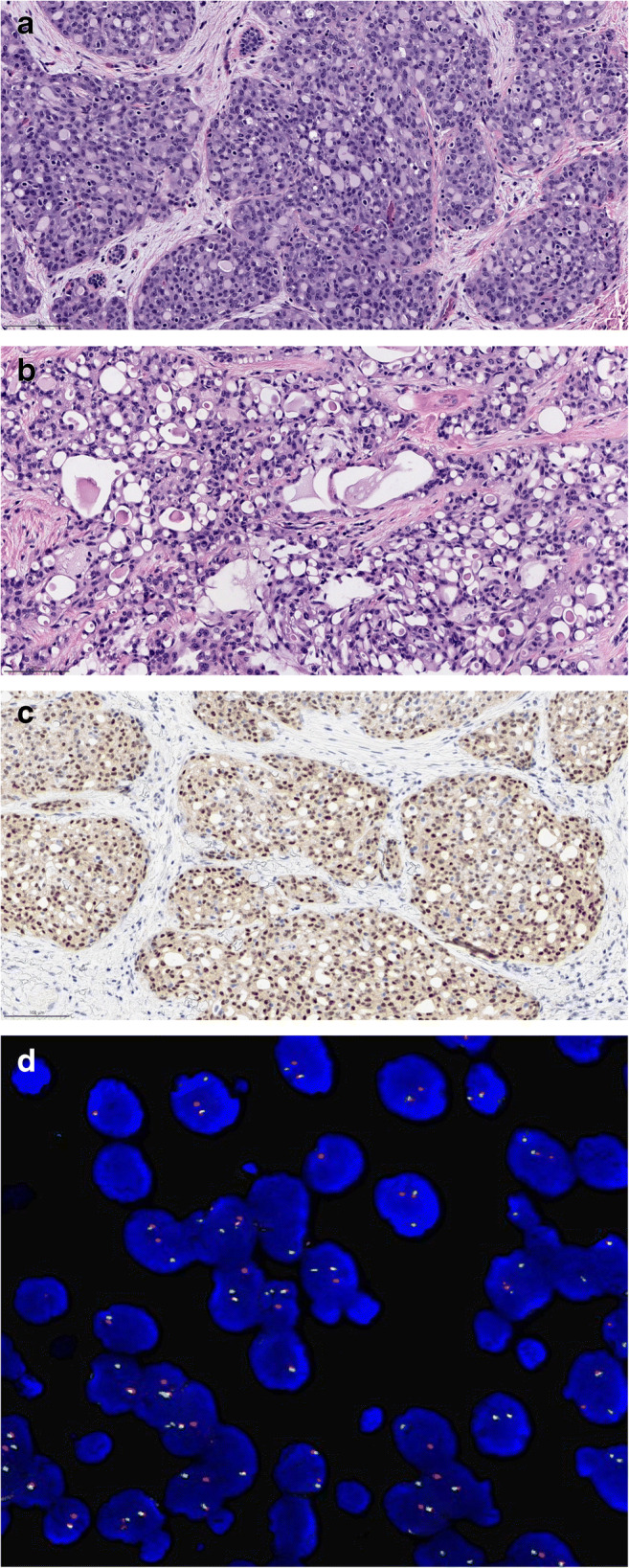
Secretory Carcinoma; a Secretory carcinoma shows a prominent microcystic pattern of growth; b at higher power, the neoplastic cells show vacuolated cytoplasm; c The chimeric NTRK3 protein is over-expressed; d Fluorescent in situ hybridzation evidences the ETV6-NTRK3 fusion

References

    1. Foschini MP, Krausz T. Salivary gland-type tumors of the breast: a spectrum of benign and malignant tumors including “triple negative carcinomas” of low malignant potential. Semin Diagn Pathol. 2010;27(1):77–90. doi: 10.1053/j.semdp.2009.12.007. - DOI - PubMed
    1. Allison K, Brogi E, Ellis IO, Fox S, Morris E, Sahin A, Salgado R, Sapino A, Sasano H, Schnitt S, Sotiriou C, van Diest P. WHO classification of tumours, 5th edition, breast tumours. Lyon: IARC Library Catalguing-in-Publication Data; 2019.
    1. Foschini MP, Morandi L, Asioli S, Giove G, Corradini AG, Eusebi V. The morphological spectrum of salivary gland type tumours of the breast. Pathology. 2017;49(2):215–227. doi: 10.1016/j.pathol.2016.10.011. - DOI - PubMed
    1. Franceschini G, Terribile D, Scafetta I, Magno S, Fabbri C, Chiesa F, Di Leone A, Moschella F, Scaldaferri A, Fragomeni S, Vellone V, Mulè A, Masetti R. Conservative treatment of a rare case of multifocal adenoid cystic carcinoma of the breast: case report and literature review. Med Sci Monit. 2010;16(3):CS33–CS39. - PubMed

    1. Cheung YC, Ueng SH, Ng SH, Kuo WL. Adenoid cystic carcinoma of the breast detected with contrast-enhanced spectral mammography: a case report. Curr Med Imaging. 2020;17:539–543. doi: 10.2174/1573405616666201009144337. - DOI - PubMed

MeSH terms