


Surgical strategies for the management of end-stage heart failure in infants and children: A 15-year experience with a patient-tailored approach
- PMID: 34461675
- PMCID: PMC9292686
- DOI: 10.1111/aor.14057
Surgical strategies for the management of end-stage heart failure in infants and children: A 15-year experience with a patient-tailored approach
Abstract
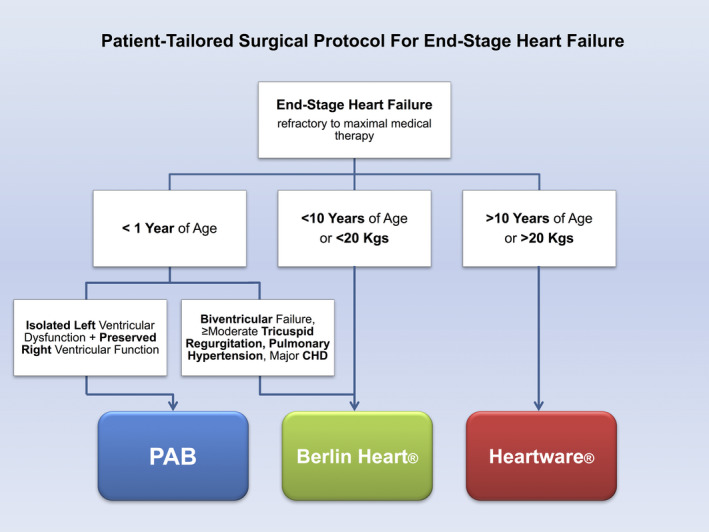
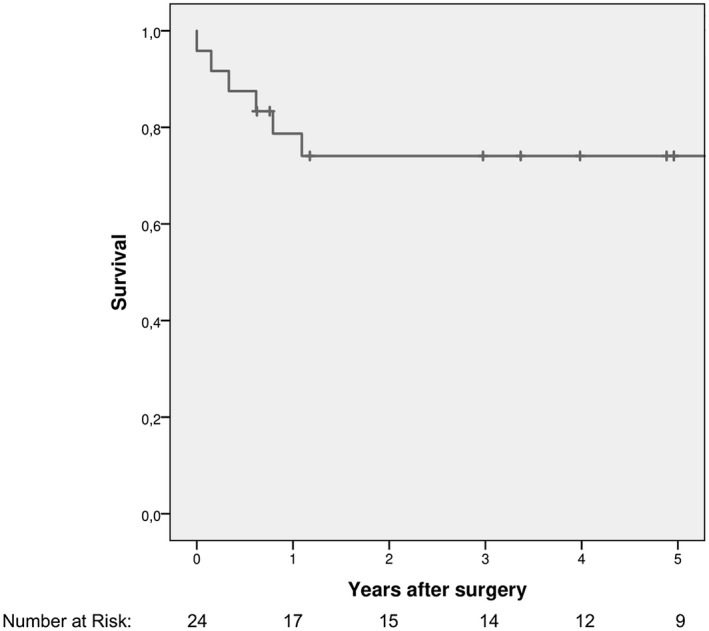
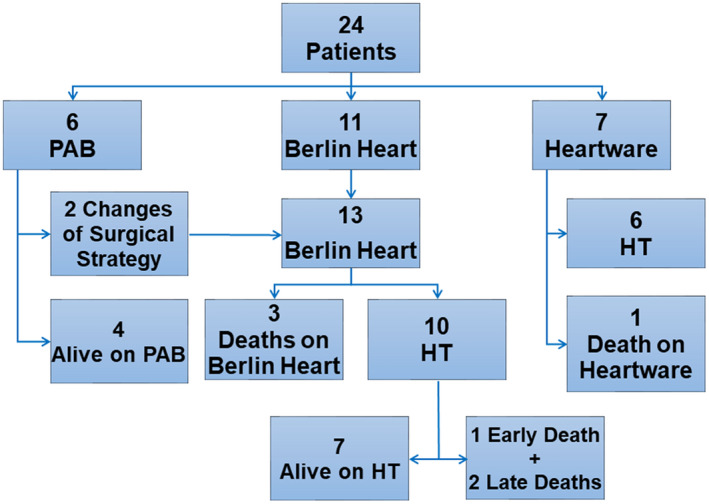
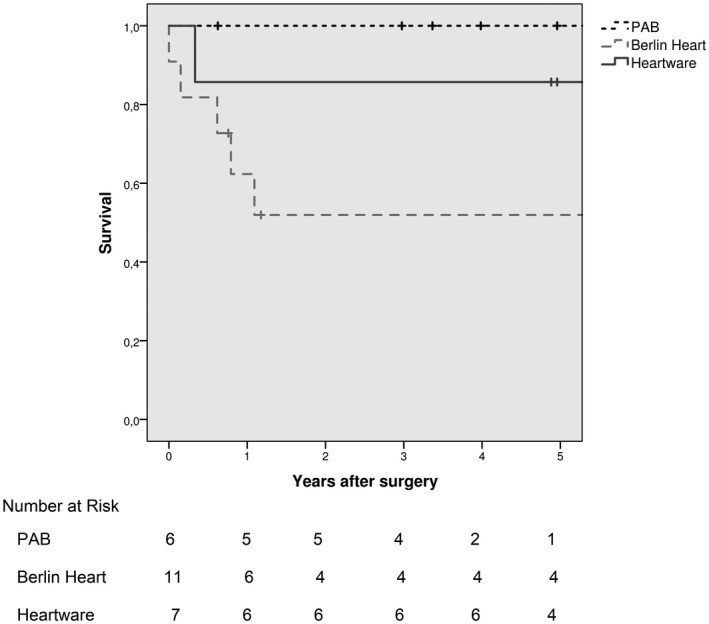
End-stage heart failure (ESHF) in pediatric age is an ongoing challenge. Heart transplantation is the final option, but its long-term outcomes are still suboptimal in children. An alternative patient-tailored surgical protocol to manage ESHF in children is described. Retrospective, single-center analysis of pediatric patients admitted to our institution between April 2004 and February 2021 for ESHF. Our current protocol is as follows: (a) Patients <1 year with isolated left ventricular dysfunction due to dilated cardiomyopathy underwent pulmonary artery banding (PAB). (b) Patients <10 years and <20 kg, who did not meet previous criteria were managed with Berlin Heart EXCOR. (c) Patients >10 years or >20 kg, underwent placement of intracorporeal Heartware. Primary outcomes were survival, transplant incidence, and postoperative adverse events. A total of 24 patients (mean age 5.3 ± 5.9 years) underwent 26 procedures: PAB in 6 patients, Berlin Heart in 11, and Heartware in 7. Two patients shifted from PAB to Berlin Heart. Overall survival at 1-year follow-up and 5-year follow-up was 78.7% (95%CI = 62%-95.4%) and 74.1% (95%CI = 56.1%-92.1%), respectively. Berlin Heart was adopted in higher-risk settings showing inferior outcomes, whereas a PAB enabled 67% of patients to avoid transplantation, with no mortality. An integrated, patient-tailored surgical strategy, comprehensive of PAB and different types of ventricular assist devices, can provide satisfactory medium-term results for bridging to transplant or recovery. The early postoperative period is critical and requires strict clinical vigilance. Selected infants can benefit from PAB that has demonstrated to be a safe bridge to recovery.
Keywords: heart transplantation; mechanical circulatory support; pediatric heart failure; pulmonary artery banding; ventricular rehabilitation.
© 2021 The Authors. Artificial Organs published by International Center for Artificial Organ and Transplantation (ICAOT) and Wiley Periodicals LLC.
Conflict of interest statement
The authors declare no conflict of interest.
Figures
References
-
- Razzouk AJ, Bailey LL. Heart transplantation in children for end‐stage congenital heart disease. Semin Thorac Cardiovasc Surg Pediatr Card Surg Annu. 2014;17:69–76. - PubMed
-
- Zangwill S. Five decades of pediatric heart transplantation: challenges overcome, challenges remaining. Curr Opin Cardiol 2017;32:69–77. - PubMed
MeSH terms
LinkOut - more resources
Full Text Sources
Medical
Miscellaneous
