Comparative Study
. 2021 Aug 30;11(1):17365.
doi: 10.1038/s41598-021-96626-8.

A comparative recombination analysis of human coronaviruses and implications for the SARS-CoV-2 pandemic

Affiliations
Comparative Study

A comparative recombination analysis of human coronaviruses and implications for the SARS-CoV-2 pandemic

Simon Pollett et al. Sci Rep. .

Abstract

The SARS-CoV-2 pandemic prompts evaluation of recombination in human coronavirus (hCoV) evolution. We undertook recombination analyses of 158,118 public seasonal hCoV, SARS-CoV-1, SARS-CoV-2 and MERS-CoV genome sequences using the RDP4 software. We found moderate evidence for 8 SARS-CoV-2 recombination events, two of which involved the spike gene, and low evidence for one SARS-CoV-1 recombination event. Within MERS-CoV, 229E, OC43, NL63 and HKU1 datasets, we noted 7, 1, 9, 14, and 1 high-confidence recombination events, respectively. There was propensity for recombination breakpoints in the non-ORF1 region of the genome containing structural genes, and recombination severely skewed the temporal structure of these data, especially for NL63 and OC43. Bayesian time-scaled analyses on recombinant-free data indicated the sampled diversity of seasonal CoVs emerged in the last 70 years, with 229E displaying continuous lineage replacements. These findings emphasize the importance of genomic based surveillance to detect recombination in SARS-CoV-2, particularly if recombination may lead to immune evasion.


Conflict of interest statement

The authors declare no competing interests.

Figures
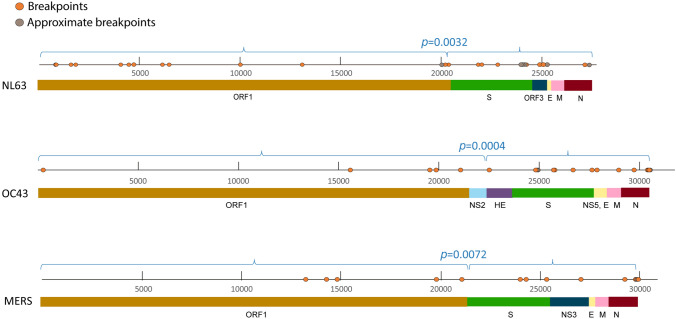
Figure 1
Figure 1
Estimated recombination breakpoint positions NL63, OC43 and MERS-CoV whole genomes. p values for the frequency of recombination breakpoints in the non-ORF1 region (containing the structural genes) versus the ORF1 region are derived by the χ2 test. Approximate breakpoints are breakpoints that could not be placed with certainty due to overlapping recombination or other reasons.
Figure 2
Figure 2
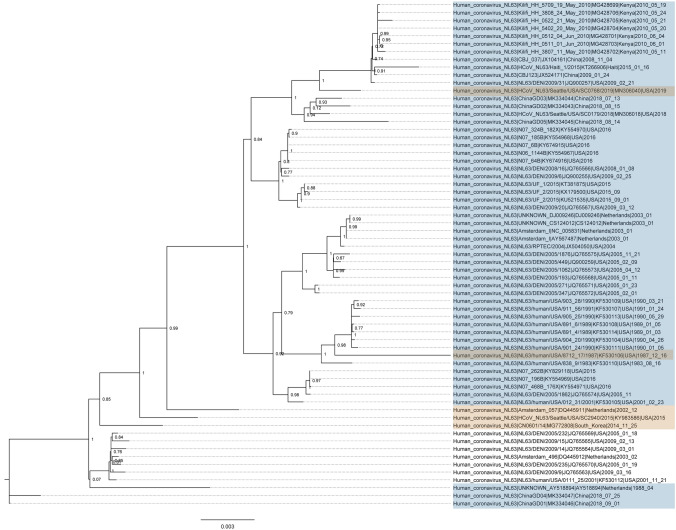
Maximum likelihood phylogeny of recombinants in NL63. Scale represents nucleotides per site. Recombinant events with multiple genomes are marked in blue, or as singletons are marked in yellow. Phylogeny was rooted with a 229E outgroup (removed for clarity).
Figure 3
Figure 3
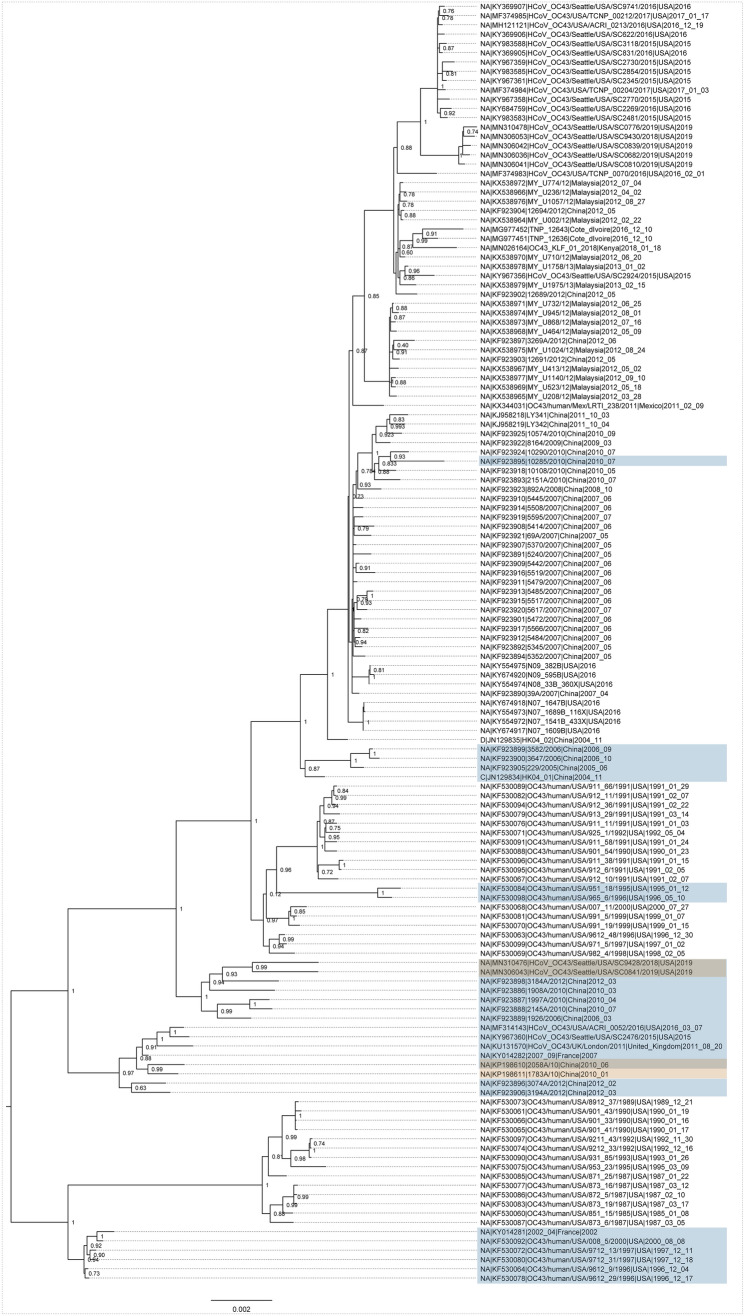
Maximum likelihood phylogenies of recombinants in OC43. Scale represents nucleotides per site. Recombinant events with multiple genomes are marked in blue, or as singletons are marked in yellow. Phylogeny was rooted with an HKU1 outgroup (removed for clarity).
Figure 4
Figure 4
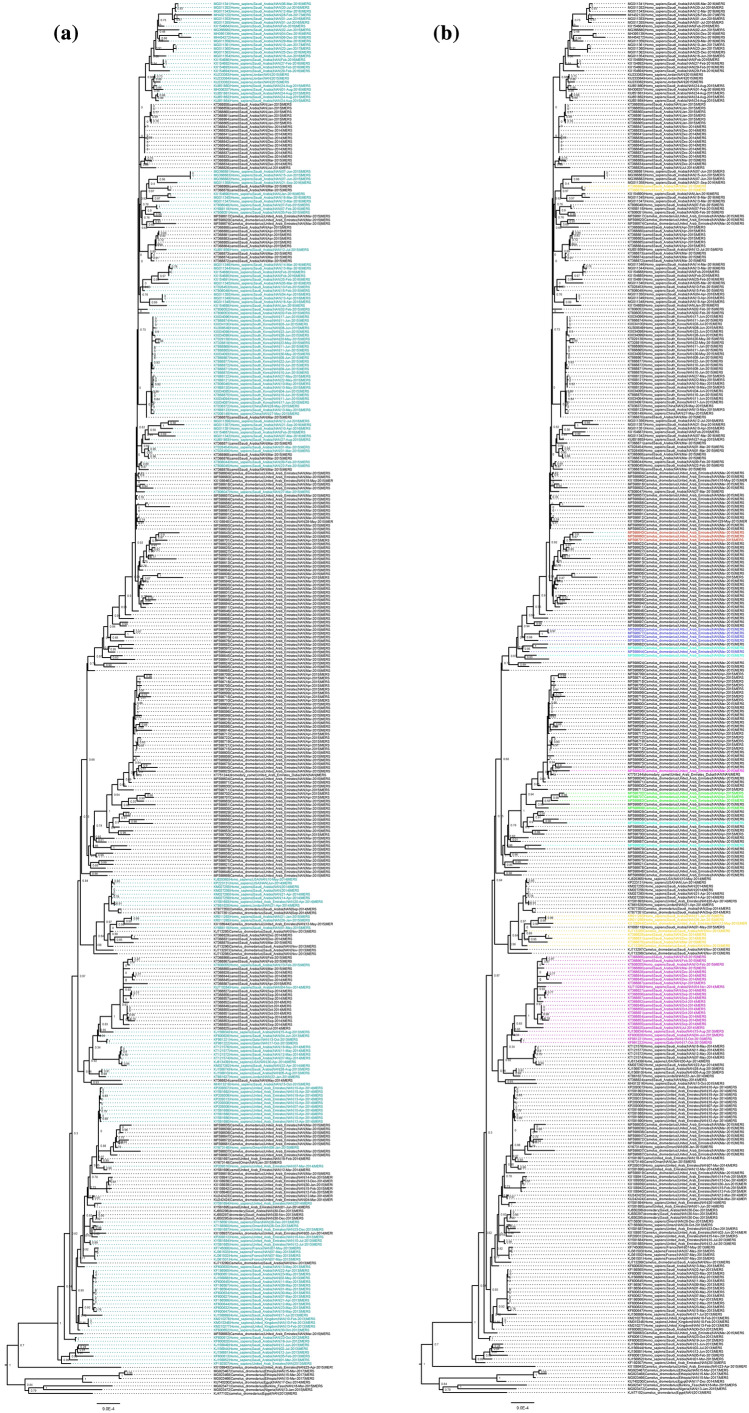
Maximum likelihood phylogeny of recombinants in MERS-CoV. Scale represents nucleotides per site. (a) Taxa colored by host (camel = black, human = green). (b) Colored taxa indicate confirmed recombinant clades.

References

    1. Simon-Loriere E, Holmes EC. Why do RNA viruses recombine? Nat. Rev. Microbiol. 2011;9:617–626. doi: 10.1038/nrmicro2614. - DOI - PMC - PubMed
    1. Dhama K, et al. Coronavirus disease 2019-COVID-19. Clin. Microbiol. Rev. 2020;33:e0002820. doi: 10.1128/cmr.00028-20. - DOI - PMC - PubMed
    1. Cheng VC, Lau SK, Woo PC, Yuen KY. Severe acute respiratory syndrome coronavirus as an agent of emerging and reemerging infection. Clin. Microbiol. Rev. 2007;20:660–694. doi: 10.1128/cmr.00023-07. - DOI - PMC - PubMed
    1. Neches RY, McGee MD, Kyrpides NC. Recombination should not be an afterthought. Nat. Rev. Microbiol. 2020;18:606. doi: 10.1038/s41579-020-00451-1. - DOI - PMC - PubMed
    1. Paraskevis D, et al. Full-genome evolutionary analysis of the novel corona virus (2019-nCoV) rejects the hypothesis of emergence as a result of a recent recombination event. Infect. Genet. Evol. 2020;79:104212. doi: 10.1016/j.meegid.2020.104212. - DOI - PMC - PubMed

Publication types

MeSH terms

Substances