Paediatric post-COVID-19 hyperinflammatory syndrome mimicking appendicitis: a case series
- PMID: 34464565
- PMCID: PMC10335061
- DOI: 10.1308/rcsann.2021.0132
Paediatric post-COVID-19 hyperinflammatory syndrome mimicking appendicitis: a case series
Abstract
Introduction: A novel hyperinflammatory syndrome has emerged in the paediatric population: paediatric inflammatory multisystem syndrome - temporally associated with SARS-CoV-2 (PIMS-TS). Up to 50% of patients develop shock with cardiac dysfunction but presentation with acute abdominal pain is common and difficult to distinguish from appendicitis.
Method: Prospective case series of PIMS-TS patients presenting to a single UK tertiary paediatric centre.
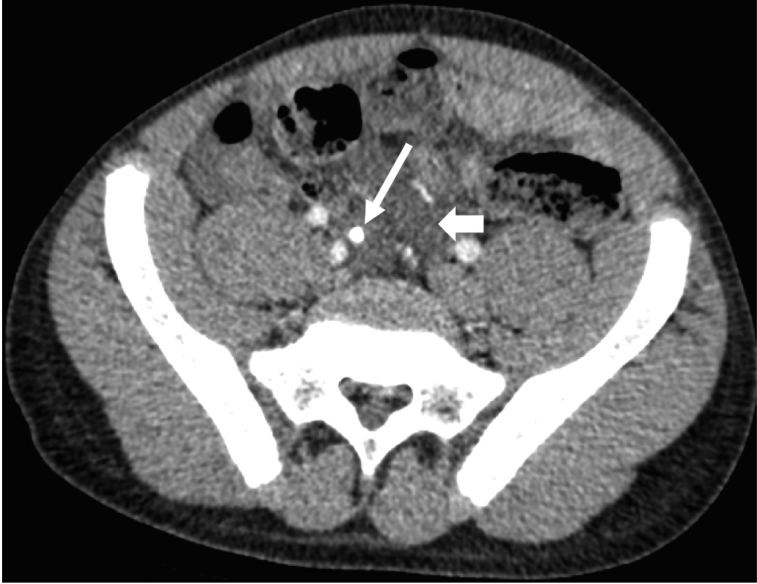
Results: As of 16 September 2020, 89 patients have presented with PIMS-TS to our institution; 19 (21.3%) were referred for surgical review. Pyrexia and acute abdominal pain were seen in all 19 patients. Diarrhoea was reported in 14 (73%) and vomiting in 12 (63%). On examination, eight (42%) had right abdominal tenderness, of which five had right iliac fossa (RIF) peritonism. C-reactive protein (CRP) was universally raised: median 176 (15-463)mg/l. Abdominal imaging was performed in 17 (89%), with 11 undergoing abdominal ultrasonography (65%) and 8 abdominal computed tomography (47%); two required both. Findings included nonspecific features of inflammation in the RIF. Eight patients (42%) had an abnormal echocardiogram at admission. Two (10%) patients, with classical signs and symptoms of appendicitis, underwent appendicectomy without radiological imaging and were subsequently diagnosed with PIMS-TS. During the same period, 18 patients underwent appendicectomy for histologically confirmed appendicitis. Serum CRP and ferritin levels were significantly higher in the PIMS-TS cohort compared with children with appendicitis.
Conclusions: PIMS-TS is a novel paediatric condition that may mimic appendicitis. It should be considered in patients presenting with abdominal pain to avoid unnecessary surgery in children at risk of cardiovascular instability.
Keywords: Acute appendicitis; COVID-19; Hyperinflammatory syndrome.
Figures



References
-
- Royal College of Paediatrics and Child Health. RCPCH Guidance: Paediatric multisystem inflammatory syndrome temporally associated with COVID-19. https://www.rcpch.ac.uk/sites/default/files/2020-05/COVID-19-Paediatric-... - PubMed
MeSH terms
Substances
Supplementary concepts
LinkOut - more resources
Full Text Sources
Medical
Research Materials
Miscellaneous