


Dysphagia in non-intubated patients affected by COVID-19 infection
- PMID: 34468824
- PMCID: PMC8408570
- DOI: 10.1007/s00405-021-07062-3
Dysphagia in non-intubated patients affected by COVID-19 infection
Abstract
Purpose: Patients affected by COVID-19 are assumed to be at high risk of developing swallowing disorders. However, to our best knowledge, data on the characteristics and incidence of dysphagia associated with COVID-19 are lacking, especially in non-intubated patients. Therefore, we investigated the onset of swallowing disorders in patients with laboratory-confirmed COVID-19 infection who have not been treated with invasive ventilation, in order to evaluate how the virus affected swallowing function regardless of orotracheal intubation.
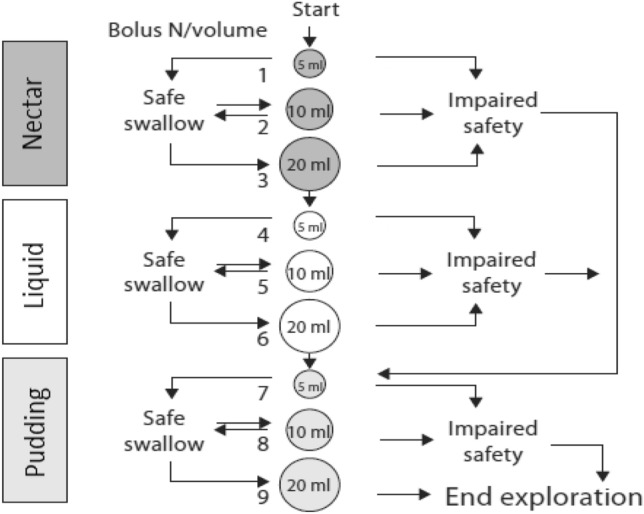
Methods: We evaluated 41 patients admitted to the COVID department of our Hospital when they had already passed the acute phase of the disease and were therefore asymptomatic but still positive for SARS-CoV-2 RNA by RT-PCR. We examined patients' clinical history and performed the Volume-Viscosity Swallow Test (VVST). Each patient also answered the Swallowing Disturbance Questionnaire (SDQ). After 6 months, we performed a follow-up in patients with swallowing disorders.
Results: Eight of 41 patients (20%) presented with dysphagia symptoms during hospitalization and 2 of them (25%) still presented a SDQ high score and swallowing disorders with liquid consistency after 6 months.
Conclusion: Non-intubated patients can experience various grades of swallowing impairment that probably directly related to pulmonary respiratory function alterations and viral direct neuronal lesive activity. Although these symptoms show natural tendency to spontaneous resolution, their impact on a general physical impaired situation should not be underestimated, since it can adversely affect patients' recovery from COVID-19 worsening health outcomes.
Keywords: COVID-19; DSQ; Deglutition; Deglutition disorders; Dysphagia; SARS-CoV-2; Swallowing; VVST.
© 2021. The Author(s), under exclusive licence to Springer-Verlag GmbH Germany, part of Springer Nature.
Conflict of interest statement
All authors certify that they have no affiliations with or involvement in any organization or entity with any financial interest (such as honoraria; educational grants; participation in speakers’ bureaus; membership, employment, consultancies, stock ownership, or other equity interest; and expert testimony or patent-licensing arrangements), or non-financial interest (such as personal or professional relationships, affiliations, knowledge or beliefs) in the subject matter or materials discussed in this manuscript.
Figures



Comment in
-
Letter to the Editor regarding "Dysphagia in non-intubated patients affected by COVID-19 infection".Eur Arch Otorhinolaryngol. 2022 Jan;279(1):537-538. doi: 10.1007/s00405-021-07100-0. Epub 2021 Sep 24. Eur Arch Otorhinolaryngol. 2022. PMID: 34559271 Free PMC article. No abstract available.
References
-
- Minerva ME, Kiekens C, Boldrini P, et al. (2020) European Journal of Physical and Rehabilitation Medicine EDIZIONI MINERVA MEDICA rehabilitation and respiratory management in the acute and early post-acute phase. “Instant paper from the field” on rehabilitation answers to the Covid-19 emergency. 10.23736/S1973-9087.20.06305-4 - PubMed
MeSH terms
Substances
LinkOut - more resources
Full Text Sources
Medical
Miscellaneous
