


Choice of dialysis modality among patients initiating dialysis: results of the Peridialysis study
- PMID: 34476093
- PMCID: PMC8406075
- DOI: 10.1093/ckj/sfaa260
Choice of dialysis modality among patients initiating dialysis: results of the Peridialysis study
Abstract
Background: In patients with end-stage kidney disease (ESKD), home dialysis offers socio-economic and health benefits compared with in-centre dialysis but is generally underutilized. We hypothesized that the pre-dialysis course and institutional factors affect the choice of dialysis modality after dialysis initiation (DI).
Methods: The Peridialysis study is a multinational, multicentre prospective observational study assessing the causes and timing of DI and consequences of suboptimal DI. Clinical and biochemical data, details of the pre-dialytic course, reasons for DI and causes of the choice of dialysis modality were registered.
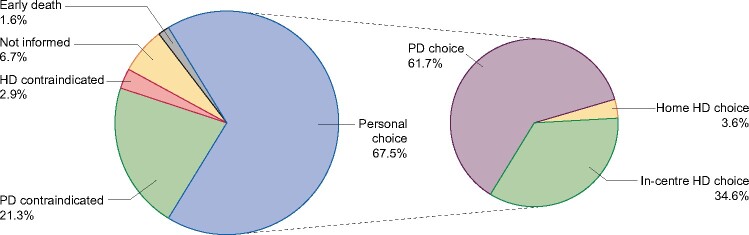
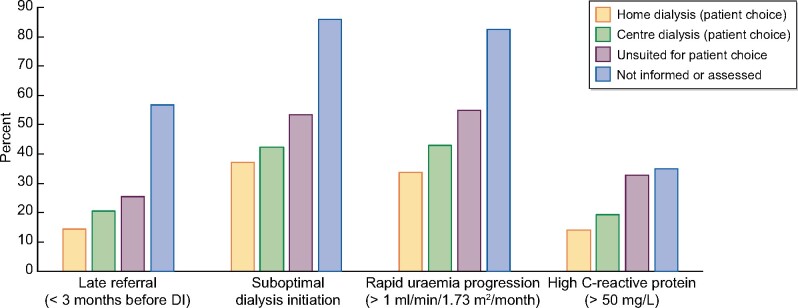
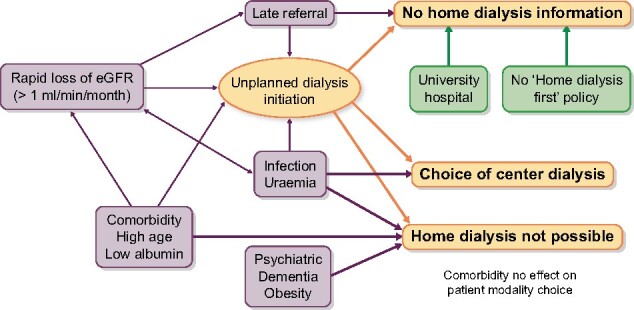
Results: Among 1587 included patients, 516 (32.5%) were judged unsuitable for home dialysis due to contraindications [384 ( 24.2%)] or no assessment [106 (6.7%); mainly due to late referral and/or suboptimal DI] or death [26 (1.6%)]. Older age, comorbidity, late referral, suboptimal DI, acute illness and rapid loss of renal function associated with unsuitability. Of the remaining 1071 patients, 700 (65.4%) chose peritoneal dialysis (61.7%) or home haemodialysis (HD; 3.6%), while 371 (34.6%) chose in-centre HD. Somatic differences between patients choosing home dialysis and in-centre dialysis were minor; factors linked to the choice of in-centre dialysis were late referral, suboptimal DI, acute illness and absence of a 'home dialysis first' institutional policy.
Conclusions: Given a personal choice with shared decision making, 65.4% of ESKD patients choose home dialysis. Our data indicate that the incidence of home dialysis potentially could be further increased to reduce the incidence of late referral and unplanned DI and, in acutely ill patients, by implementing an educational programme after improvement of their clinical condition.
Keywords: glomerular filtration rate; haemodialysis; peritoneal dialysis; pre-dialysis; uraemia.
© The Author(s) 2020. Published by Oxford University Press on behalf of ERA-EDTA.
Figures
References
-
- Mehrotra R, Chiu YW, Kalantar-Zadeh K. et al.Similar outcomes with hemodialysis and peritoneal dialysis in patients with end-stage renal disease. Arch Intern Med 2011; 171: 110–118 - PubMed
-
- Noordzij M, Jager KJ.. Survival comparisons between haemodialysis and peritoneal dialysis. Nephrol Dial Transplant 2012; 27: 3385–3387 - PubMed
LinkOut - more resources
Full Text Sources
