


Quality of Life in Patients with Chronic Thyroid Eye Disease in the United States
- PMID: 34478126
- PMCID: PMC8589903
- DOI: 10.1007/s40123-021-00385-8
Quality of Life in Patients with Chronic Thyroid Eye Disease in the United States
Erratum in
-
Correction to: Quality of Life in Patients with Chronic Thyroid Eye Disease in the United States.Ophthalmol Ther. 2022 Apr;11(2):923. doi: 10.1007/s40123-022-00467-1. Ophthalmol Ther. 2022. PMID: 35102515 Free PMC article. No abstract available.
Abstract
Introduction: Thyroid eye disease (TED) is an autoimmune condition producing ocular pain, dysmotility, and ocular structure and function changes. As disease activity changes, redness, swelling, and pain can improve, but eye comfort, appearance, and motility alterations often persist. There are limited data on chronic TED patient-reported outcomes. This study examined chronic US TED patient-reported symptoms and quality of life (QOL).
Methods: Existing data from an online survey regarding chronic TED signs/symptoms and patient QOL were retrospectively examined. The Graves' Ophthalmopathy QOL instrument (GO-QOL; 0-100, 100 = highest QOL) evaluated overall, appearance, and vision-related QOL. Influencing factors were examined by stratifying patients into low (overall QOL ≤ 50), moderate (> 50 and < 75), and high (≥ 75) QOL categories.
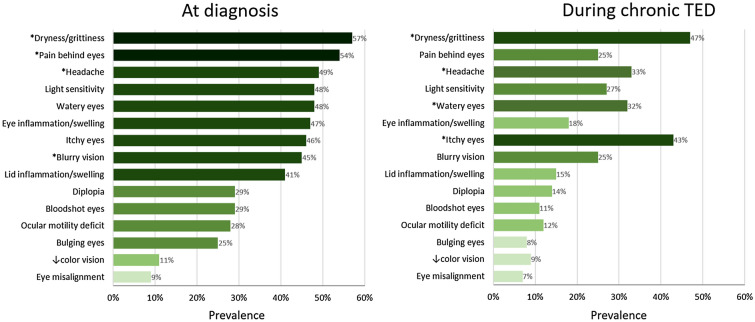
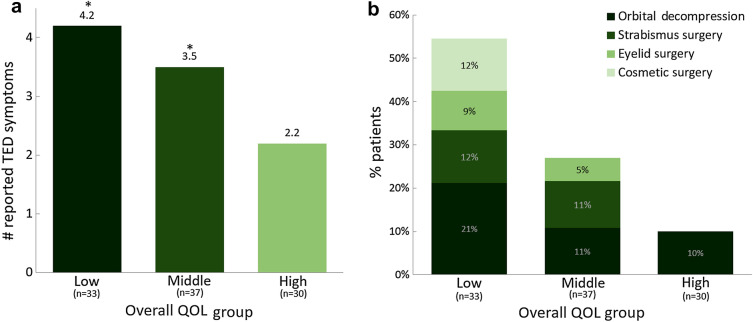
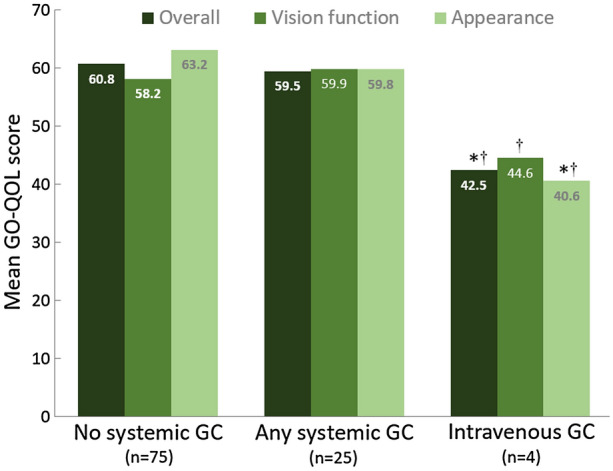
Results: One hundred patients (47 women, 81 Caucasian, 45.2 ± 7.6 years) were included. The duration of inactive TED was 3.0 ± 4.6 years and total duration of TED was 5.8 ± 5.9 years. Patients reported an average of 20 doctor visits/year and high prevalence of anxiety (34%) and depression (28%). Prior TED treatments for the polled population included systemic corticosteroids during active TED (25%), orbital radiation (5%), and surgery (25%). The overall GO-QOL score was 60.5 ± 21.8 (vision-related: 58.6 ± 24.0, appearance-related: 62.3 ± 25.1). Patients with low QOL more frequently reported hypothyroidism, anxiety, and a larger number of chronic TED signs/symptoms (average: 4.2). Compared to high QOL patients, low QOL patients had more pain (39% vs. 13%), blurry vision (30% vs. 17%), and diplopia (27% vs. 3%, all p ≤ 0.025). Additionally, the low QOL group more often had TED-specific surgical history (45% vs. 10%, p = 0.002), more often reported disability/unemployment (21% vs. 3%, p = 0.055), and had a higher number of doctor visits (40 vs. 5 visits/person/year, p < 0.001).
Conclusion: TED severely impacts patient QOL, despite becoming stable and chronic. Patients reported vision and appearance impairment and psychosocial impact long after acute TED had subsided.
Keywords: Chronic; Clinical presentation; Inactive; Quality of life; Thyroid eye disease.
Plain language summary
Thyroid eye disease (TED) occurs when loss of immune tolerance results in orbital and retro-orbital inflammation. Fat and muscle tissue can swell severely, causing debilitating symptoms, including pain around/behind the eyes, eye movement abnormalities, bulging eyes (proptosis), and double vision (diplopia), manifesting in appearance and vision quality of life (QOL) changes. Some improvement can occur as inflammation quiets and TED becomes chronic/inactive. However, appearance and visual changes often remain due to persistent proptosis and eye muscle and eyelid changes. This study examined TED symptoms and QOL in 100 chronic TED patients. They answered questions about symptoms, how TED affected them, and their medical care. The average duration of TED was 6 years (3 years inactive), patients had an average of 20 TED-related doctor visits/year, and nearly one-half (42%) of patients reported having anxiety and/or depression. Prior TED treatments included steroids (25% when TED-related inflammation was present), orbital radiation (5%), and surgery (25%). Disease-specific QOL scores (average score: 60.5 of 100) indicated that these chronic patients reported similar QOL impact as those with moderate-to-severe, active disease. Compared with the least impacted group, the most impacted patients reported higher rates of hypothyroidism (18% vs. 0%), anxiety (48% vs. 17%), disability/unemployment (21% vs.3%), number of doctor visits (40 vs. 5 visits/person/year), pain (39% vs. 13%), blurry vision (30% vs. 17%), diplopia (27% vs. 3%), and surgical treatment for TED (45% vs. 10%). This study demonstrates that QOL continues to be severely impacted by TED long after TED-related inflammation has quieted.
© 2021. The Author(s).
Figures
References
-
- Dickinson AJ, Hintschich C. Clinical manifestations. In: Wiersinga WM, Kahaly GJ, editors. Graves' orbitopathy: a multidisciplinary approach—questions and answers. 3. Basel: Karger; 2017. pp. 1–25.
LinkOut - more resources
Full Text Sources
Research Materials
