Review
. 2021 Nov:178:113956.
doi: 10.1016/j.addr.2021.113956. Epub 2021 Sep 1.

Vaginal delivery of vaccines

Affiliations
Review

Vaginal delivery of vaccines

Hannah M VanBenschoten et al. Adv Drug Deliv Rev. 2021 Nov.

Abstract

Recent estimates suggest that one in two sexually active individuals will acquire a sexually transmitted infection by age 25, an alarming statistic that amounts to over 1 million new infections per day worldwide. Vaccination against STIs is highly desirable for alleviating this global burden of disease. Vaginal immunization is a promising strategy to combat transmission via the vaginal mucosa. The vagina is typically considered a poor inductive site for common correlates of adaptive immunity. However, emerging evidence suggests that immune tolerance may be overcome by precisely engineered vaccination schemes that orchestrate cell-mediated immunity and establish tissue resident memory immune cells. In this review, we will discuss the unique immunological milieu of the vaginal mucosa and our current understanding of correlates of pathogenesis and protection for several common STIs. We then present a summary of recent vaginal vaccine studies and explore the role that mucosal adjuvants and delivery systems play in enhancing protection according to requisite features of immunity. Finally, we offer perspectives on the challenges and future directions of vaginal vaccine delivery, discussing remaining physiological barriers and innovative vaccine formulations that may overcome them.

Keywords: Drug delivery; Mucosal adjuvants; Mucosal immunology; Sexually transmitted infections; Vaginal vaccines.


Conflict of interest statement

Declaration of Competing Interest The authors declare that they have no known competing financial interests or personal relationships that could have appeared to influence the work reported in this paper.

Figures
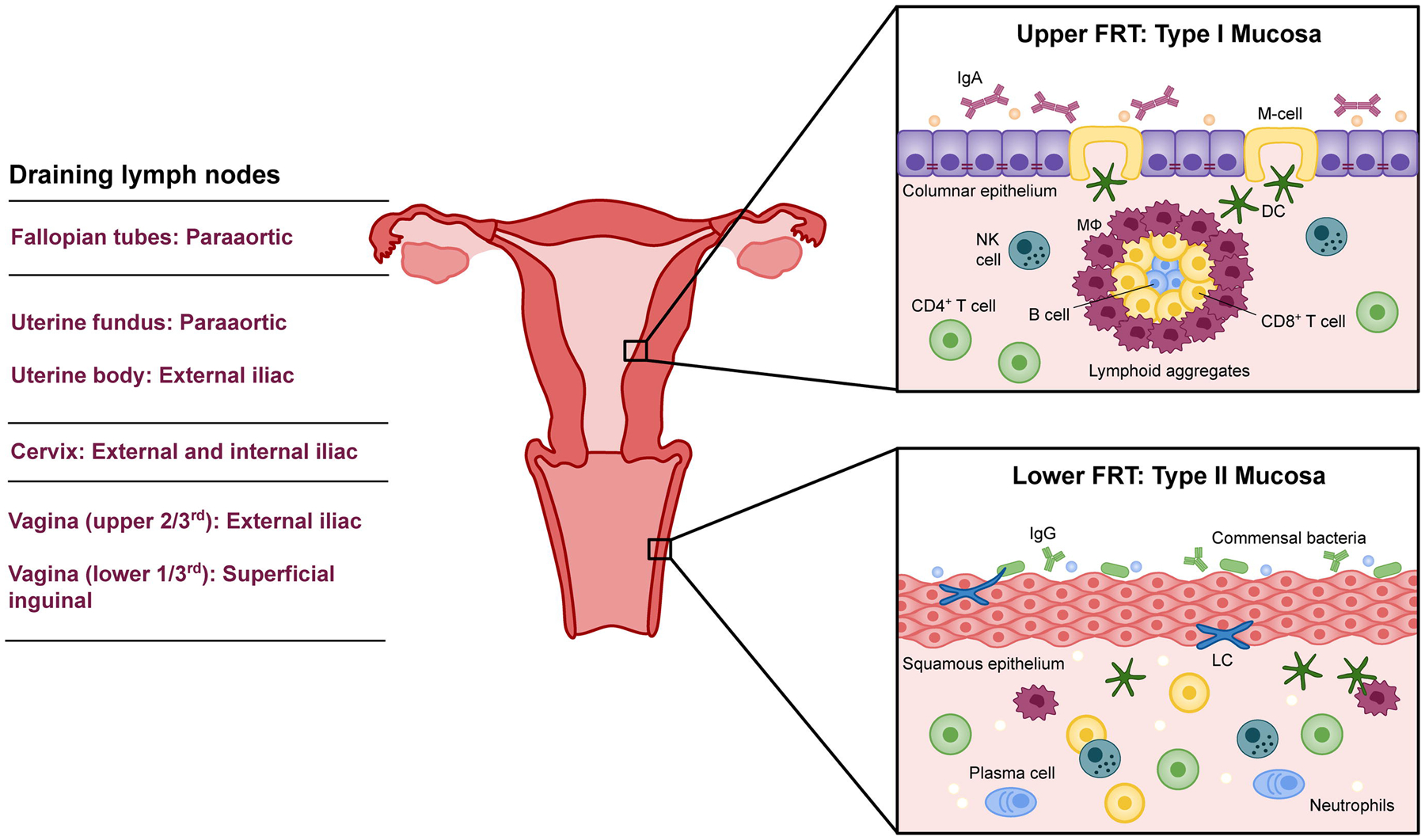
Figure 1.
Figure 1.. Differences in the immunological milieu of the upper and lower female reproductive tract.
The upper FRT, comprised of the ovaries, fallopian tubes, uterus, and endocervix, is a sterile environment with type I mucosa. As such, it contains organized mucosa-associated lymphoid tissue (MALT) and exerts constitutive immune surveillance via intraepithelial M cells. IgA is the primary immunoglobulin secreted by the upper FRT, though IgG and IgM are also supplied. Antibodies and antimicrobial factors wash into the lower FRT, which is made up of type II mucosa. The ectocervix and vagina do not have MALT or M cells, but possess intraepithelial Langerhans cells which periodically patrol the vaginal lumen. A sequence of draining lymph nodes receive APCs from and prime adaptive immune cells for the FRT.
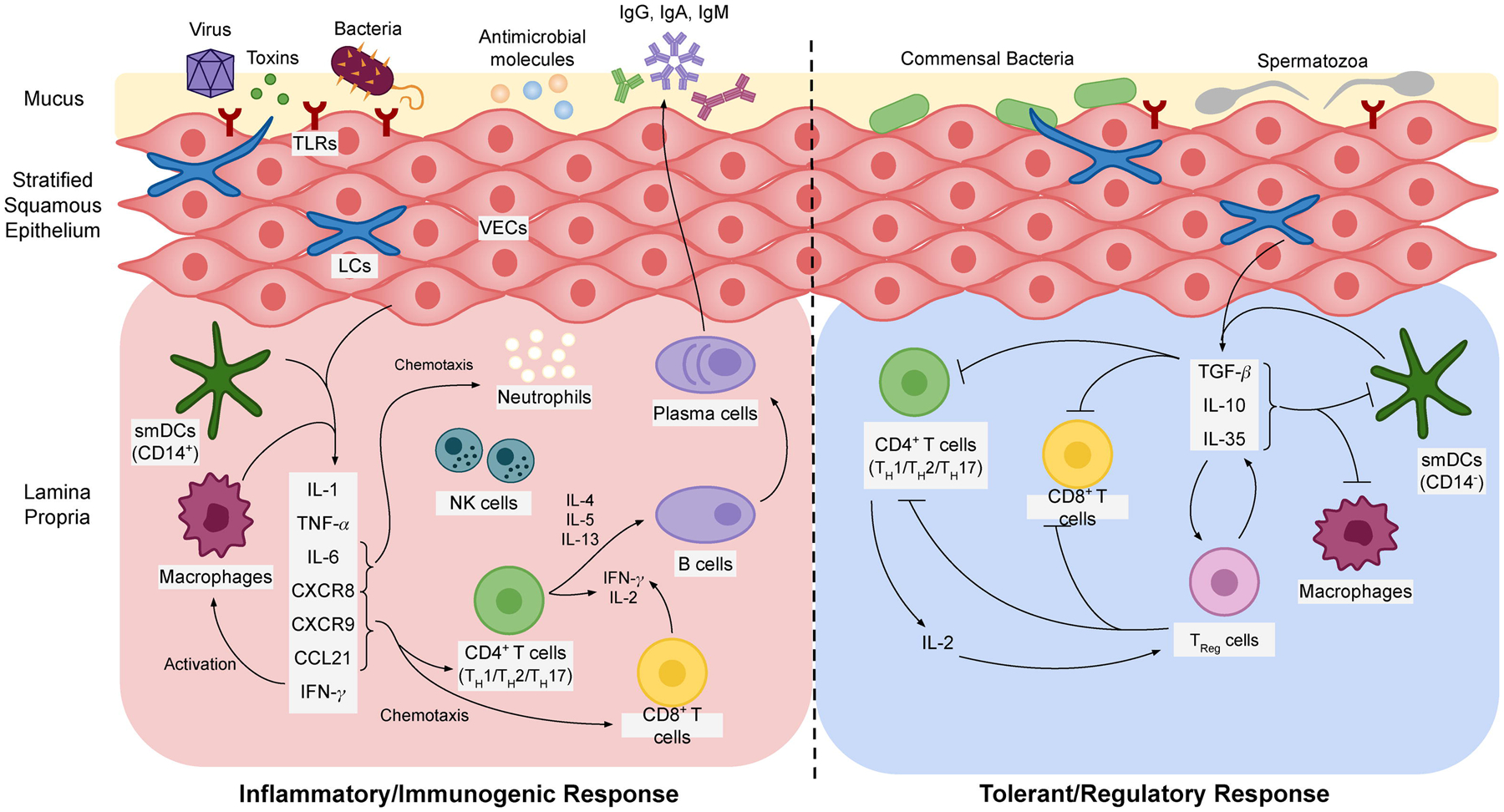
Figure 2.
Figure 2.. Soluble factors modulate immunogenic and tolerogenic responses in the vaginal mucosa.
Inflammation or tolerance is largely determined by PRR signalling from specific APC subtypes. TLRs and C-type lectin receptors (CTR) on CD14+ smDCs and macrophages preferentially initiate release of several proinflammatory cytokines and chemokines with pleiotropic effects on immune cell recruitment and activation. On the other hand, VECs and cvLCs commonly patrol commensal bacteria and non-pathogenic infiltrate in the vaginal lumen and thus initiate tolerogenic signalling, primarily via release of TGF-β. Immunosuppressive cytokines inhibit antigen presentation and induce regulatory T-cell activation. TReg cells detect and suppress TH1, TH2, and TH17-type responses, inhibit CTL activity, and secrete additional cytokines to maintain a suppressive milieu.
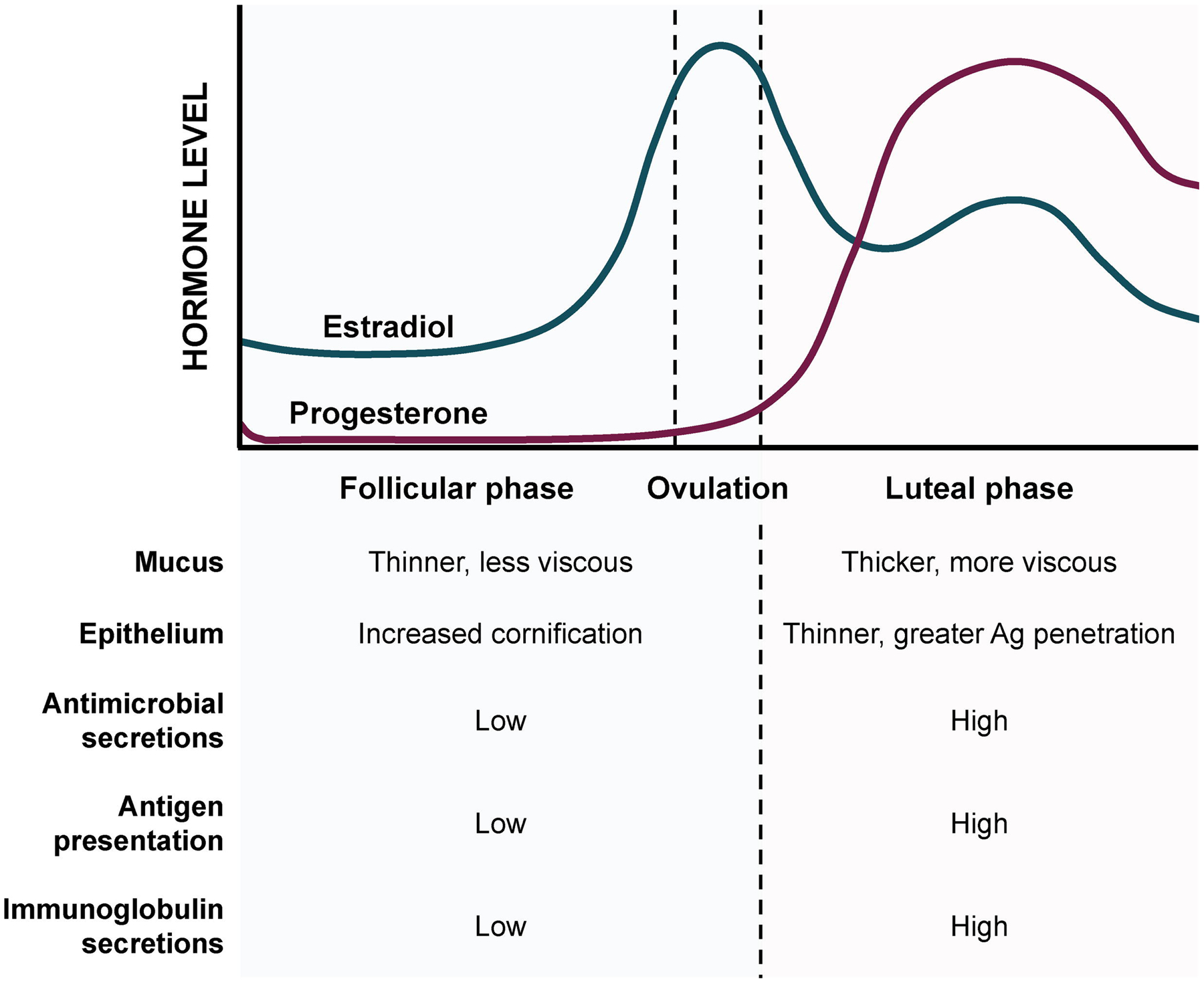
Figure 3:
Figure 3:. Dominant menstrual hormones affect immunity in the vaginal mucosa.
The follicular and preovulatory phases are dominated by estradiol, resulting in a general increase in immune tolerance. The luteal phase is dominated by progesterone, which causes significant thinning of the epithelium compensated by an increased immune secretory profile.

References

    1. Holmgren J, Czerkinsky C, Mucosal immunity and vaccines, Nat. Med 11 (2005) S45. 10.1038/nm1213. - DOI - PubMed
    1. Kozlowski PA, Cu-Uvin S, Neutra MR, Flanigan TP, Comparison of the oral, rectal, and vaginal immunization routes for induction of antibodies in rectal and genital tract secretions of women, Infect. Immun 65 (1997) 1387–1394. 10.1128/iai.65.4.1387-1394.1997. - DOI - PMC - PubMed
    1. Anderson DJ, Marathe J, Pudney J, The Structure of the Human Vaginal Stratum Corneum and its Role in Immune Defense, Am. J. Reprod. Immunol 71 (2014) 618–623. 10.1111/aji.12230. - DOI - PMC - PubMed
    1. Blaskewicz CD, Pudney J, Anderson DJ, Structure and function of intercellular junctions in human cervical and vaginal mucosal epithelia, Biol. Reprod 85 (2011) 97–104. 10.1095/biolreprod.110.090423. - DOI - PMC - PubMed
    1. Iwasaki A, Mucosal dendritic cells, Annu. Rev. Immunol 25 (2007) 381–418. 10.1146/annurev.immunol.25.022106.141634. - DOI - PubMed

Publication types