


Transition from injecting opioids to smoking fentanyl in San Francisco, California
- PMID: 34482046
- PMCID: PMC10790652
- DOI: 10.1016/j.drugalcdep.2021.109003
Transition from injecting opioids to smoking fentanyl in San Francisco, California
Abstract
Background: The introduction of illicitly made fentanyl in the United States has slowly replaced heroin. New illicit drugs are often associated with changes in frequency and modes of administration. We assessed changes in injection frequency and smoking fentanyl in the new era of fentanyl availability in San Francisco.
Methods: We used targeted sampling to recruit 395 people who inject drugs (PWID) into an observational cohort study in San Francisco 2018-2020. We assessed changes in injection frequency, opioid injection frequency and fentanyl smoking frequency in four six-month periods. We also conducted qualitative interviews with PWID asking about motivations for injecting and smoking opioids.
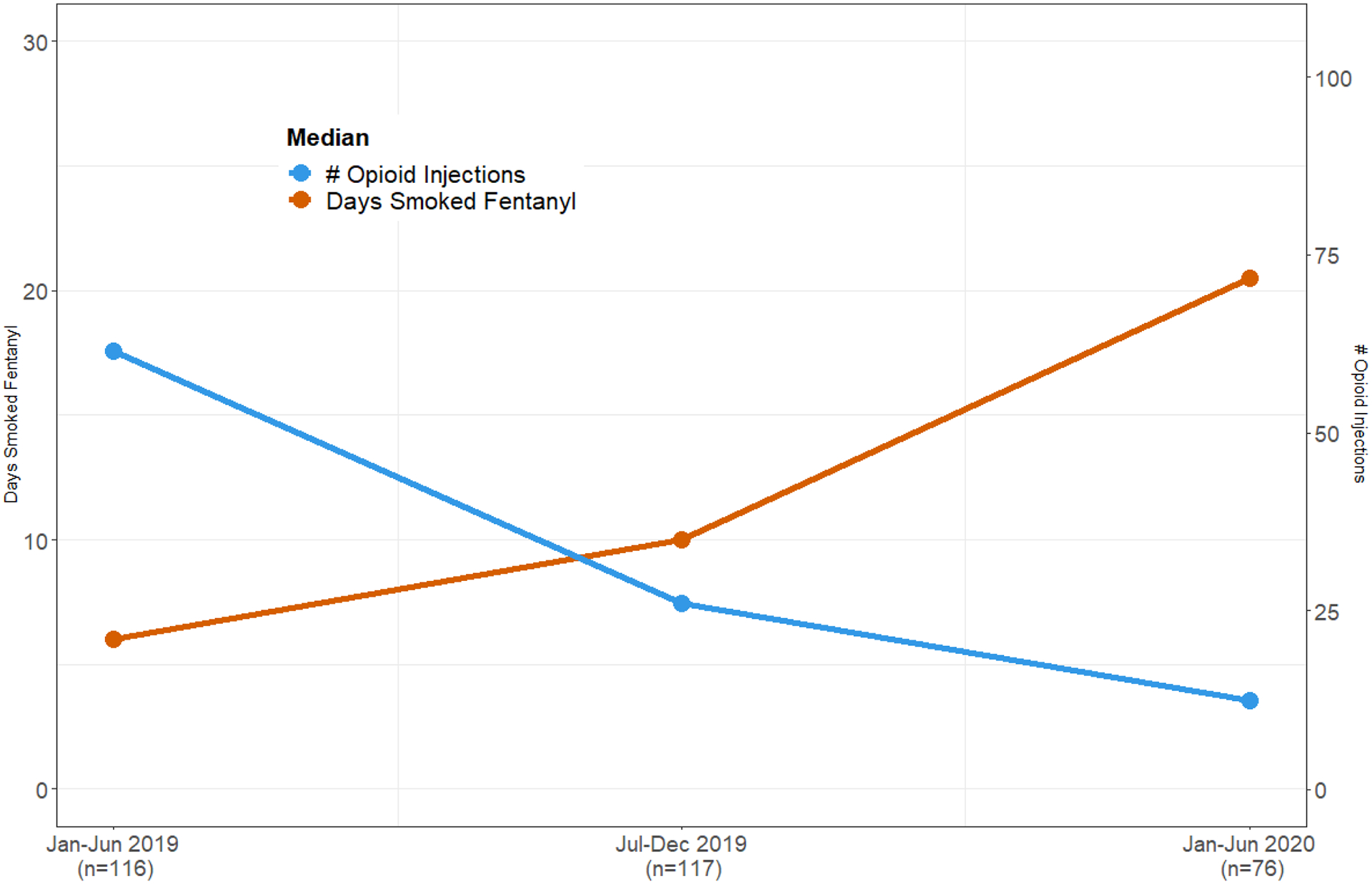
Results: The median number of past-month injections steadily decreased by semi-annual calendar year from 92 injections in July to December 2018 to 17 injections in January to June 2020. The rate of opioid injections reduced by half (Adjusted Incidence Rate Ratio = 0.41; 95 % Confidence Interval = 0.25, 0.70; p < 0.01). The number of days smoking fentanyl was associated with fewer number of injections (X2(2) = 11.0; p < 0.01). Qualitative interviews revealed that PWID's motivation for switching from injecting tar heroin to smoking fentanyl was related to difficulties accessing veins. After switching to smoking fentanyl, they noticed many benefits including how the drug felt, improved health, fewer financial constraints, and reduced stigma.
Conclusion: Between 2018 and 2020, there was a shift from injecting tar heroin to smoking fentanyl in San Francisco. Reductions in injection of illicit drugs may offer public health benefit if it reduces risk of blood-borne viruses, abscesses and soft-tissue infections, and infective endocarditis.
Keywords: Drugs; Epidemiology; Fentanyl; Inject; Qualitative; Smoke.
Copyright © 2021. Published by Elsevier B.V.
Conflict of interest statement
Figures
References
-
- Barrio G, De la Fuente L, Royuela L, Diaz A, Rodriguez-Artalejo F, 1998. Cocaine use among heroin users in Spain: the diffusion of crack and cocaine smoking. Spanish Group for the Study on the Route of Administration of Drugs. J Epidemiol Community Health 52, 172–180. 10.1136/jech.52.3.172. - DOI - PMC - PubMed
Publication types
MeSH terms
Substances
Grants and funding
LinkOut - more resources
Full Text Sources
Miscellaneous
