


Effects of Continuous Yoga on Body Composition in Obese Adolescents
- PMID: 34484400
- PMCID: PMC8410386
- DOI: 10.1155/2021/6702767
Effects of Continuous Yoga on Body Composition in Obese Adolescents
Abstract
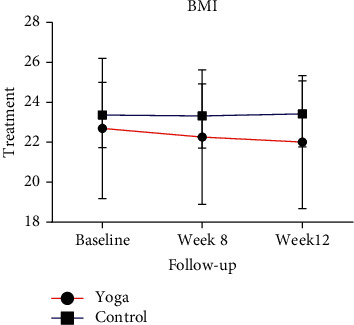
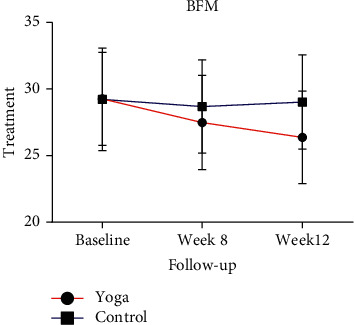
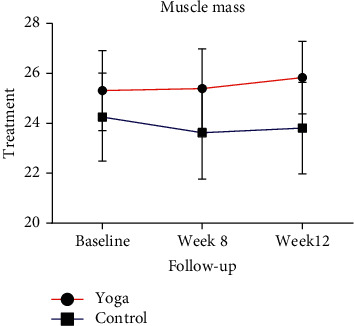
Overweight/obesity is a pressing international health concern, and conventional treatments demonstrate poor long-term efficacy. Several studies have shown that yoga can control risk factors for cardiovascular disease, obesity, and psychosocial stress. The present study aimed to assess the effect of continuous yoga (asanas, pranayama, and Surya Namaskar yoga) on body composition in overweight participants. Forty adolescents with obesity were enrolled in this study. The study was conceived as a prospective, single-center, single-blinded randomized controlled trial. The participants were divided into 2 groups: the intervention group (n = 20), which undertook a continuous yoga practice, and the control group (n = 20). Body composition, including body weight (BW), body mass index (BMI), body fat mass (BFM), and muscle mass, was evaluated using tetrapolar bioelectrical impedance (BIA). Our results showed that the mean BMI and BFM of the yoga intervention group were significantly decreased at week 8 and week 12. The muscle mass of the yoga group continued to improve at a rate of 0.515 per week, which was statistically significant. In conclusion, a continuous yoga practice had a tendency to decrease BMI and BFM and increase muscle mass. These findings demonstrate intervention effectiveness similar to that observed in other clinical research and indicate that continuous yoga practice may be used as an alternative therapy for obesity prevention and health promotion in adolescents with obesity.
Copyright © 2021 Marisa Poomiphak Na Nongkhai et al.
Conflict of interest statement
The authors declare that there are no conflicts of interest regarding the publication of this paper.
Figures
References
-
- Hales C. M., Carroll M. D., Fryar C. D., Ogden C. L. Prevalence of Obesity Among Adults and Youth: United States, 2015-2016. NCHS Data Brief. 2017;288:1–8. - PubMed
-
- World Health Organization. Obesity and overweight. 2020. https://www.who.int/news-room/fact-sheets/detail/obesity-and-overweight.
LinkOut - more resources
Full Text Sources
