Prevalence of diarrhoea, acute respiratory infections, and malaria over time (1995-2017): A regional analysis of 23 countries in West and Central Africa
- PMID: 34484715
- PMCID: PMC8397278
- DOI: 10.7189/jogh.11.13008
Prevalence of diarrhoea, acute respiratory infections, and malaria over time (1995-2017): A regional analysis of 23 countries in West and Central Africa
Abstract
Backgound: The global community recognizes the urgent need to end preventable child deaths, making it an essential part of the third Sustainable Development Goal. Pneumonia, diarrhoea, and malaria still remain the leading causes of deaths among children under five years, especially in one of the poorest geographic regions of the world - West and Central Africa. This region carries a disproportionately high share of the global burden, both in terms of morbidity and mortality. The study aims to assess levels and trends of the prevalence of these three childhood diseases in West and Central Africa to better inform ongoing and future programmes to improve child survival.
Methods: Demographic and Health Surveys and Multiple Indicator Cluster Surveys available from 1995 to 2017 for 23 countries in West and Central Africa were analysed. We estimated the prevalence of diarrhoea, acute respiratory infections (ARI), malaria, and fever as a proxy for malaria, and split the data into three time periods to assess these trends in disease prevalence over time. Further analyses were done to assess the variations by geographic location (urban and rural) and gender (boys and girls).
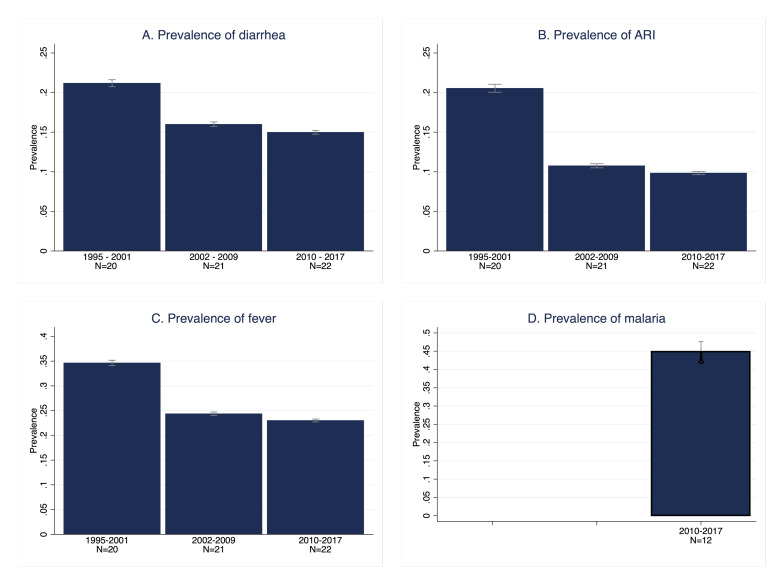
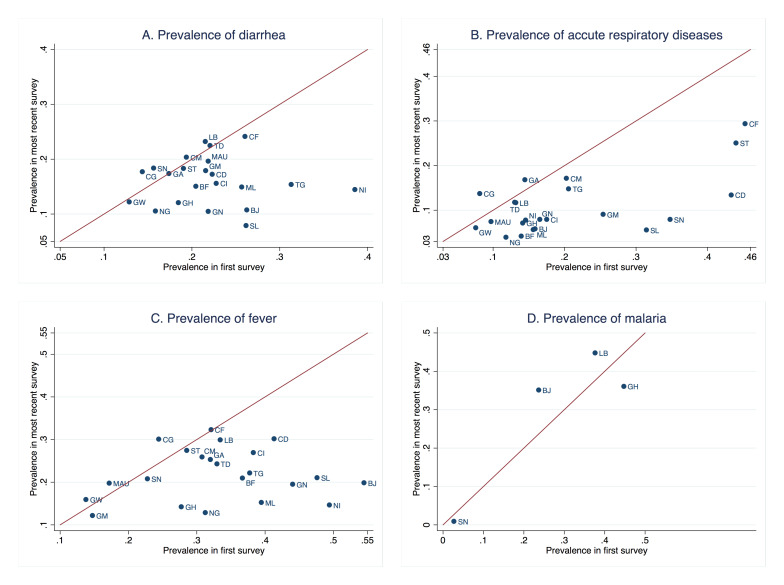
Results: In West and Central Africa, the reduction of the prevalence rates of diarrhoea, acute respiratory infections, malaria, and fever has decelerated over time (1995-2009), and little improvements occurred between 2010 and 2017. The reduction within the region has been uneven and the prevalence rates either increased or stagnated for diarrhoea (nine countries), ARI (four countries), and fever (six countries). The proportion of affected children was high in emergency or fragile settings. Disaggregated analyses of population-based data show persistent gaps between the prevalence of diseases by geographic location and gender, albeit not significant for the latter.
Conclusions: Without intensified commitment to reducing the prevalence of pneumonia, malaria, and diarrhoea, many countries will not be able to meet the SDG goal to end preventable child deaths. Evidence-driven programmes that focus on improving equitable access to preventive health care information and services must be fostered, especially in complex emergency settings. This will be an opportunity to strengthen primary health care, including community health programmes, to achieve universal health coverage.
Copyright © 2021 by the Journal of Global Health. All rights reserved.
Conflict of interest statement
Competing interests: The authors completed the ICMJE Unified Competing Interest form (available from convey.org) and declare no conflicts of interest.
Figures
References
-
- World Health Organization. World Malaria Report 2019. Geneva: World Health Organization; 2019. Available: https://www.who.int/publications-detail/world-malaria-report-2019. Accessed: 23 May 2020.
-
- International Vaccine Access Center (IVAC). Pneumonia and diarrhea progress report: Driving progress through equitable investment and action. Baltimore, MD: Johns Hopkins Bloomberg School of Public Health; 2017. Available: https://www.jhsph.edu/ivac/wp-content/uploads/2018/04/IVAC-2017-Pneumoni.... Accessed: 20 May 2020.
-
- UN Inter-agency Groups for Child Mortality Estimation. Levels and trends in child mortality. Report 2019. Geneva: UNICEF; 2019.
-
- The Global Strategy for women's and children's, and adolescents' health 2016-2030: survive, thrive, transform. Available: http://www.everywomaneverychild.org/wp-content/uploads/2017/10/EWEC_GSUp.... Accessed: 25 May 2020.
MeSH terms
LinkOut - more resources
Full Text Sources
Medical