


Clinical and Cytometric Study of Immune Involvement in a Heterogeneous Cohort of Subjects With RASopathies and mTORopathies
- PMID: 34485194
- PMCID: PMC8414575
- DOI: 10.3389/fped.2021.703613
Clinical and Cytometric Study of Immune Involvement in a Heterogeneous Cohort of Subjects With RASopathies and mTORopathies
Abstract
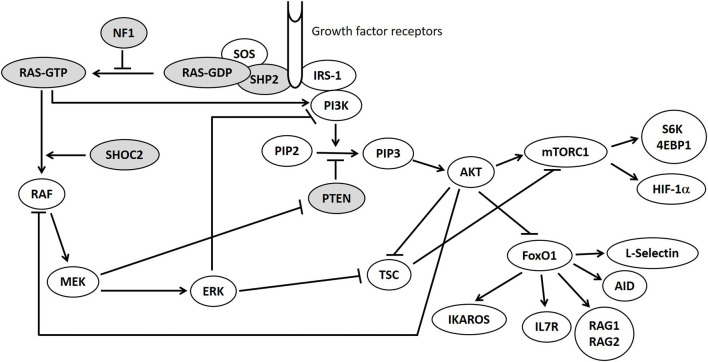
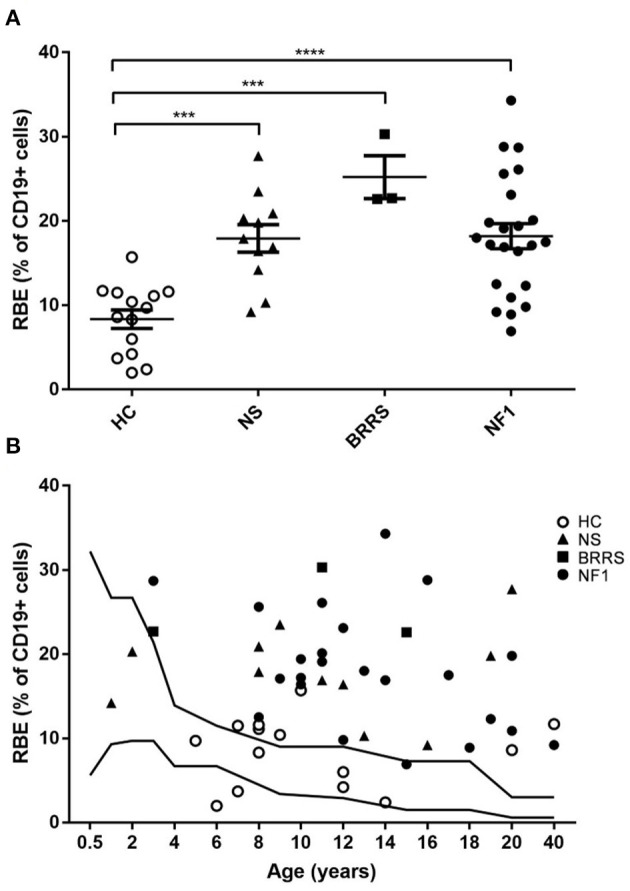
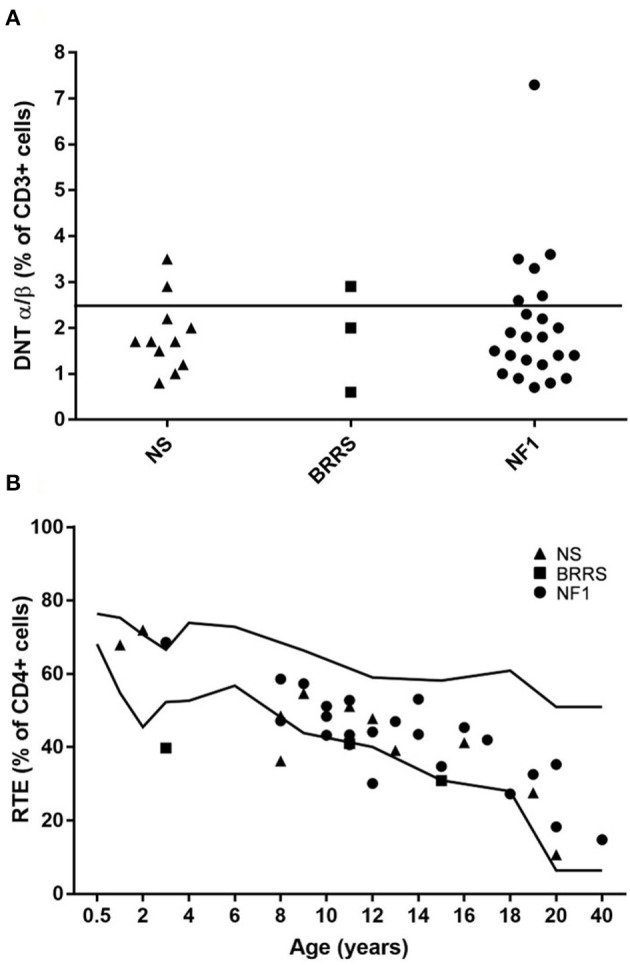
RASopathies and mTORopathies are groups of genetic syndromes associated with increased activation of the RAS-MAPK or the PI3K-AKT-mTOR pathway, resulting in altered cell proliferation during embryonic and postnatal development. The RAS-MAPK and the PI3K-AKT-mTOR pathways are connected to each other and play a crucial role in adaptive immunity. However, with the exception of Activated PI3K delta syndrome (APDS), immune function has not been deeply studied in these disorders. We collected clinical and immunophenotypic data of a cohort of patients with RASopathies and mTORopathies. Overall, we enrolled 47 patients (22 females, 25 males, age 2-40 years): 33 with neurofibromatosis type 1, 11 Noonan syndrome and 3 Bannayan-Riley-Ruvalcaba syndrome. 8 patients reported a history of invasive infections requiring hospitalization and intravenous antibiotic therapy. Only 3 patients reported a history of unusual, difficult-to-treat or deep-seated infection. Adenotonsillectomy was performed in 11 patients (24%). However, in most cases (83%) patients' parents did not perceive their child as more prone to infections than their peers. Lymphocyte subpopulations were analyzed in 37 of the 47 patients (16 female, 21 males, age 1-40 years). Among the studied lymphocyte subsets, the only consistent alteration regarded an increased percentage of immature B cells (recent bone marrow emigrants) in 34 out of 37 (91,9%) patients, and an increased percentage of double negative T cells in 9 patients. In conclusion, although borderline immune abnormalities were present in a significant proportion of subjects and adenotonsillectomy was performed more frequently than expected for the general population, no major immune disturbance was found in this cohort of patients.
Keywords: RASopathies; Ras/MAPK; flow cytometry; immune dysregulation; mTORopathies; recent bone marrow emigrants.
Copyright © 2021 Valencic, Da Lozzo, Tornese, Ghirigato, Facca, Piscianz, Faletra, Taddio, Tommasini and Magnolato.
Conflict of interest statement
The authors declare that the research was conducted in the absence of any commercial or financial relationships that could be construed as a potential conflict of interest.
Figures
References
-
- Bos JL. ras oncogenes in human cancer: a review. Cancer Res. (1989) 49:4682–9. - PubMed
LinkOut - more resources
Full Text Sources
Research Materials
Miscellaneous
