


Symptomatic hernia of the thigh musculature requiring reconstruction: A rare late presenting sequela after fascial release for compartment syndrome
- PMID: 34485667
- PMCID: PMC8405955
- DOI: 10.1016/j.tcr.2021.100528
Symptomatic hernia of the thigh musculature requiring reconstruction: A rare late presenting sequela after fascial release for compartment syndrome
Erratum in
-
Erratum regarding missing patient consent statement in previously published articles.Trauma Case Rep. 2023 Mar 1;45:100813. doi: 10.1016/j.tcr.2023.100813. eCollection 2023 Jun. Trauma Case Rep. 2023. PMID: 37234572 Free PMC article.
Abstract
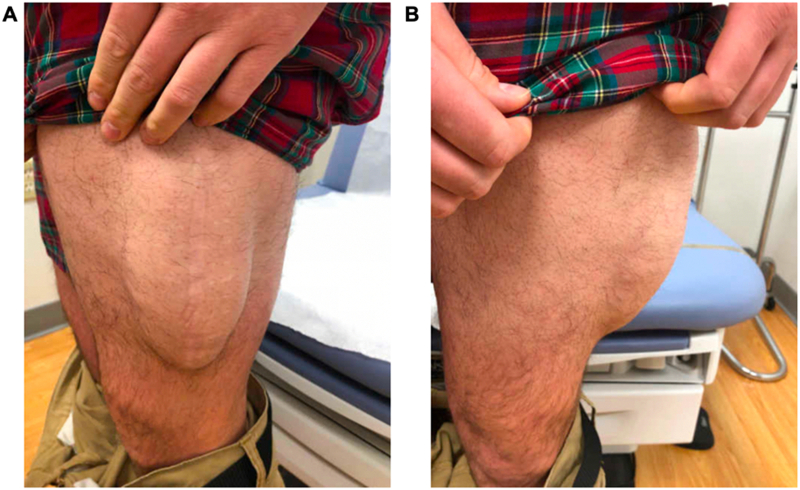
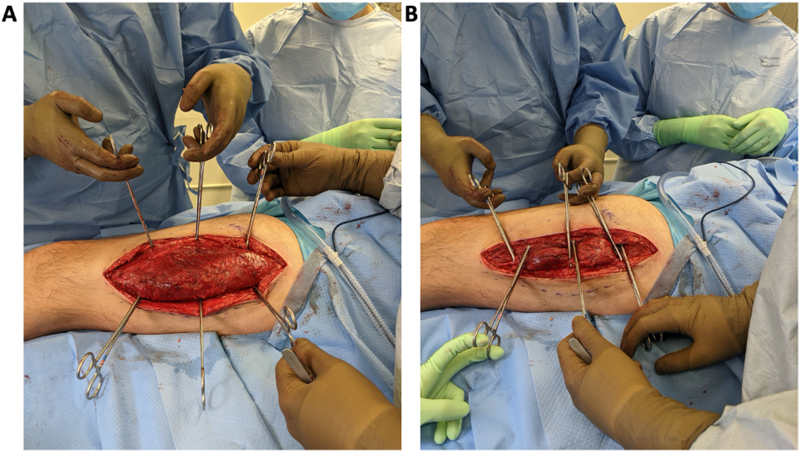
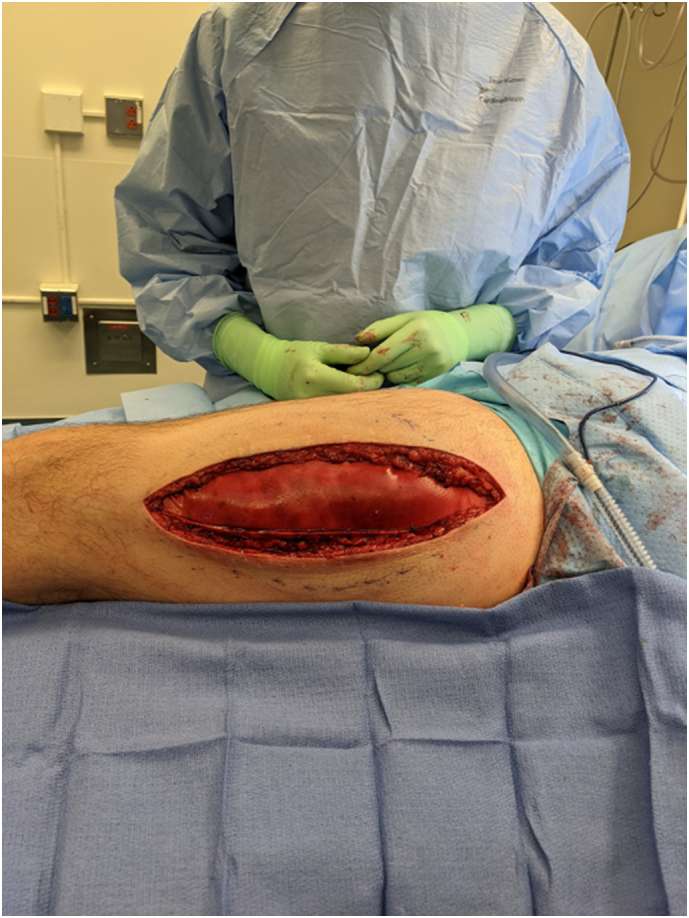
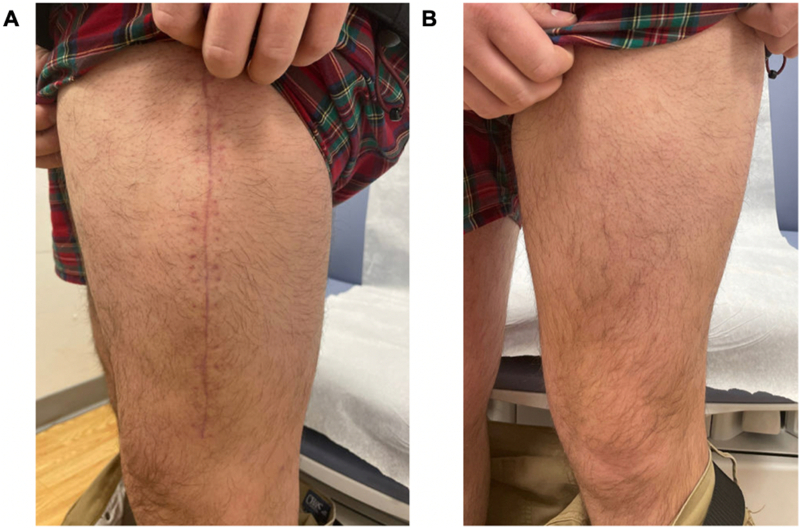
Acute compartment syndrome (ACS) of the lower extremity is a surgical emergency, often secondary to severe crush injury, and requires immediate fascial release. In treatment of ACS, the underlying fascia is left unrepaired and the subsequent fascial defect does not generally cause negative consequences. Here, we present a 24-year-old man who developed symptomatic muscle herniation 3-years after undergoing fascial release secondary to ACS of the anterior thigh. Given the size of the defect, reconstruction was performed using Acellular Dermal Matrix (ADM). The patient did well, with no complications 6 months postoperatively. Symptomatic muscle herniation following fasciotomy can be treated with hernia reduction and fascial repair. When primary closure is not possible, Acelluar Dermal Matrix (ADM) is an option for successful fascial reconstruction.
Keywords: Acellular dermal matrix; Acute compartment syndrome; Fasciotomy; Lower extremity trauma; Thigh hernia.
© 2021 The Authors.
Conflict of interest statement
None of the authors have conflicts of interest to disclose.
Figures
References
-
- Maj E., Martell B.Kakar, Muschett D., Armstrong M. Facs, lower extremity fascial reconstruction using an acellular dermal matrix graft. Wounds. 2009;21 - PubMed
Publication types
LinkOut - more resources
Full Text Sources
