


Unraveling the concepts of distress, burnout, and depression in type 1 diabetes: A scoping review
- PMID: 34485879
- PMCID: PMC8408521
- DOI: 10.1016/j.eclinm.2021.101118
Unraveling the concepts of distress, burnout, and depression in type 1 diabetes: A scoping review
Abstract
Background: Psychological complications are frequent in type 1 diabetes (T1D) but they might be difficult to distinguish one from the other in clinical practice. Our objective was to study the distinguishing characteristics, overlaps and their use in the literature between three concepts of T1D: depression, diabetes distress (DD) and diabetes burnout (DB).
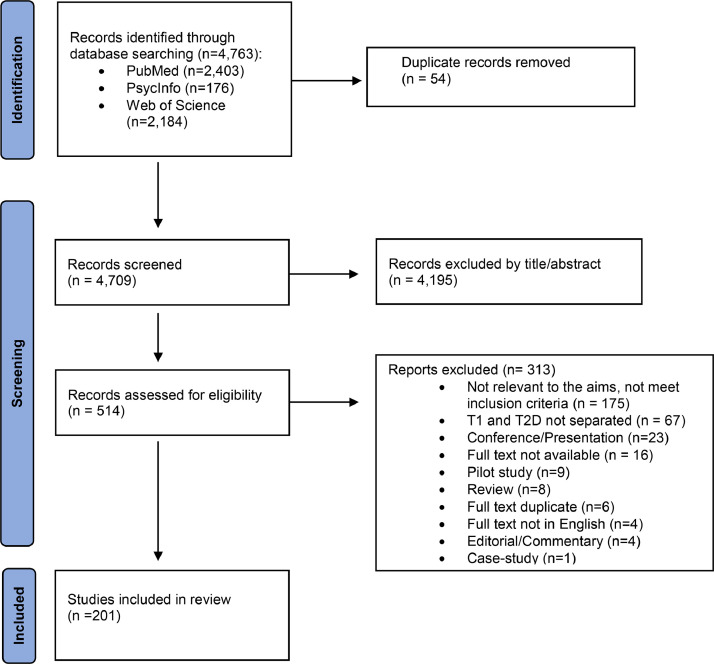
Methods: A scoping review (PRISMA guidelines) performed in three databases (PubMed/MEDLINE, PsycInfo, Web of Science) with the keywords: T1D, depression, diabetes and burnout, from January 1990 to June 2021. We selected original studies with participants with T1D, which reported depression, DD, or DB. We extracted information about the concepts, their sub-concepts and screening tools.
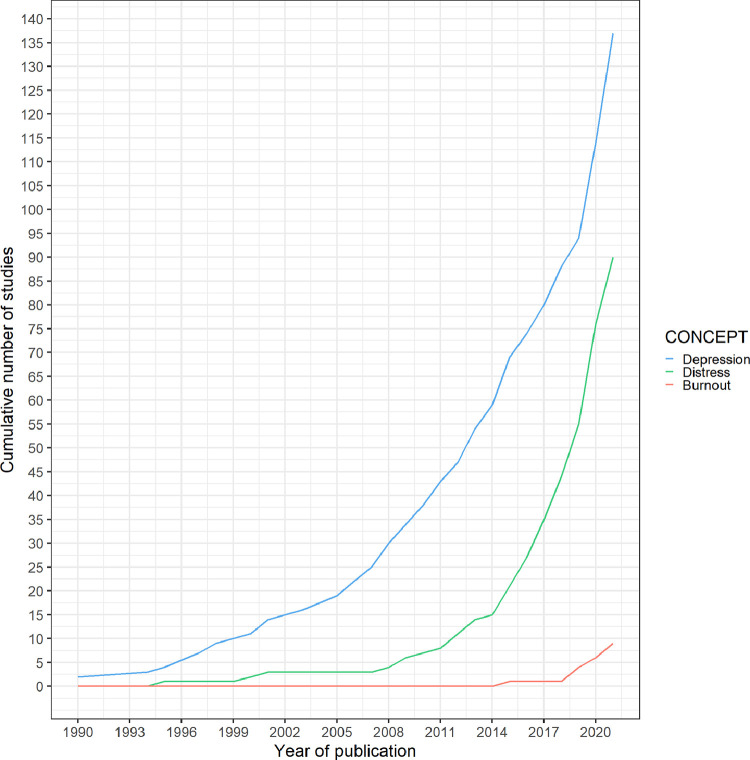
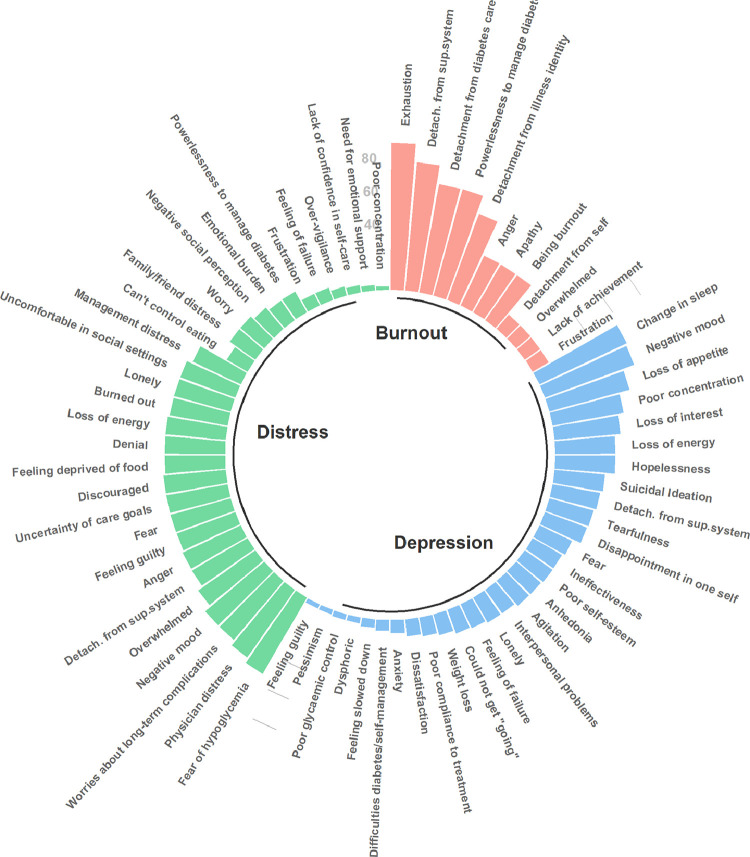
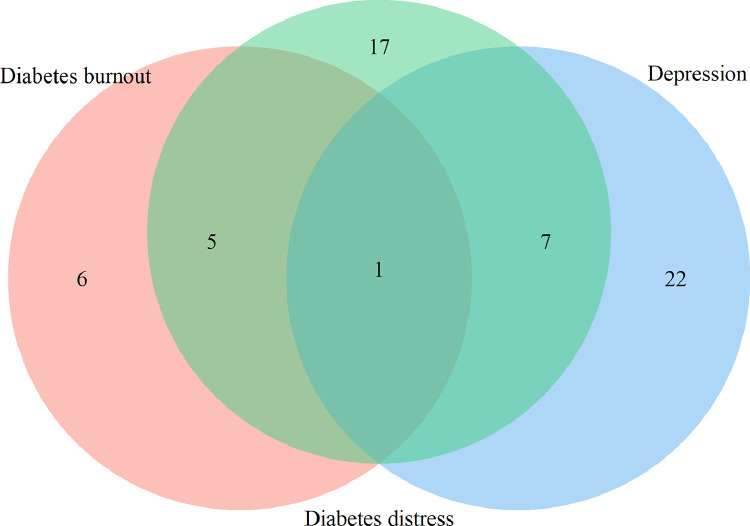
Findings: Of the 4763 studies identified, 201 studies were included in the study. Seventy-three percent, 57% and 45% of sub-concepts do not overlap in depression, DD, and DB, respectively. We observed overlap between depression (27%)/DD (27%) and between DD (20%)/DB (50%).
Interpretation: A number of sub-concepts distinguish depression and DD. Overlaps between concepts suggest that a more precise definition is still lacking. DB is still a relatively new concept and more research is needed to better understand how it can present itself differently, in order to personalize care in comparison to those having DD.
Keywords: Depression; Diabetes burnout; Diabetes distress; Diagnostic questionnaires; Exhaustion; Fear of hypoglicaemia; Insulin pump; Psychological burden; Selfmanagement; Type 1 diabetes.
© 2021 The Author(s).
Conflict of interest statement
The authors declare no conflict of interest.
Figures
References
-
- Johansen C.B., Rothmann M.J., Andersen A., Beck-Nielsen H., Pouwer F. The role of parental support for emerging adults with type 1 diabetes: a scoping review. Pediatr Diabetes. 2020;21(6):995–1030. - PubMed
-
- Delamater A.M., de Wit M., McDarby V. ISPAD clinical practice consensus guidelines 2018: psychological care of children and adolescents with type 1 diabetes. Pediatr Diabetes. 2018;19:237–249. - PubMed
-
- Rubin R.R., Peyrot M. Psychological issues and treatments for people with diabetes. J Clin Psychol. 2001;57(4):457–478. - PubMed
-
- Bryden K.S., Dunger D.B., Mayou R.A., Peveler R.C., Neil H.A.W. Poor prognosis of young adults with type 1 diabetes: a longitudinal study. Diabetes Care. 2003;26(4):1052–1057. - PubMed
Publication types
LinkOut - more resources
Full Text Sources
Medical
Miscellaneous
