


The Antifungal Activity of Loquat (Eriobotrya japonica Lindl.) Leaves Extract Against Penicillium digitatum
- PMID: 34490318
- PMCID: PMC8417588
- DOI: 10.3389/fnut.2021.663584
The Antifungal Activity of Loquat (Eriobotrya japonica Lindl.) Leaves Extract Against Penicillium digitatum
Abstract
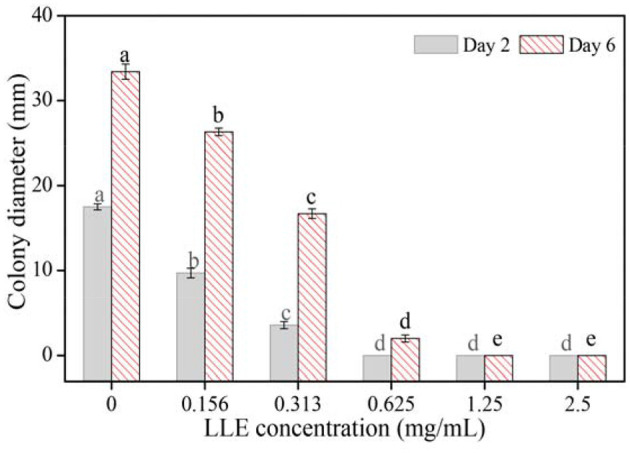
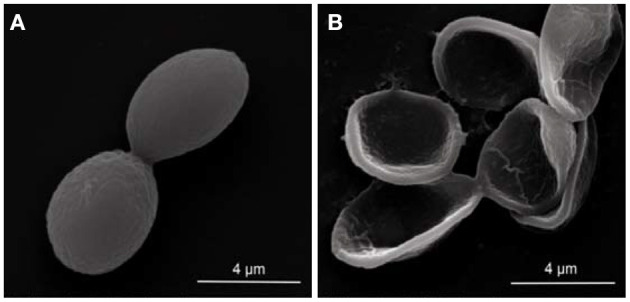
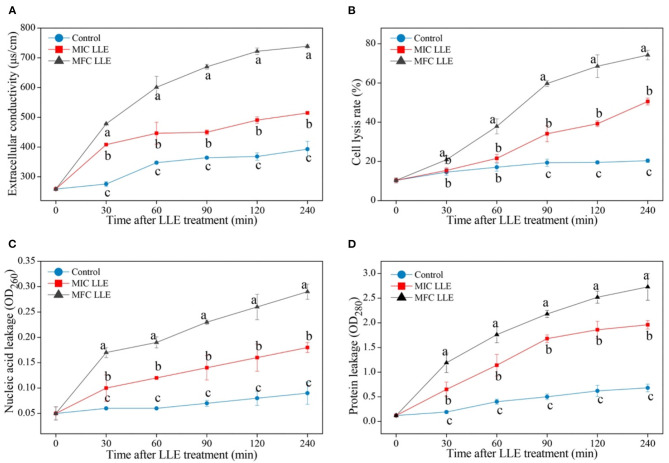
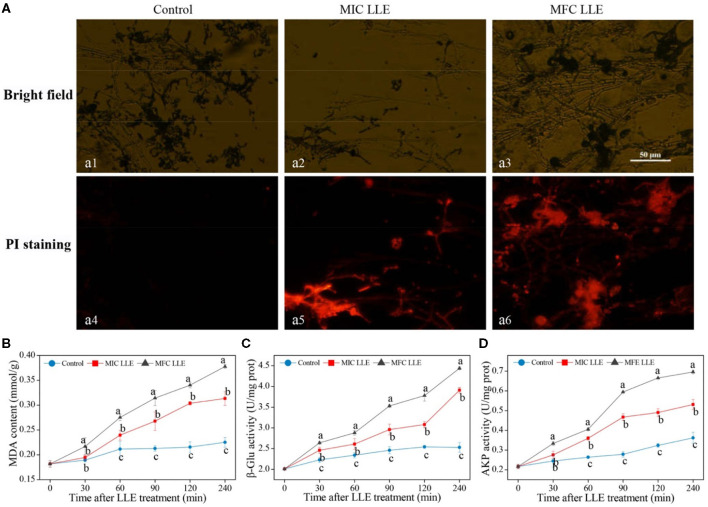
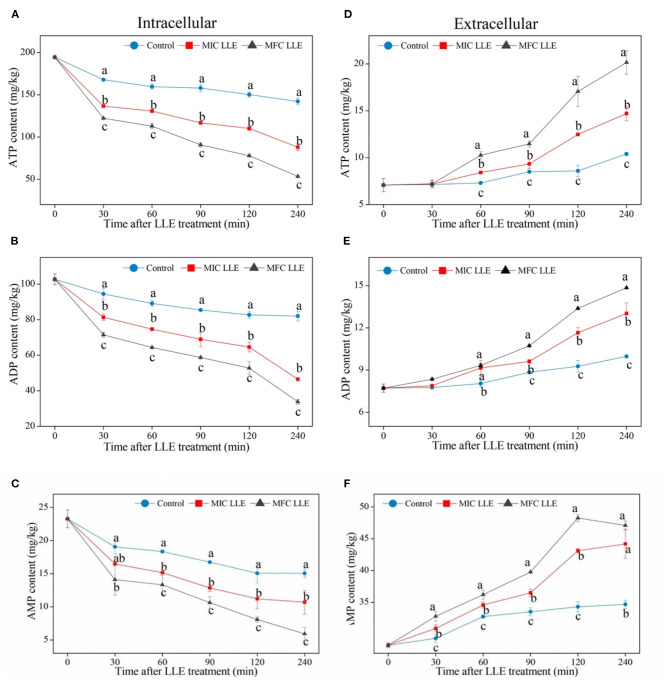
This study was performed to determine the antifungal activity of loquat (Eriobotrya japonica Lindl) leaf extract (LLE) against the citrus postharvest pathogen Penicillium digitatum (P. digitatum). The LLE exhibited an antifungal activity against P. digitatum, with a minimum inhibitory concentration (MIC) of 0.625 mg/ml and a minimum fungicidal concentration (MFC) of 1.25 mg/ml. Significant inhibitory effects of LLE on mycelial growth and spore germination of P. digitatum were seen in a dose-dependent manner. Simultaneously, to investigate possible antifungal mechanisms by LLE, we analyzed their influence on morphological changes, cell membrane permeability, cell wall and cell membrane integrity, and adenosine phosphates (ATP, ADP, and AMP) levels. Alterations, such as sunken surface and malformation, occurred in the LLE-treated P. digitatum spores. Furthermore, intracellular inclusion content decreased after LLE treatment, indicating an increase in cell membrane permeability. Besides, the LLE treatment induced a significant decline in the level of adenosine monophosphate (AMP), adenosine diphosphate (ADP), and adenosine triphosphate (ATP) with a noticeable addition of extracellular ATP, ADP, and AMP during the entire treatment period. Overall, the results manifested that the antifungal activity of LLE against P. digitatum can be attributed to the derangement of cell membrane permeability and disordered energy metabolism. This is the first report on the mechanism of antifungal activity of LLE and could be useful in the development of targeted fungicides from natural origin.
Keywords: Penicillium digitatum; antifungal activity; energy metabolism; loquat leaves; membrane permeability.
Copyright © 2021 Shen, Chen, Cai, Yang, Chen, Kahramanoǧlu, Okatan, Rengasamy and Wan.
Conflict of interest statement
The authors declare that the research was conducted in the absence of any commercial or financial relationships that could be construed as a potential conflict of interest.
Figures
References
-
- Erasmus A, Lennox CL, Korsten L, Lesar K, Fourie PH. Imazalil resistance in Penicillium digitatum and P. italicum causing citrus postharvest green and blue mould: impact and options. Postharvest Biol Technol. (2015) 107:66–76. 10.1016/j.postharvbio.2015.05.008 - DOI
-
- Kellerman M, Erasmus A, Cronjé PJR, Fourie PH. Thiabendazole residue loading in dip, drench and wax coating applications to control green mould and chilling injury on citrus fruit. Postharvest Biol Technol. (2014) 96:78–87. 10.1016/j.postharvbio.2014.05.008 - DOI
LinkOut - more resources
Full Text Sources
