Metabolic Plasticity Aids Amphotropism of Coxiella burnetii
- PMID: 34491791
- PMCID: PMC8594591
- DOI: 10.1128/IAI.00135-21
Metabolic Plasticity Aids Amphotropism of Coxiella burnetii
Abstract
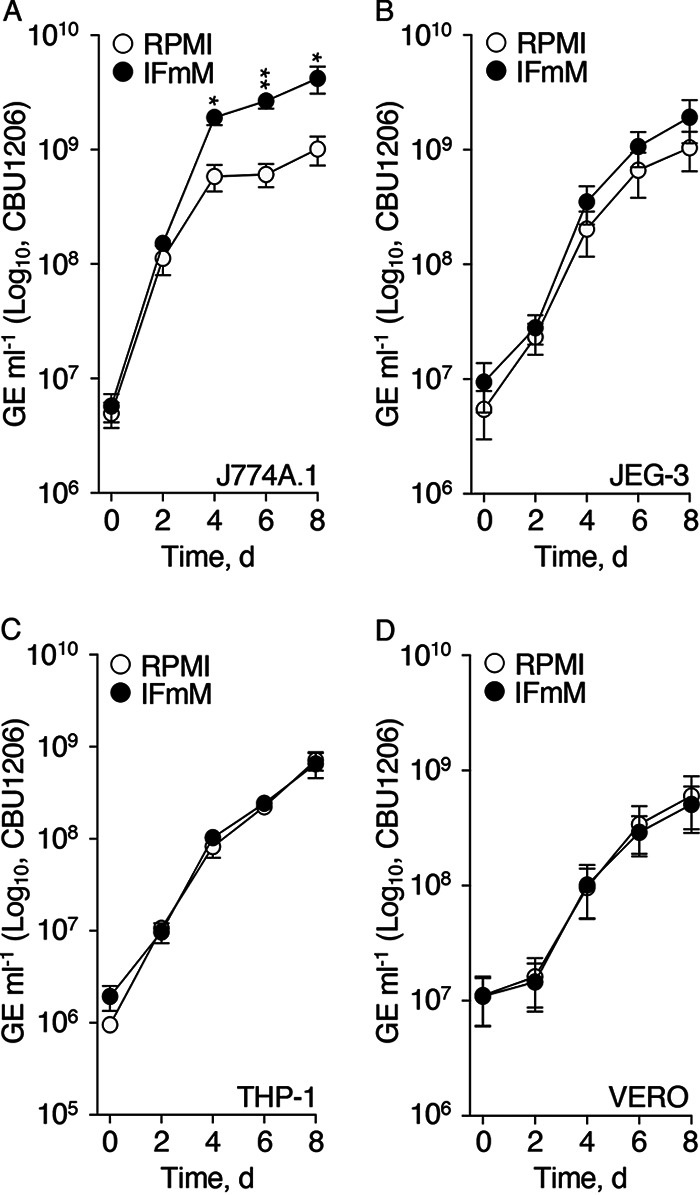
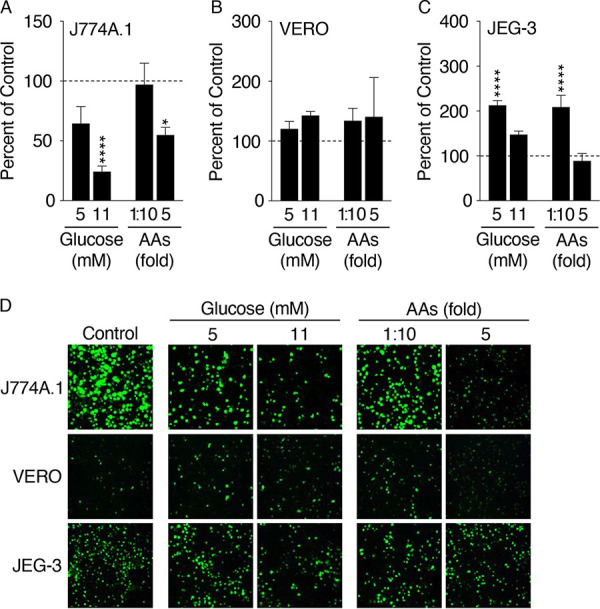
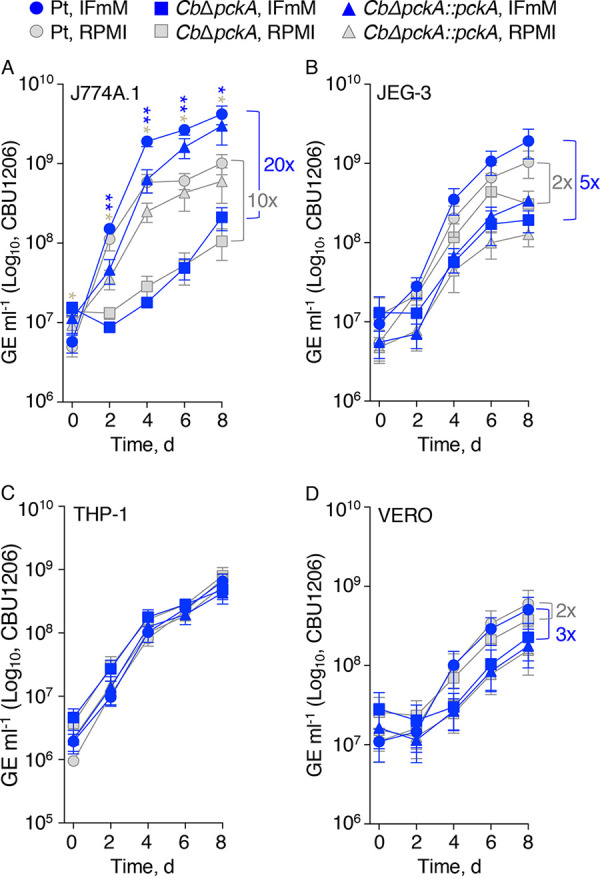
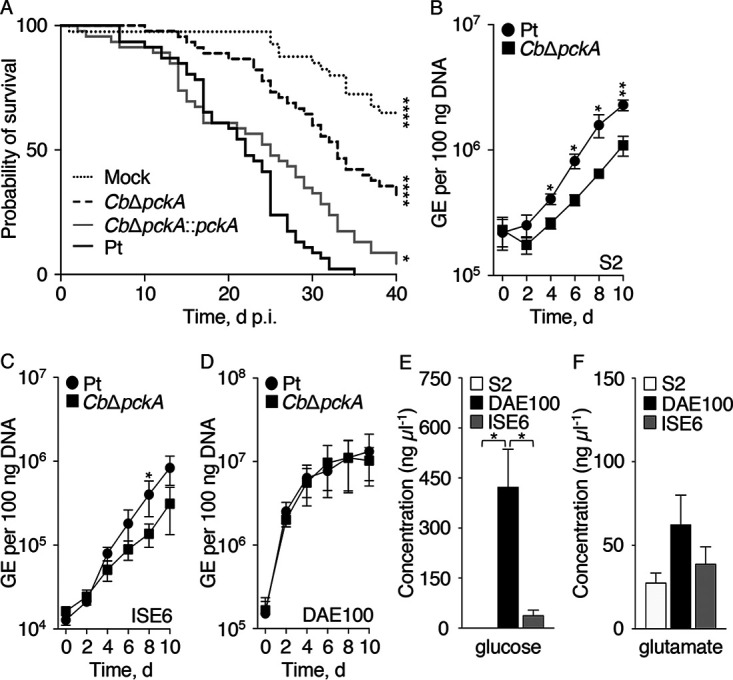
Coxiella burnetii, the causative agent of query (Q) fever in humans, is an obligate intracellular bacterium. C. burnetii can naturally infect a broad range of host organisms (e.g., mammals and arthropods) and cell types. This amphotropic nature of C. burnetii, in combination with its ability to utilize both glycolytic and gluconeogenic carbon sources, suggests that the pathogen relies on metabolic plasticity to replicate in nutritionally diverse intracellular environments. To test the significance of metabolic plasticity in C. burnetii host cell colonization, C. burnetii intracellular replication in seven distinct cell lines was compared between a metabolically competent parental strain and a mutant, CbΔpckA, unable to undergo gluconeogenesis. Both the parental strain and CbΔpckA mutant exhibited host cell-dependent infection phenotypes, which were influenced by alterations to host glycolytic or gluconeogenic substrate availability. Because the nutritional environment directly impacts host cell physiology, our analysis was extended to investigate the response of C. burnetii replication in mammalian host cells cultivated in a novel physiological medium based on the nutrient composition of mammalian interstitial fluid, interstitial fluid-modeled medium (IFmM). An infection model based on IFmM resulted in exacerbation of a replication defect exhibited by the CbΔpckA mutant in specific cell lines. The CbΔpckA mutant was also attenuated during infection of an animal host. Overall, the study underscores that gluconeogenic capacity aids C. burnetii amphotropism and that the amphotropic nature of C. burnetii should be considered when resolving virulence mechanisms in this pathogen.
Keywords: Coxiella burnetii; amphotropism; gluconeogenesis; glycolysis; interstitial fluid; intracellular parasites; metabolic plasticity; obligate; physiological medium; virulence.
Figures
References
-
- Anderson A, Bijlmer H, Fournier P-E, Graves S, Hartzell J, Kersh GJ, Limonard G, Marrie TJ, Massung RF, McQuiston JH, Nicholson WL, Paddock CD, Sexton DJ. 2013. Diagnosis and management of Q fever–United States, 2013: recommendations from CDC and the Q Fever Working Group. MMWR Recomm Rep 62:1–30. - PubMed
-
- Melenotte C, Protopopescu C, Million M, Edouard S, Carrieri MP, Eldin C, Angelakis E, Djossou F, Bardin N, Fournier P-E, Mège J-L, Raoult D. 2018. Clinical features and complications of Coxiella burnetii infections from the French National Reference Center for Q Fever. JAMA Netw Open 1:e181580. 10.1001/jamanetworkopen.2018.1580. - DOI - PMC - PubMed
-
- Delsing CE, Kullberg BJ, Bleeker-Rovers CP. 2010. Q fever in the Netherlands from 2007 to 2010. Neth J Med 68:382–387. - PubMed
Publication types
MeSH terms
Substances
Grants and funding
LinkOut - more resources
Full Text Sources