


Management of Flap Failure After Head and Neck Reconstruction: A Systematic Review and Meta-analysis
- PMID: 34491852
- PMCID: PMC8972962
- DOI: 10.1177/01945998211044683
Management of Flap Failure After Head and Neck Reconstruction: A Systematic Review and Meta-analysis
Abstract
Objective: To systematically review management of flap loss in head and neck construction with free tissue transfer as compared with locoregional flap or conservative management.
Data sources: Medline, Embase, Scopus, Cochrane Central Register of Controlled Trials, Cochrane Database of Systematic Reviews, and ClinicalTrials.gov were searched up to October 2019.
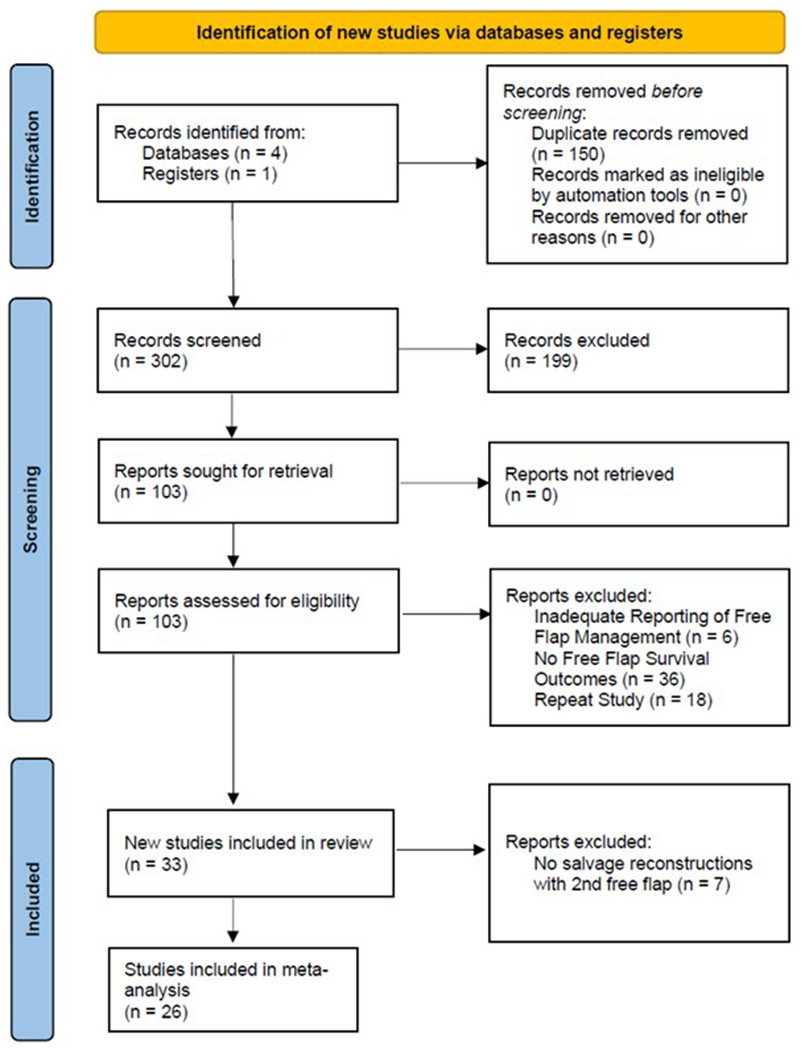
Review methods: Candidate articles were independently reviewed by 2 authors. Articles were considered eligible if they included adequate reporting of flap management after flap loss and outcomes for survival of reconstruction, length of hospitalization, and perioperative complications.
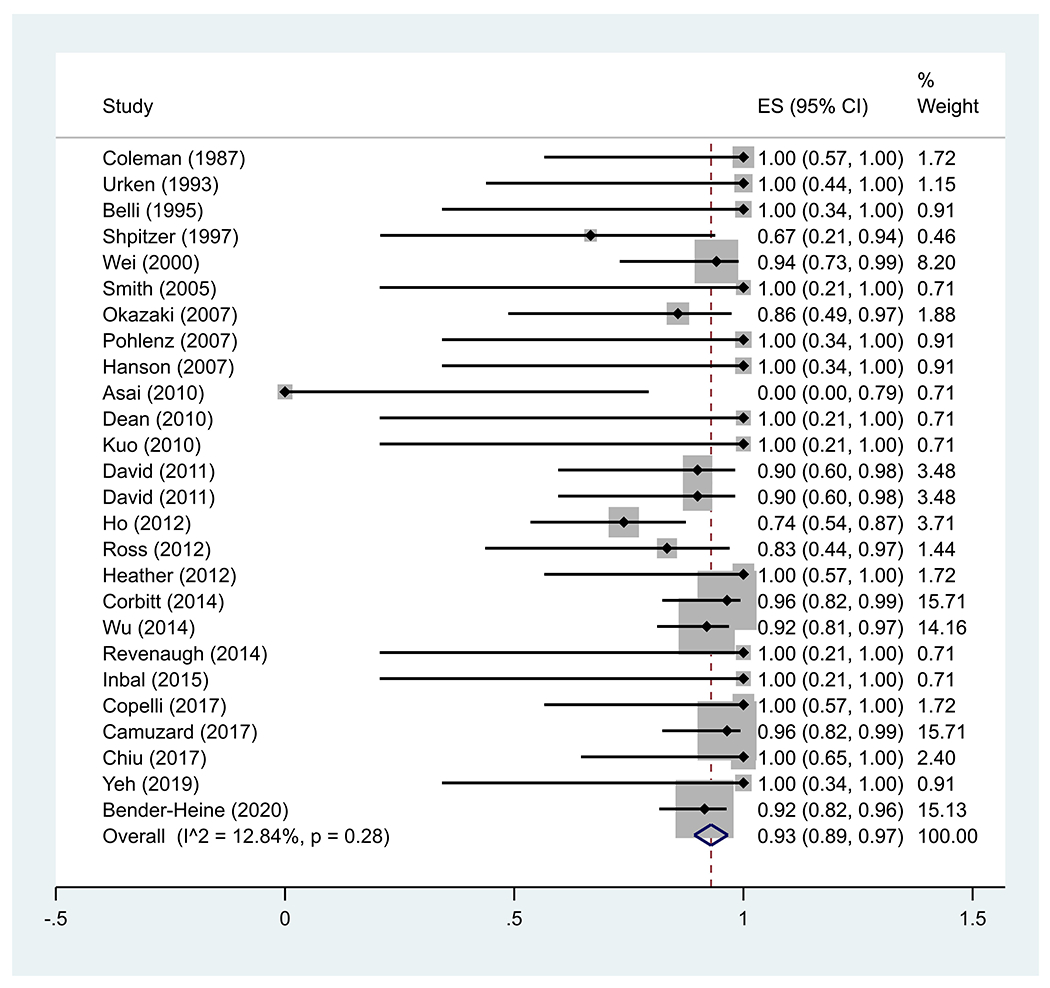
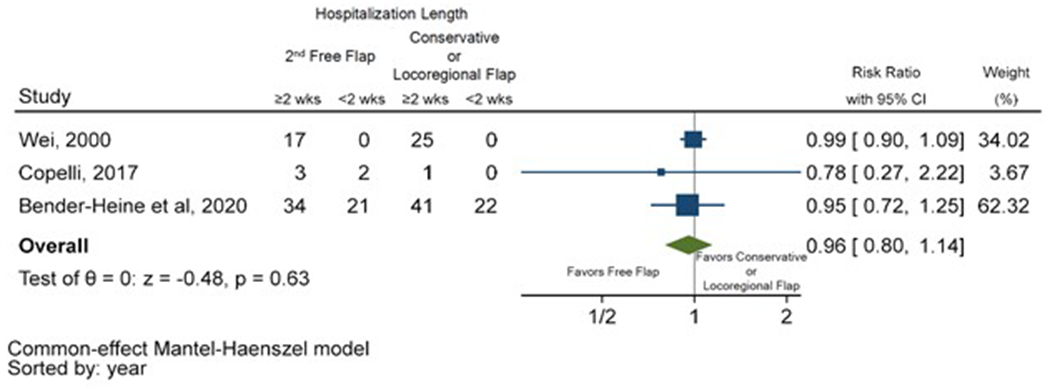
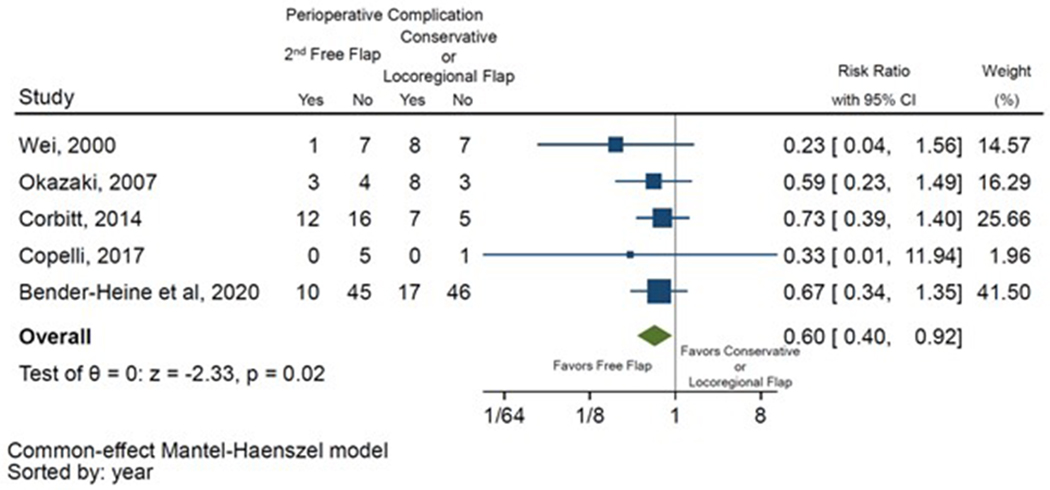
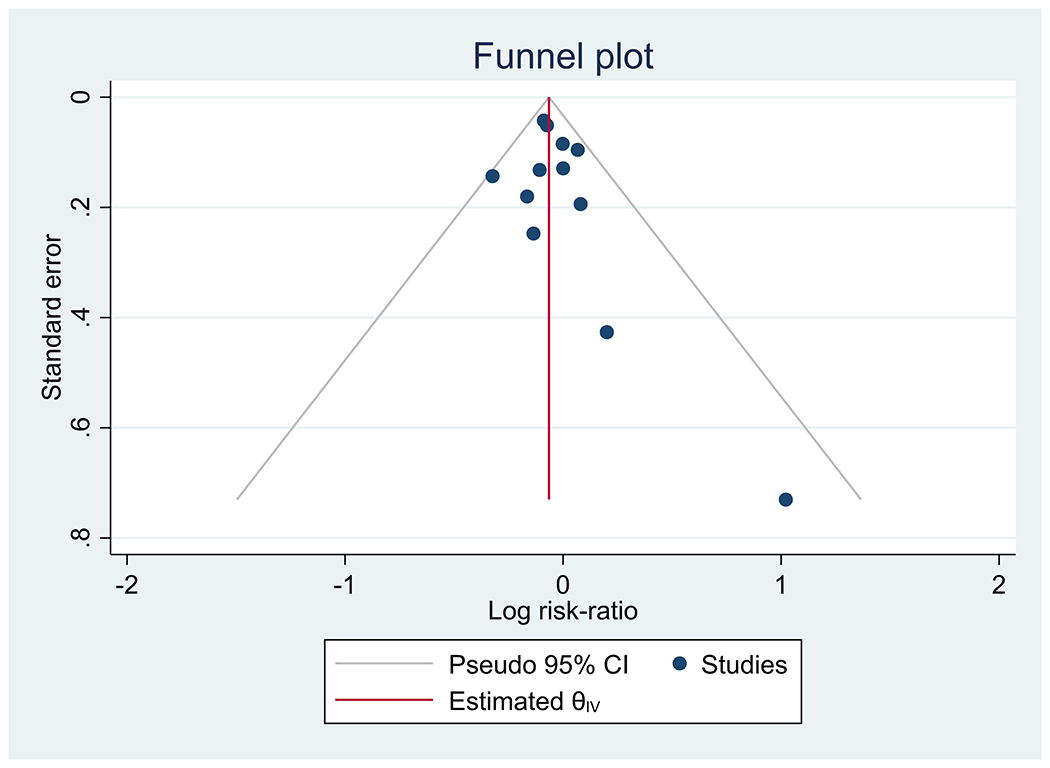
Results: A total of 429 patients had acute flap failure in the perioperative period. The overall success with a secondary free flap was 93% (95% CI, 0.89-0.97; n = 26 studies, I2 = 12.8%). There was no difference in hospitalization length after secondary reconstruction between free tissue transfer and locoregional flaps or conservative management (relative risk of hospitalization ≥2 weeks, 96%; 95% CI, 0.80-1.14; n = 3 studies, I2 = 0). The pooled relative risk of perioperative complications following free tissue transfer was 0.60 when compared with locoregional flap or conservative management (95% CI, 0.40-0.92; n = 5 studies, I2 = 0).
Conclusion: Salvage reconstruction with free tissue transfer has a high success rate. Second free flaps following flap failure had a similar length of hospitalization and lower overall complication rate than locoregional reconstruction or conservative management. A second free tissue transfer, when feasible, is likely a more reliable and effective procedure for salvage reconstruction.
Keywords: free flap failure; free flap salvage; free tissue transfer; free tissue transfer failure; head and neck reconstruction; head and neck reconstructive surgery; management of failed free flap; management of failed free tissue transfer; microvascular free flap.
Conflict of interest statement
Competing Interests: None
Figures
References
-
- Blackwell KE. Unsurpassed Reliability of Free Flaps for Head and Neck Reconstruction. Archives of Otolaryngology–Head & Neck Surgery. 1999;125(3):295–299. - PubMed
-
- Urken ML, Weinberg H, Buchbinder D, et al. Microvascular Free Flaps in Head and Neck Reconstruction: Report of 200 Cases and Review of Complications. Archives of Otolaryngology–Head & Neck Surgery. 1994;120(6):633–640. - PubMed
-
- Coleman JJ, Searles JM, Hester TR, et al. Ten years experience with the free jejunal autograft. The American Journal of Surgery. 1987;154(4):394–398. - PubMed
-
- Pohlenz P, Blessmann M, Heiland M, Blake F, Schmelzle R, Li L. Postoperative complications in 202 cases of microvascular head and neck reconstruction. Journal of Cranio-Maxillofacial Surgery. 2007;35(6):311–315. - PubMed
Publication types
MeSH terms
Grants and funding
LinkOut - more resources
Full Text Sources
Medical
