Internet addiction in Gulf countries: A systematic review and meta-analysis
- PMID: 34491902
- PMCID: PMC8997198
- DOI: 10.1556/2006.2021.00057
Internet addiction in Gulf countries: A systematic review and meta-analysis
Abstract
Background and aims: The prevalence of internet addiction (IA) varies widely in the Gulf Cooperation Council (GCC) countries (4%-82.6%). We aimed to assess the quality of IA studies from the GCC and pool their data to get an accurate estimate of the problem of IA in the region.
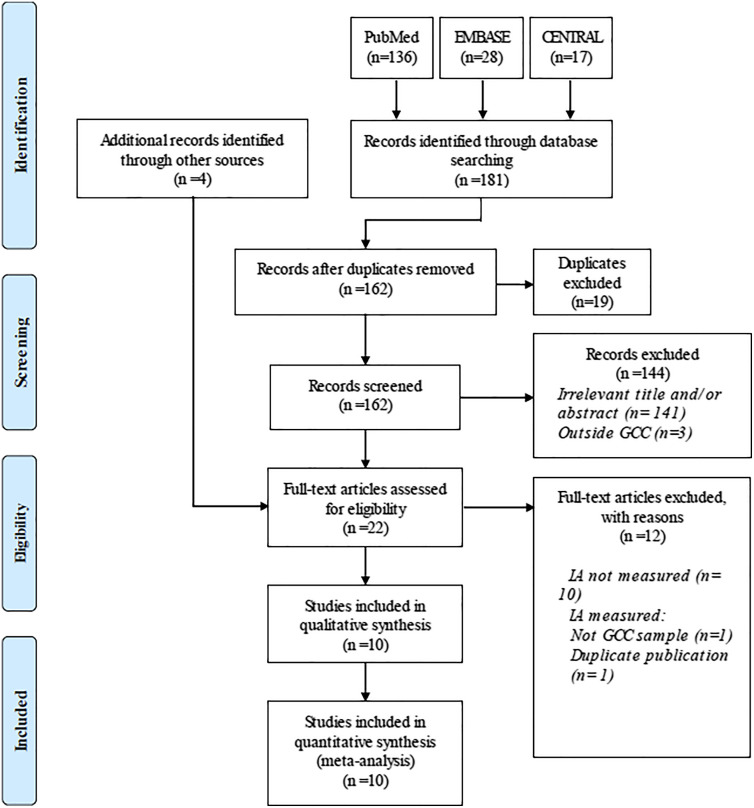
Methods: A systematic review of available studies was conducted following the Preferred Reporting Items for Systematic Reviews and Meta-analyses (PRISMA) guidelines. PubMed, Embase, and Cochrane Controlled Register of Trials were systematically searched; studies conducted in GCC countries (i.e., Bahrain, Kuwait, Oman, Qatar, Saudi Arabia, and the United Arab Emirates) with a validated instrument for internet addiction assessment were eligible. Ten studies were eligible for the systematic review, all of which were included in the meta-analysis. The Newcastle Ottawa Scale was used for quality assessment.
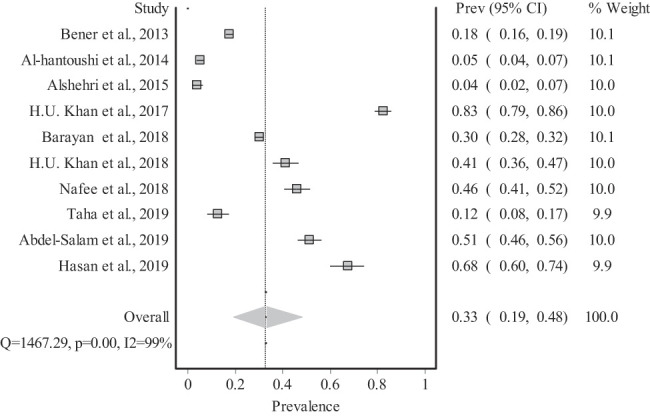
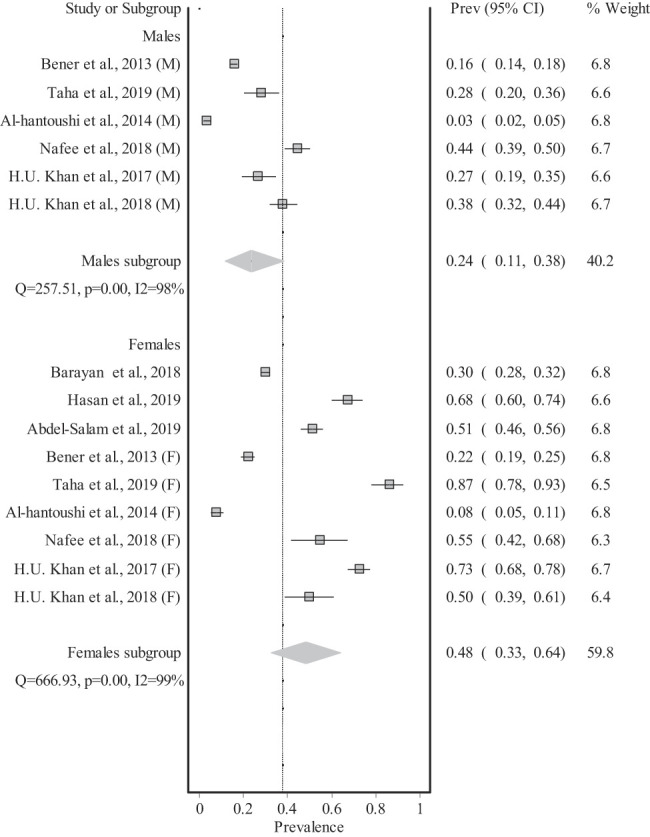
Results: Nine out of ten of the included studies had either adolescent and/or young adult participants (age < 25). Two studies were of 'good' quality, six were of 'satisfactory' quality, and two were of 'unsatisfactory' quality. The pooled internet addiction prevalence was 33%; it was significantly higher among females than males (male = 24%, female = 48%, P = 0.05) and has significantly increased over time (P < 0.05).
Discussion and conclusions: One in every three individuals in GCC countries was deemed to be addicted to the internet, according to Young's Internet Addiction Test. A root cause analysis focusing on family structure, environment, and religious practices is needed to identify modifiable risk factors.
Keywords: Gulf Cooperation Council; internet addiction; prevalence.
Conflict of interest statement
The authors declare no conflict of interest.
Figures
References
-
- Abdel-Salam, D. M. , Alrowaili, H. I. , Albedaiwi, H. K. , Alessa, A. I. , & Alfayyadh, H. A. (2019). Prevalence of internet addiction and its associated factors among female students at Jouf University, Saudi Arabia. Journal of the Egyptian Public Health Association , 94(1), 12. 10.1186/s42506-019-0009-6. - DOI - PMC - PubMed
-
- Al-Hazzaa, H. M. , Al-Sobayel, H. I. , Abahussain, N. A. , Qahwaji, D. M. , Alahmadi, M. A. , & Musaiger, A. O. (2014). Association of dietary habits with levels of physical activity and screen time among adolescents living in Saudi Arabia. Journal of Human Nutrition and Dietetics , 27(Suppl. 2), 204–213. 10.1111/jhn.12147. - DOI - PubMed
-
- Alhantoushi, M. , & Alabdullateef, S. (2014). Internet addiction among secondary school students in Riyadh city, its prevalence, correlates and relation to depression: A questionnaire survey. International Journal of Medical Science and Public Health , 3(1), 10–15. 10.5455/ijmsph.2013.130920131. - DOI
-
- Alshehri, A. , Azahrani, H. , & Alotaibi, M. (2015). Internet addiction among Taif University students and its association with psychiatric co-morbidities. Journal of Medicine and Medical Sciences , 3(12), 536–544. Retrieved from http://www.meritresearchjournals.org/mms/index.htm.
Publication types
MeSH terms
LinkOut - more resources
Full Text Sources