


Synthetic nicotine has arrived
- PMID: 34493630
- PMCID: PMC8898991
- DOI: 10.1136/tobaccocontrol-2021-056626
Synthetic nicotine has arrived
Abstract
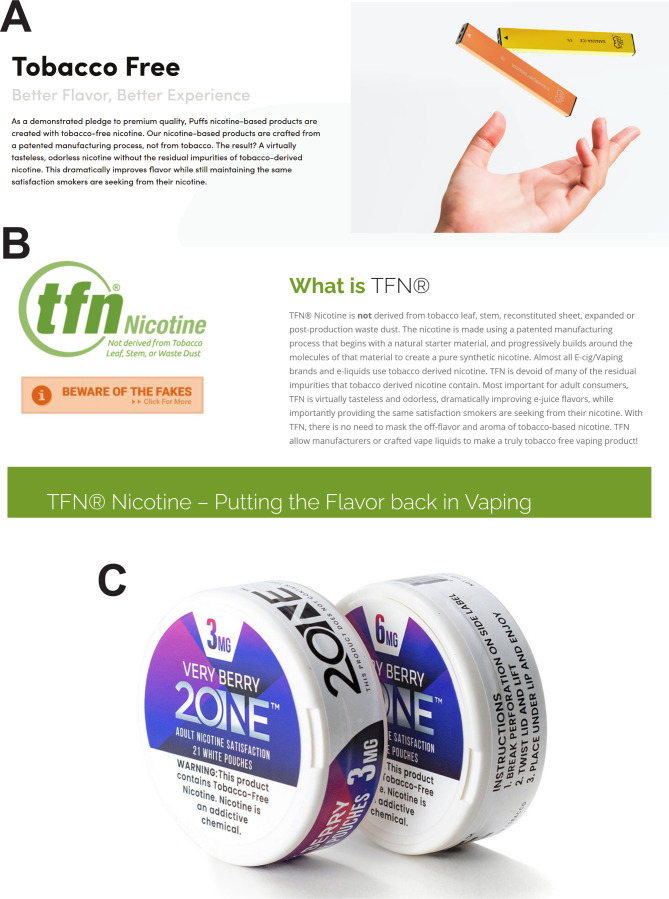
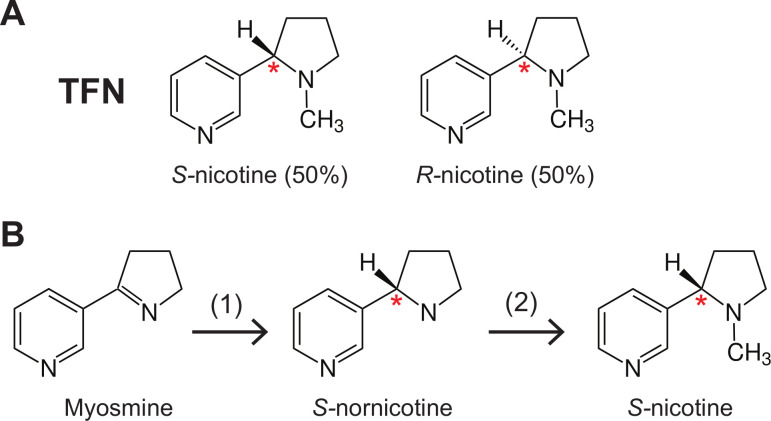
The introduction of a new product line of the popular disposable electronic cigarette brand Puffbar, advertised as containing synthetic nicotine, has drawn attention to the increasing use of synthetic nicotine in marketed products and its uncertain regulatory status. A search of the Truth Tobacco Industry Documents revealed that the industry considered using synthetic nicotine already in the 1960s, efforts that were abandoned due to high costs and insufficient purity. Recent patents revealed renewed efforts to develop more efficient strategies for the synthesis of nicotine. Nicotine exists as two stereoisomers, S-nicotine and R-nicotine. While S-nicotine is the prevalent (>99%) form of nicotine in tobacco, a market-leading form of synthetic nicotine contains both stereoisomers at equal amounts, raising concerns about inaccurate labelling and the poorly understood health effects of R-nicotine. Other manufacturers, including a leading vendor of pharmaceutical grade nicotine, developed stereospecific strategies to synthesise pure S-nicotine, now added to electronic cigarette products marketed in the USA and UK. While S-nicotine and R-nicotine can be differentiated by enantioselective High Performance Liquid Chromatography (HPLC), differentiation of synthetic (fossil-derived) from tobacco-derived S-nicotine will require development of methods to measure carbon isotope (14C or 13C) content. Vendors claim that the FDA has no authority to regulate synthetic nicotine as a tobacco product, allowing them to circumvent the premarket tobacco product application process. However, legal analysis suggests that FDA may have the authority to regulate synthetic nicotine as a drug. Alternatively, Congress needs to include nicotine from any source within the legal definition of tobacco products.
Keywords: electronic nicotine delivery devices; nicotine; non-cigarette tobacco products; tobacco industry; toxicology.
© Author(s) (or their employer(s)) 2023. Re-use permitted under CC BY-NC. No commercial re-use. See rights and permissions. Published by BMJ.
Conflict of interest statement
Competing interests: Unrelated to the current research, SEJ reports receiving personal fees and non-financial support from Hydra Biosciences, Sanofi and the Research Institute for Fragrance Materials and non-financial support from GlaxoSmithKline Pharmaceuticals.
Figures
References
-
- USFDA . CTP Glossary - Tobacco Product: USFDA, 2017. Available: https://www.fda.gov/tobacco-products/compliance-enforcement-training/ctp...
-
- Velo - Frequently Asked Questions, 2021. Available: https://www.velo.com/footer-links/faq.html
Publication types
MeSH terms
Substances
Grants and funding
LinkOut - more resources
Full Text Sources
Other Literature Sources
Medical
