


Mechanisms of vascular smooth muscle cell investment and phenotypic diversification in vascular diseases
- PMID: 34495326
- PMCID: PMC8589433
- DOI: 10.1042/BST20210138
Mechanisms of vascular smooth muscle cell investment and phenotypic diversification in vascular diseases
Abstract
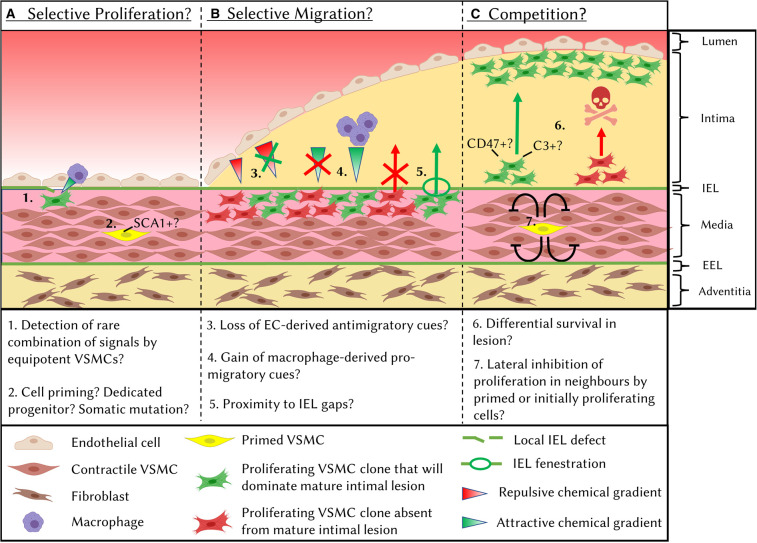
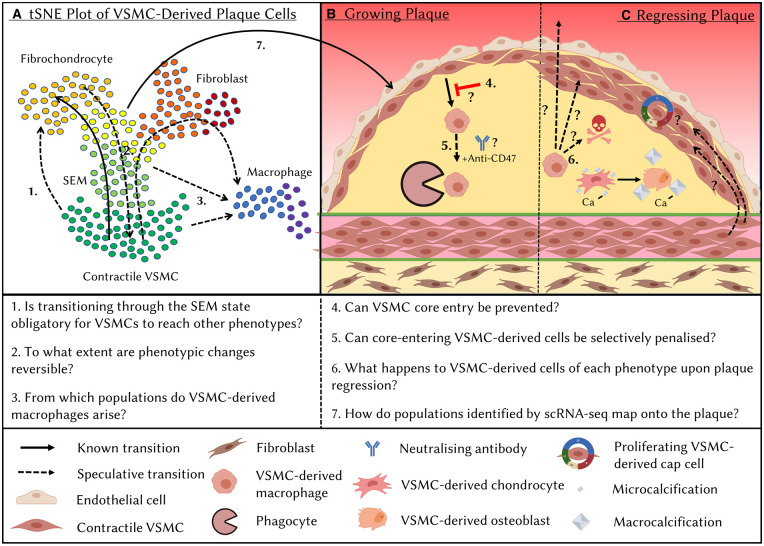
In contrast with the heart, the adult mammalian vasculature retains significant remodelling capacity, dysregulation of which is implicated in disease development. In particular, vascular smooth muscle cells (VSMCs) play major roles in the pathological vascular remodelling characteristic of atherosclerosis, restenosis, aneurysm and pulmonary arterial hypertension. Clonal lineage tracing revealed that the VSMC-contribution to disease results from the hyperproliferation of few pre-existing medial cells and suggested that VSMC-derived cells from the same clone can adopt diverse phenotypes. Studies harnessing the powerful combination of lineage tracing and single-cell transcriptomics have delineated the substantial diversity of VSMC-derived cells in vascular lesions, which are proposed to have both beneficial and detrimental effects on disease severity. Computational analyses further suggest that the pathway from contractile VSMCs in healthy arteries to phenotypically distinct lesional cells consists of multiple, potentially regulatable, steps. A better understanding of how individual steps are controlled could reveal effective therapeutic strategies to minimise VSMC functions that drive pathology whilst maintaining or enhancing their beneficial roles. Here we review current knowledge of VSMC plasticity and highlight important questions that should be addressed to understand how specific stages of VSMC investment and phenotypic diversification are controlled. Implications for developing therapeutic strategies in pathological vascular remodelling are discussed and we explore how cutting-edge approaches could be used to elucidate the molecular mechanisms underlying VSMC regulation.
Keywords: cardiovascular disease; cell plasticity; lineage tracing; single cell RNA sequencing; vascular smooth muscle.
© 2021 The Author(s).
Conflict of interest statement
The authors declare that there are no competing interests associated with the manuscript.
Figures
References
Publication types
MeSH terms
Grants and funding
- RG/20/2/34763/BHF_/British Heart Foundation/United Kingdom
- RG/08/009/25841/BHF_/British Heart Foundation/United Kingdom
- CH/2000003/12800/BHF_/British Heart Foundation/United Kingdom
- PG/16/24/32090/BHF_/British Heart Foundation/United Kingdom
- PG/16/11/32021/BHF_/British Heart Foundation/United Kingdom
LinkOut - more resources
Full Text Sources
Medical
