


Methylphenidate for attention-deficit/hyperactivity disorder in patients with Smith-Magenis syndrome: protocol for a series of N-of-1 trials
- PMID: 34496899
- PMCID: PMC8424817
- DOI: 10.1186/s13023-021-02003-z
Methylphenidate for attention-deficit/hyperactivity disorder in patients with Smith-Magenis syndrome: protocol for a series of N-of-1 trials
Abstract
Background: Smith-Magenis syndrome (SMS) is a rare genetic neurodevelopmental disorder characterized by intellectual disability and severe behavioural and sleep disturbances. Often, patients with SMS are diagnosed with attention-deficit/hyperactivity disorder (ADHD). However, the effectiveness of methylphenidate (MPH), the first-line pharmacological treatment for ADHD, in patients with SMS is unclear. Our objective is to examine the effectiveness of MPH for ADHD symptoms in individuals with SMS, proposing an alternative trial design as traditional randomized controlled trials are complex in these rare and heterogeneous patient populations.
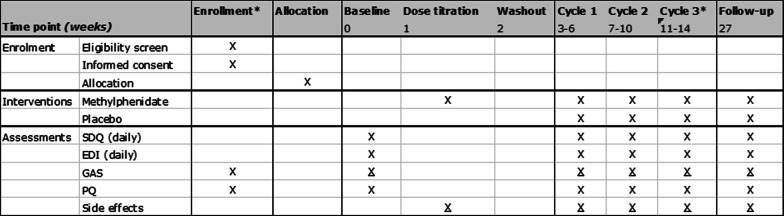
Methods and analysis: We will initiate an N-of-1 series of double-blind randomized and placebo-controlled multiple crossover trials in six patients aged ≥ 6 years with a genetically confirmed SMS diagnosis and a multidisciplinary established ADHD diagnosis, according to a power analysis based on a summary measures analysis of the treatment effect. Each N-of-1 trial consists of a baseline period, dose titration phase, three cycles each including randomized intervention, placebo and washout periods, and follow-up. The intervention includes twice daily MPH (doses based on age and body weight). The primary outcome measure will be the subscale hyperactivity/inattention of the Strengths and Difficulties Questionnaire (SDQ), rated daily. Secondary outcome measures are the shortened version of the Emotion Dysregulation Inventory (EDI) reactivity index, Goal Attainment Scaling (GAS), and the personal questionnaire (PQ). Statistical analysis will include a mixed model analysis. All subjects will receive an assessment of their individual treatment effect and data will be aggregated to investigate the effectiveness of MPH for ADHD in SMS at a population level.
Conclusions: This study will provide information on the effectiveness of MPH for ADHD in SMS, incorporating personalized outcome measures. This protocol presents the first properly powered N-of-1 study in a rare genetic neurodevelopmental disorder, providing a much-needed bridge between science and practice to optimize evidence-based and personalized care.
Trial registration: This study is registered in the Netherlands Trial Register (NTR9125).
Keywords: ADHD; Methylphenidate; Multiple crossover; N-of-1; Rare genetic neurodevelopmental disorder; Smith–Magenis syndrome.
© 2021. The Author(s).
Conflict of interest statement
The authors declare that they have no competing interest.
Figures

References
Publication types
MeSH terms
Substances
Associated data
LinkOut - more resources
Full Text Sources
Medical
