


Dysphagia, reflux and related sequelae due to altered physiology in scleroderma
- PMID: 34497445
- PMCID: PMC8384755
- DOI: 10.3748/wjg.v27.i31.5201
Dysphagia, reflux and related sequelae due to altered physiology in scleroderma
Abstract
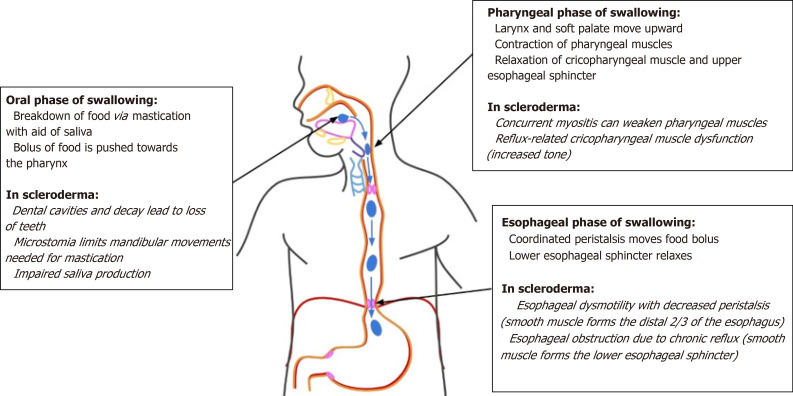
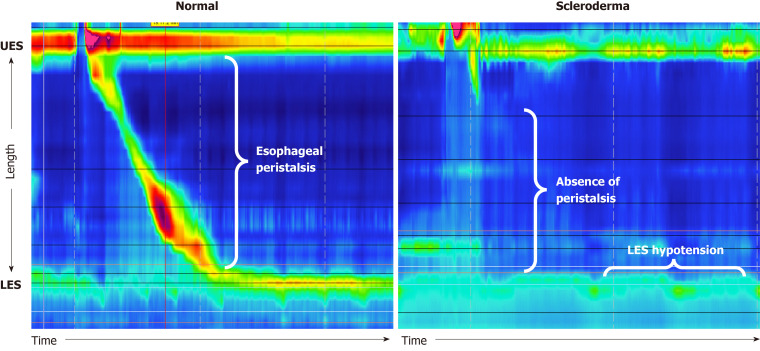
Systemic sclerosis is a connective tissue disease that presents with significant gastrointestinal involvement, commonly in the esophagus. Dysphagia is a common clinical manifestation of systemic sclerosis and is strongly related to esophageal dysmotility. However, there are multiple other contributing factors in each step in the physiology of swallowing that may contribute to development of severe dysphagia. The oral phase of swallowing may be disrupted by poor mastication due to microstomia and poor dentition, as well as by xerostomia. In the pharyngeal phase of swallowing, pharyngeal muscle weakness due to concurrent myositis or cricopharyngeal muscle tightening due to acid reflux can cause disturbance. The esophageal phase of swallowing is most commonly disturbed by decreased peristalsis and esophageal dysmotility. However, it can also be affected by obstruction from chronic reflux changes, pill-induced esophagitis, or Candida esophagitis. Other contributing factors to dysphagia include difficulties in food preparation and gastroparesis. Understanding the anatomy and physiology of swallowing and evaluating systemic sclerosis patients presenting with dysphagia for disturbances in each step can allow for development of better treatment plans to improve dysphagia and overall quality of life.
Keywords: Deglutition; Deglutition disorders; Esophageal motility disorders; Esophagitis; Gastroesophageal reflux; Systemic sclerosis.
©The Author(s) 2021. Published by Baishideng Publishing Group Inc. All rights reserved.
Conflict of interest statement
Conflict-of-interest statement: The authors disclose no conflicts of interest or external funding for this publication.
Figures
References
-
- Adigun R, Goyal A, Bansal P, Hariz A. Systemic Sclerosis. In: StatPearls [Internet]. Treasure Island (FL): StatPearls Publishing; 2021.
-
- Sandqvist G, Hesselstrand R. Validity of the Swedish version of the systemic sclerosis quality of life questionnaire (SSCQoL): A novel measure of quality of life for patients with systemic sclerosis. Ann Rheum Dis. 2019;78:855–857. - PubMed
Publication types
MeSH terms
LinkOut - more resources
Full Text Sources
Medical
