


Integrated care pathways and the hub-and-spoke model for the management of non-melanoma skin cancer: A proposal of the Italian Association of Hospital Dermatologists (ADOI)
- PMID: 34497705
- PMCID: PMC8404423
- DOI: 10.4081/dr.2021.9278
Integrated care pathways and the hub-and-spoke model for the management of non-melanoma skin cancer: A proposal of the Italian Association of Hospital Dermatologists (ADOI)
Abstract
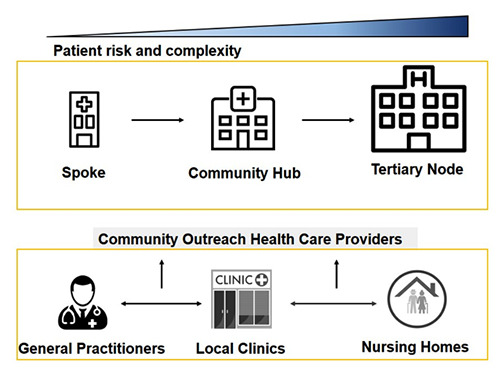
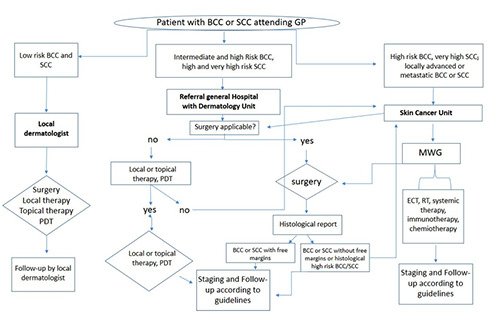
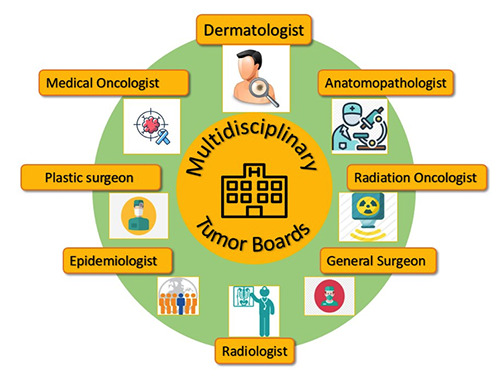
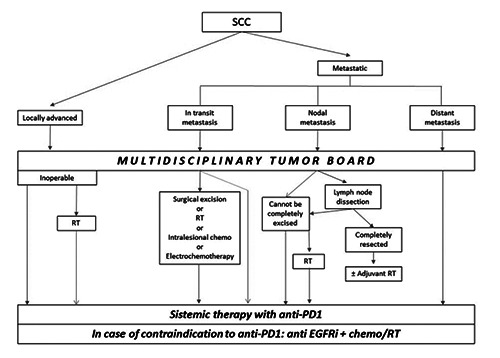
The term non-melanoma skin cancer (NMSC) refers to skin cancer different from melanoma, and it is usually restricted to basal cell carcinoma (BCC), squamous cell carcinoma (SCC) and their pre-cancerous lesions, e.g., actinic keratosis. These conditions represent the most frequent tumors in Caucasians and are characterized by an increasing incidence worldwide and a high socio-economic impact. The term Integrated Care Pathway (ICP) refers to "a complex intervention for the mutual decision making and organization of care processes for a well-defined group of patients during a well-defined period". The purpose of this paper is to present a proposal from the Italian Association of Hospital Dermatologists (ADOI) for an ICP organization of care of NMSC, considering the hub-and-spoke model in the different geographical areas. This proposal is based on the most recent literature and on documents from the Italian Association of Medical Oncology (AIOM), the European consensus-based interdisciplinary guidelines from the European Association of Dermato- Oncology (EADO), and the National Comprehensive Cancer Network (NCCN). We initially discuss the NMSC outpatient clinic, the role of the multidisciplinary working groups, and the hub-and-spoke model regarding this topic. Then, we define the ICP processes specific for BCC and SCC. The ICP for NMSC is an innovative strategy to guarantee the highest possible quality of health care while the hub-andspoke model is crucial for the organization of different health care structures. Considering the importance on this topic, it is essential to create a valid ICP together with an efficient organization within the different geographical areas.
Keywords: Actinic keratosis; Basal cell carcinoma; Integrated care pathway; Nonmelanoma skin cancer; Squamous cell carcinoma; hub and spoke model.
©Copyright: the Author(s).
Conflict of interest statement
Conflict of interest: None.
Figures
References
-
- Guy GP, Ekwueme DU. Years of potential life lost and indirect costs of melanoma and non-melanoma skin cancer: A systematic review of the literature. Pharmacoeconomics 2011;29:863-74. - PubMed
-
- Boi S, Cristofolini M, Micciolo R, et al. Epidemiology of Skin Tumors: Data from the Cutaneous Cancer Registry in Trentino, Italy. J Cutan Med Surg Inc Med Surg Dermatology 2003;7:300-5. - PubMed
LinkOut - more resources
Full Text Sources
Research Materials
