


Enteric Illness Outbreaks Reported Through the National Outbreak Reporting System-United States, 2009-2019
- PMID: 34498027
- PMCID: PMC11194694
- DOI: 10.1093/cid/ciab771
Enteric Illness Outbreaks Reported Through the National Outbreak Reporting System-United States, 2009-2019
Abstract
Background: The National Outbreak Reporting System (NORS) captures data on foodborne, waterborne, and enteric illness outbreaks in the United States. This study describes enteric illness outbreaks reported during 11 years of surveillance.
Methods: We extracted finalized reports from NORS for outbreaks occurring during 2009-2019. Outbreaks were included if caused by an enteric etiology or if any patients reported diarrhea, vomiting, bloody stools, or unspecified acute gastroenteritis.
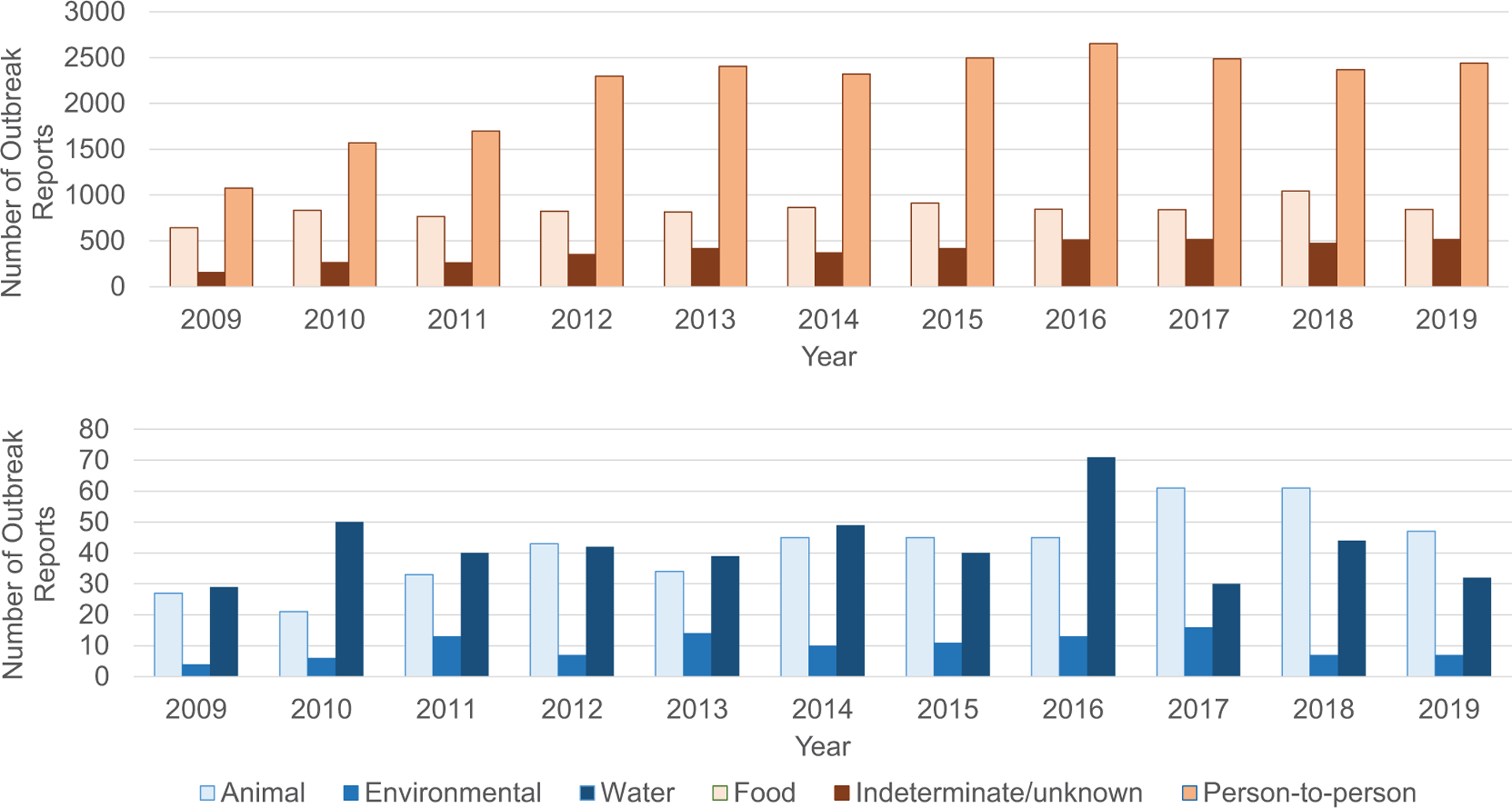
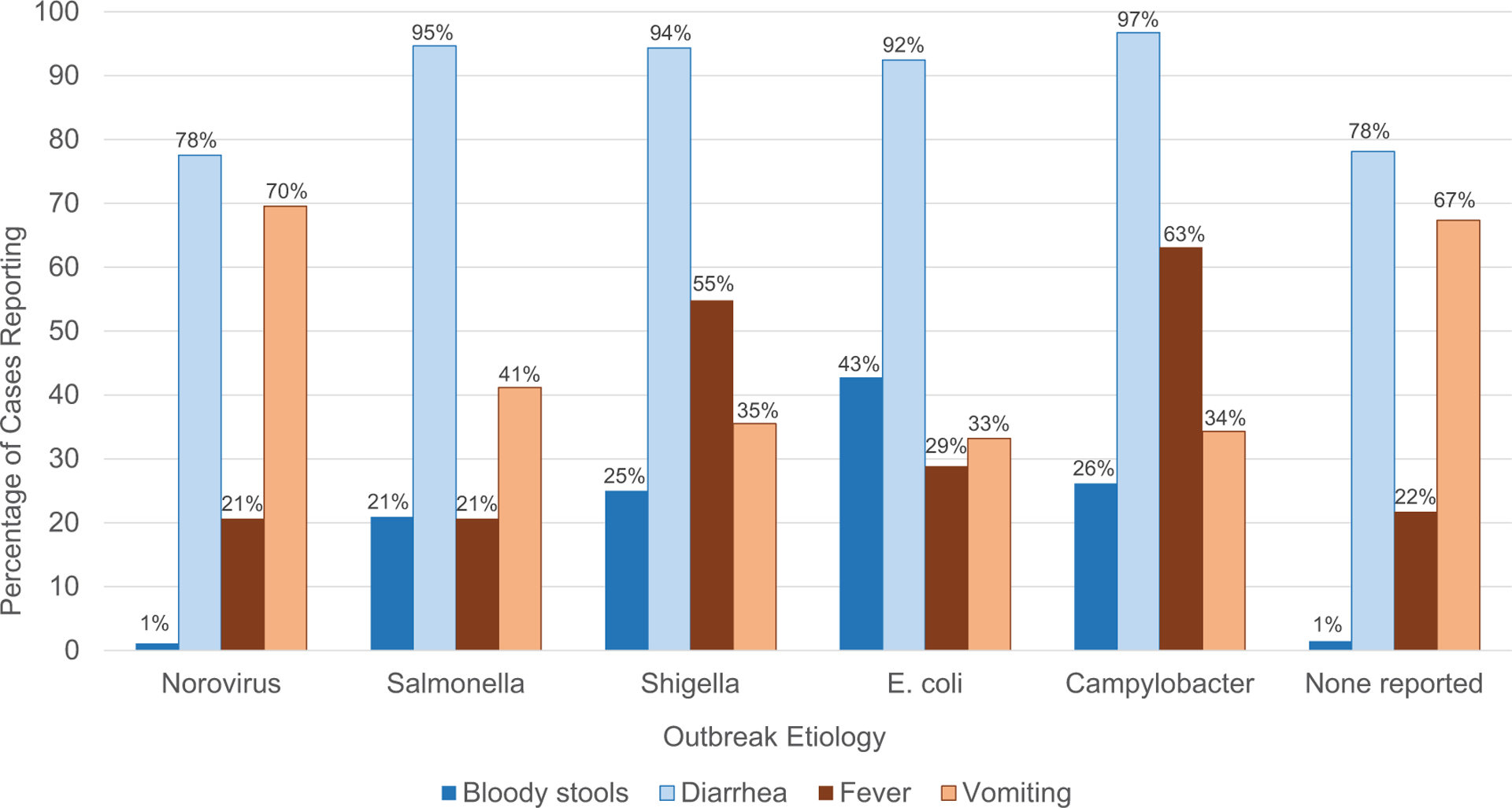
Results: A total of 38 395 outbreaks met inclusion criteria, increasing from 1932 in 2009 to 3889 in 2019. Outbreaks were most commonly transmitted through person-to-person contact (n = 23 812; 62%) and contaminated food (n = 9234; 24%). Norovirus was the most commonly reported etiology, reported in 22 820 (59%) outbreaks, followed by Salmonella (n = 2449; 6%) and Shigella (n = 1171; 3%). Norovirus outbreaks were significantly larger, with a median of 22 illnesses per outbreak, than outbreaks caused by the other most common outbreak etiologies (P < .0001, all comparisons). Hospitalization rates were higher in outbreaks caused by Salmonella and Escherichia coli outbreaks (20.9% and 22.8%, respectively) than those caused by norovirus (2%). Case fatality rate was highest in E. coli outbreaks (0.5%) and lowest in Shigella and Campylobacter outbreaks (0.02%).
Conclusions: Norovirus caused the most outbreaks and outbreak-associated illness, hospitalizations, and deaths. However, persons in E. coli and Salmonella outbreaks were more likely to be hospitalized or die. Outbreak surveillance through NORS provides the relative contributions of each mode of transmission and etiology for reported enteric illness outbreaks, which can guide targeted interventions.
Keywords: Salmonella; enteric illness; norovirus; outbreaks; surveillance.
Published by Oxford University Press for the Infectious Diseases Society of America 2021.
Conflict of interest statement
Figures
References
-
- Yen C, Wikswo ME, Lopman BA, Vinje J, Parashar UD, Hall AJ. Impact of an emergent norovirus variant in 2009 on norovirus outbreak activity in the United States. Clin Infect Dis 2011; 53:568–71. - PubMed
-
- Centers for Disease Control and Prevention. Systems for tracking waterborne disease and outbreaks. Available at: https://www.cdc.gov/healthywater/surveil-lance/tracking-systems.html. Accessed 27 March 2021.
-
- Centers for Disease Control and Prevention. Frequently asked questions about the Foodborne Disease Outbreak Surveillance System (FDOSS). Available at: https://www.cdc.gov/fdoss/faq.html. Accessed 27 March 2021.
Publication types
MeSH terms
Grants and funding
LinkOut - more resources
Full Text Sources
Medical
Miscellaneous
