


Eco-Friendly Biosorbents Based on Microbial Biomass and Natural Polymers: Synthesis, Characterization and Application for the Removal of Drugs and Dyes from Aqueous Solutions
- PMID: 34500899
- PMCID: PMC8432565
- DOI: 10.3390/ma14174810
Eco-Friendly Biosorbents Based on Microbial Biomass and Natural Polymers: Synthesis, Characterization and Application for the Removal of Drugs and Dyes from Aqueous Solutions
Abstract
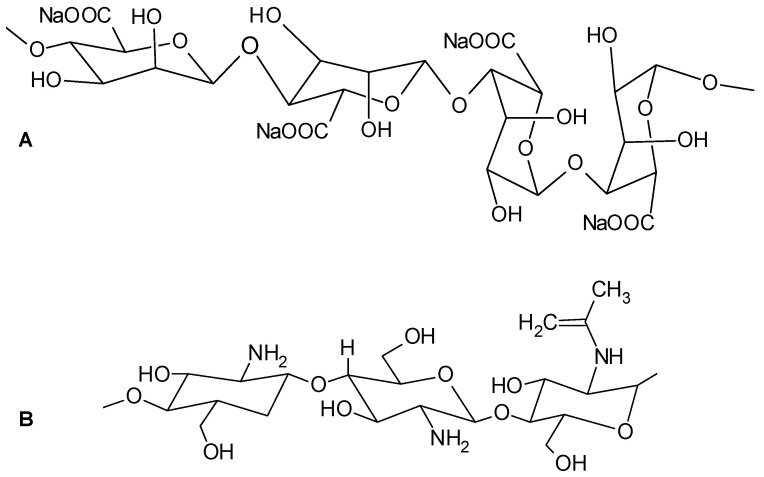
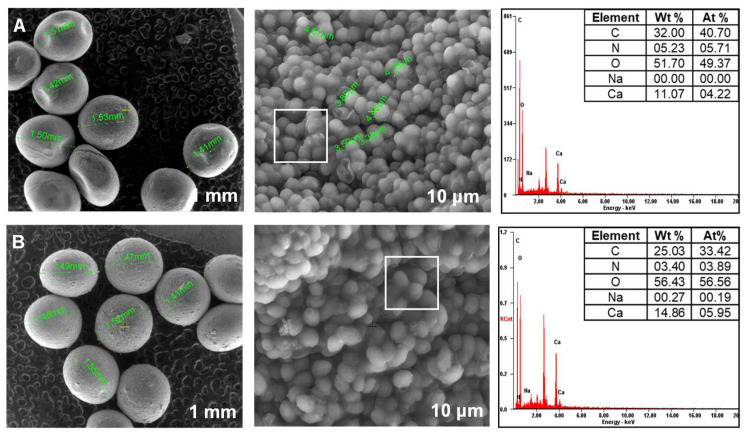
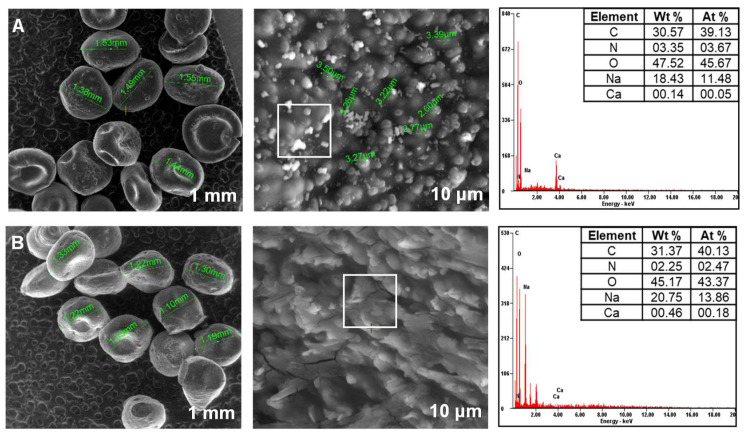
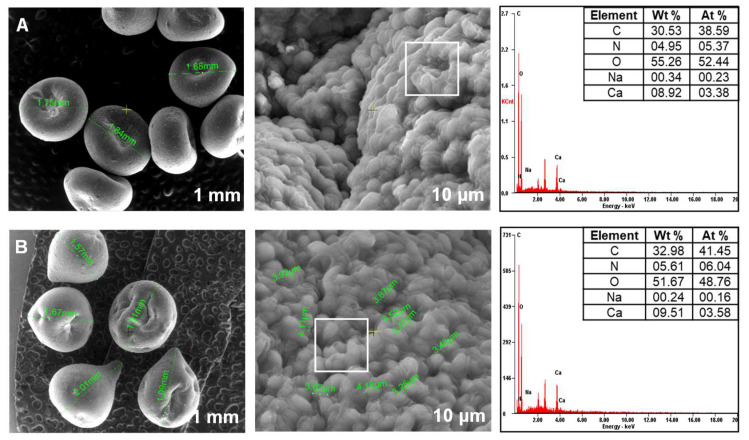
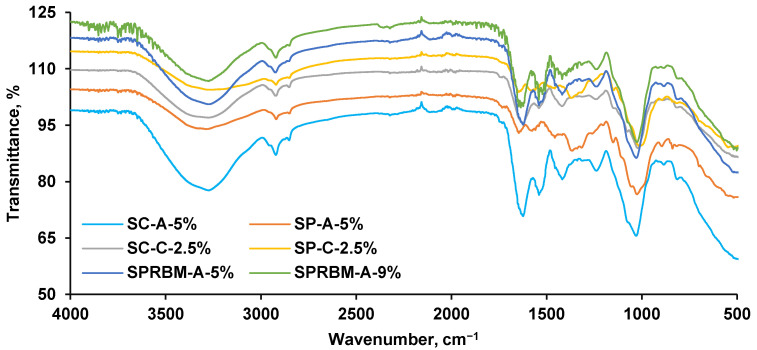
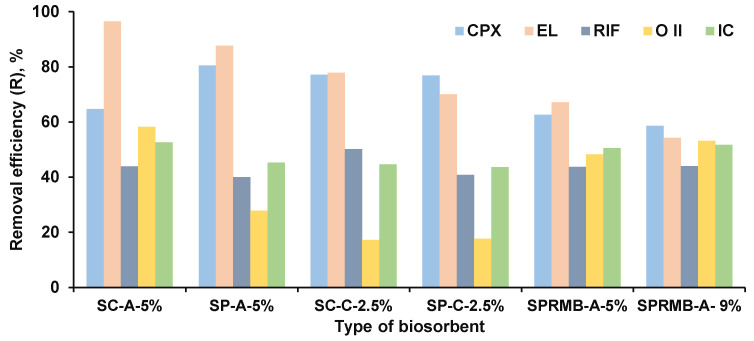
Pharmaceuticals and dyes are a very important part of the nonbiodegradable or hard biodegradable substances present in wastewater. Microorganisms are already known to be effective biosorbents, but the use of free microbial cells involves difficulties in their separation from effluents and limits their application in wastewater treatment. Thus, this study aimed to develop biosorbents by immobilizing Saccharomyces cerevisiae, Saccharomyces pastorianus and Saccharomyces pastorianus residual biomass on natural polymers (alginate and chitosan) and to evaluate the biosorptive potential for removal of pharmaceuticals and dyes from water. Six types of biosorbents were synthesized and characterized by Scanning Electron Microscopy and Fourier Transform Infrared Spectroscopy techniques and their biosorptive capacities for three drugs (cephalexin, rifampicin, ethacridine lactate) and two dyes (orange II and indigo carmine) were evaluated. The obtained results show that the removal efficiency depends on the polymer type used for the immobilization. In case of alginate the removal efficiency is between 40.05% and 96.41% for drugs and between 27.83% and 58.29% for dyes, while in the case of chitosan it is between 40.83% and 77.92% for drugs and between 17.17% and 44.77% for dyes. In general, the synthesized biosorbents proved to be promising for the removal of drugs and dyes from aqueous solutions.
Keywords: Saccharomyces cerevisiae; Saccharomyces pastorianus; alginate; biosorption; chitosan; drug; dye.
Conflict of interest statement
The authors declare no conflict of interest. The funders had no role in the design of the study; in the collection, analyses, or interpretation of data; in the writing of the manuscript, or in the decision to publish the results.
Figures

References
-
- Stawiński W., Węgrzyn A., Freitas O., Chmielarz L., Mordarski G., Figueiredo S. Simultaneous removal of dyes and metal cations using an acid, acid-base and base modified vermiculite as a sustainable and recyclable adsorbent. Sci. Total Environ. 2017;576:398–408. doi: 10.1016/j.scitotenv.2016.10.120. - DOI - PubMed
-
- De Rossi A., Rigueto C.V.T., Dettmer A., Colla L.M., Piccin J.S. Synthesis, characterization, and application of Saccharomyces cerevisiae/alginate composites beads for adsorption of heavy metals. J. Environ. Chem. Eng. 2020;8:104009. doi: 10.1016/j.jece.2020.104009. - DOI
-
- Fernández-Castro P., Vallejo M., San Román M.F., Ortiz I. Insight on the fundamentals of advanced oxidation processes. Role and review of the determination methods of reactive oxygen species. J. Chem. Technol. Biotechnol. 2015;90:796–820. doi: 10.1002/jctb.4634. - DOI
Grants and funding
LinkOut - more resources
Full Text Sources
Molecular Biology Databases
