


Targeted Delivery of Drugs and Genes Using Polymer Nanocarriers for Cancer Therapy
- PMID: 34502028
- PMCID: PMC8431379
- DOI: 10.3390/ijms22179118
Targeted Delivery of Drugs and Genes Using Polymer Nanocarriers for Cancer Therapy
Abstract
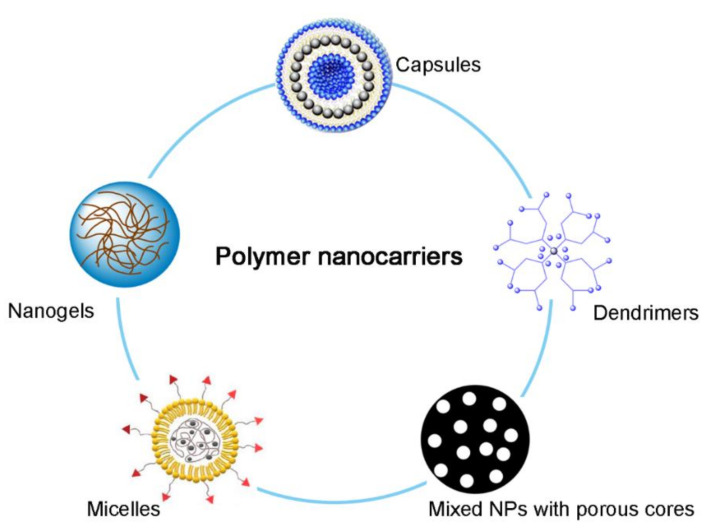
Cancer is one of the primary causes of worldwide human deaths. Most cancer patients receive chemotherapy and radiotherapy, but these treatments are usually only partially efficacious and lead to a variety of serious side effects. Therefore, it is necessary to develop new therapeutic strategies. The emergence of nanotechnology has had a profound impact on general clinical treatment. The application of nanotechnology has facilitated the development of nano-drug delivery systems (NDDSs) that are highly tumor selective and allow for the slow release of active anticancer drugs. In recent years, vehicles such as liposomes, dendrimers and polymer nanomaterials have been considered promising carriers for tumor-specific drug delivery, reducing toxicity and improving biocompatibility. Among them, polymer nanoparticles (NPs) are one of the most innovative methods of non-invasive drug delivery. Here, we review the application of polymer NPs in drug delivery, gene therapy, and early diagnostics for cancer therapy.
Keywords: cancer therapy; drug delivery; polymer nanocarriers.
Conflict of interest statement
The authors declare no conflict of interest.
Figures
References
Publication types
MeSH terms
Substances
Grants and funding
LinkOut - more resources
Full Text Sources
Medical
