. 2021 Sep 3;22(17):9564.
doi: 10.3390/ijms22179564.

Antibacterial and Cellular Behaviors of Novel Zinc-Doped Hydroxyapatite/Graphene Nanocomposite for Bone Tissue Engineering

Affiliations

Antibacterial and Cellular Behaviors of Novel Zinc-Doped Hydroxyapatite/Graphene Nanocomposite for Bone Tissue Engineering

H Maleki-Ghaleh et al. Int J Mol Sci. .

Abstract

Bacteria are one of the significant causes of infection in the body after scaffold implantation. Effective use of nanotechnology to overcome this problem is an exciting and practical solution. Nanoparticles can cause bacterial degradation by the electrostatic interaction with receptors and cell walls. Simultaneously, the incorporation of antibacterial materials such as zinc and graphene in nanoparticles can further enhance bacterial degradation. In the present study, zinc-doped hydroxyapatite/graphene was synthesized and characterized as a nanocomposite material possessing both antibacterial and bioactive properties for bone tissue engineering. After synthesizing the zinc-doped hydroxyapatite nanoparticles using a mechanochemical process, they were composited with reduced graphene oxide. The nanoparticles and nanocomposite samples were extensively investigated by transmission electron microscopy, X-ray diffraction, and Raman spectroscopy. Their antibacterial behaviors against Escherichia coli and Staphylococcus aureus were studied. The antibacterial properties of hydroxyapatite nanoparticles were found to be improved more than 2.7 and 3.4 times after zinc doping and further compositing with graphene, respectively. In vitro cell assessment was investigated by a cell viability test and alkaline phosphatase activity using mesenchymal stem cells, and the results showed that hydroxyapatite nanoparticles in the culture medium, in addition to non-toxicity, led to enhanced proliferation of bone marrow stem cells. Furthermore, zinc doping in combination with graphene significantly increased alkaline phosphatase activity and proliferation of mesenchymal stem cells. The antibacterial activity along with cell biocompatibility/bioactivity of zinc-doped hydroxyapatite/graphene nanocomposite are the highly desirable and suitable biological properties for bone tissue engineering successfully achieved in this work.

Keywords: antibacterial; biocompatibility; graphene; hydroxyapatite; nanocomposite; zinc.


Conflict of interest statement

The authors declare no conflict of interest.

Figures
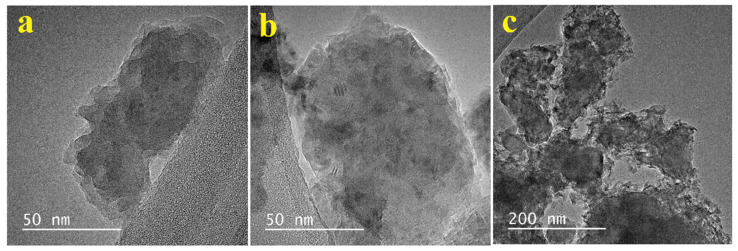
Figure 1
Figure 1
TEM images of (a) HA, and (b) ZnHA nanoparticles showing flake-like morphology, and (c) ZnHA-rGO showing ZnHA nanoparticles composited with rGO sheets.
Figure 2
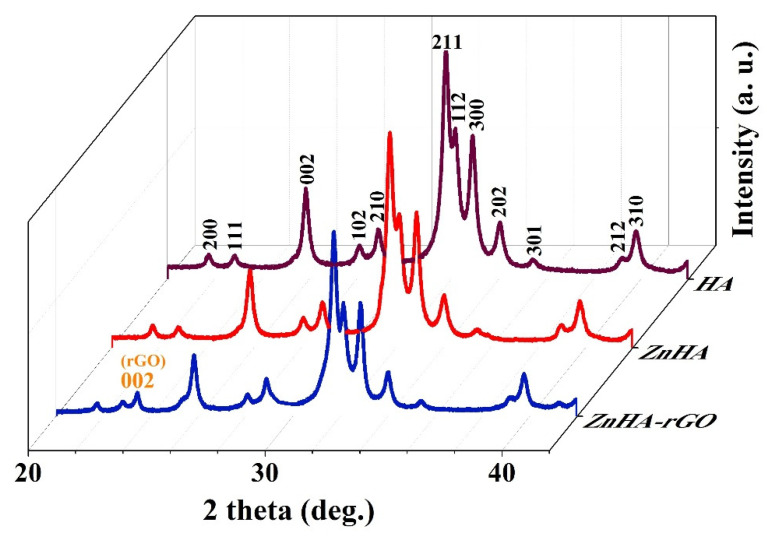
Figure 2
XRD patterns of HA, ZnHA, and ZnHA-rGO nanoparticles. The diffraction pattern of HA nanoparticles was well in accordance with the standard pattern of HA (JCPDS card No. 09–0432); hexagonal structure. The XRD patterns of ZnHA and ZnHA-rGO nanoparticles were highly similar to that of HA nanoparticles. A peak corresponding to graphene nanosheets (002) was seen in ZnHA-rGO.
Figure 3
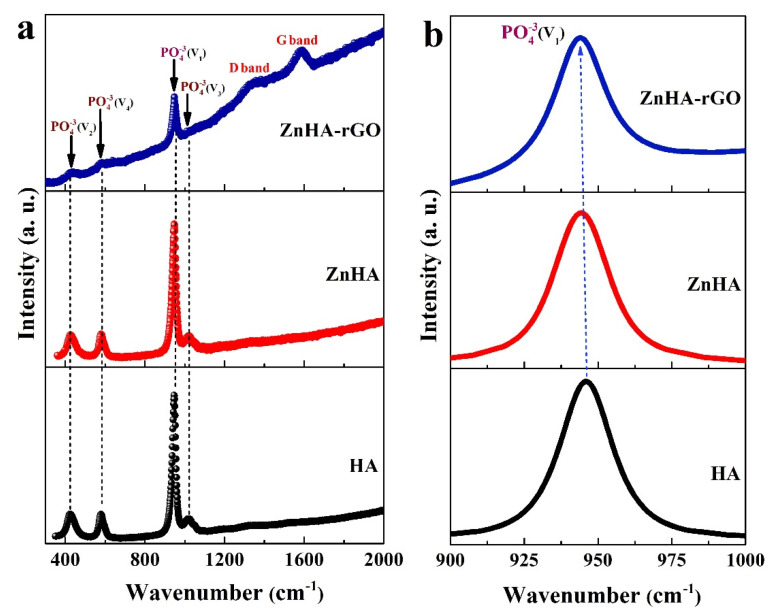
Figure 3
(a) Raman spectra of HA, ZnHA, and ZnHA-rGO nanoparticles, (b) Raman spectra in 900–1000 cm−1 range. Raman spectra indicate that the rGO nanosheets wrap the surface of ZnHA nanoparticles. Zn doping in the HA structure and its compositing with rGO has made PO43− bands lower and broader.
Figure 4
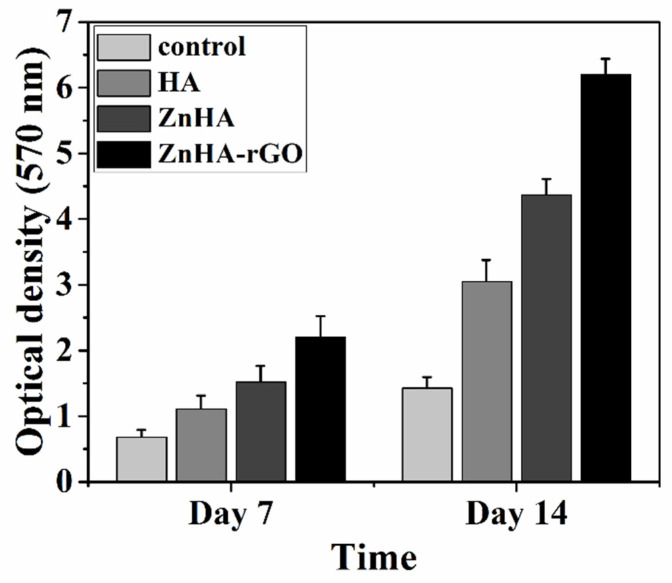
Figure 4
The viability of MSCs incubated in culture media treated by the HA, ZnHA, and ZnHA-rGO nanoparticles using MTT assay. During the incubation period (14 days), the presence of nanoparticles caused an appreciable increase in cell proliferation, especially ZnHA-rGO, compared to the non-treated control.
Figure 5
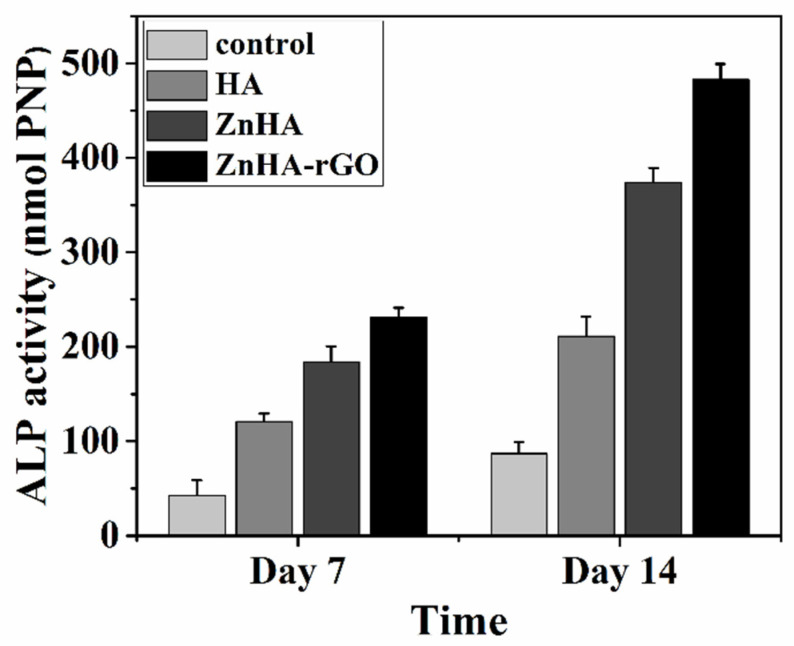
Figure 5
ALP activity of MSCs in culture media treated by the HA, ZnHA, and ZnHA-rGO nanoparticles. Incubation with ZnHA-rGO nanoparticles for 7 to 14 days significantly induced ALP activity.
Figure 6
Figure 6
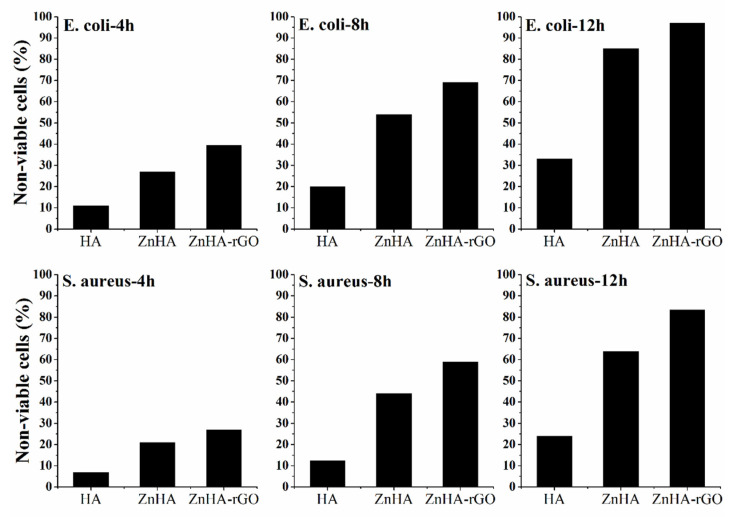
The loss of viability of E. coli and S. aureus bacteria after incubation with 100 µg mL−1 concentration of HA, ZnHA, and ZnHA-rGO nanoparticles for different time exposure (4, 8, and 12 h).
Figure 7
Figure 7
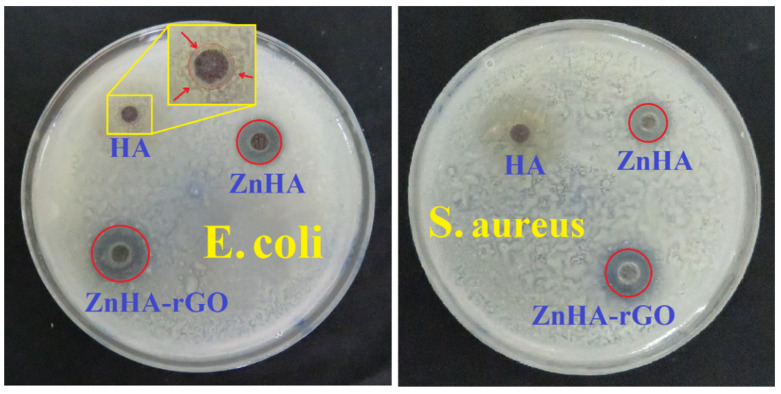
Disk diffusion tests for the evaluation of antibacterial activity of HA, ZnHA, and ZnHA-rGO nanoparticles against the E. coli and S. aureus strains. The zone of inhibition is highlighted with a red circle indicating a noticeable antibacterial effect.
Figure 8
Figure 8
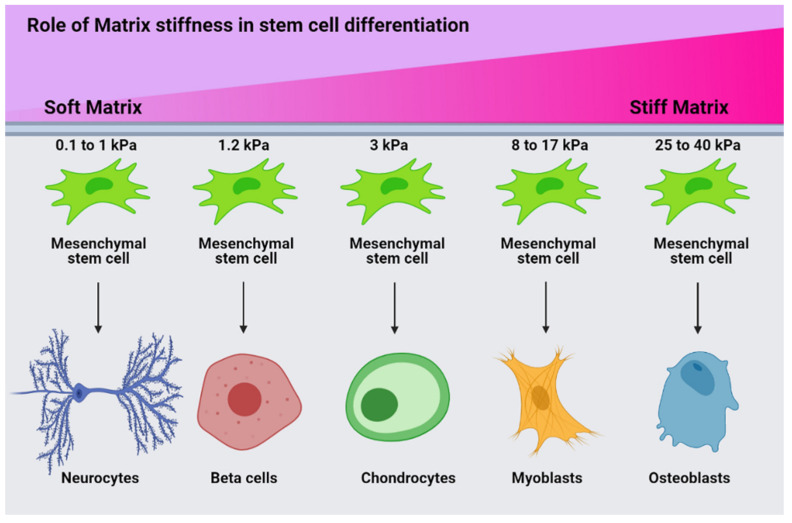
Schematic representation of the relationship between matrix stiffness and HMSC differentiation. Matrix stiffness significantly affects the differentiation of HMSCs; higher stiffness leads to osteogenic differentiation.
Figure 9
Figure 9
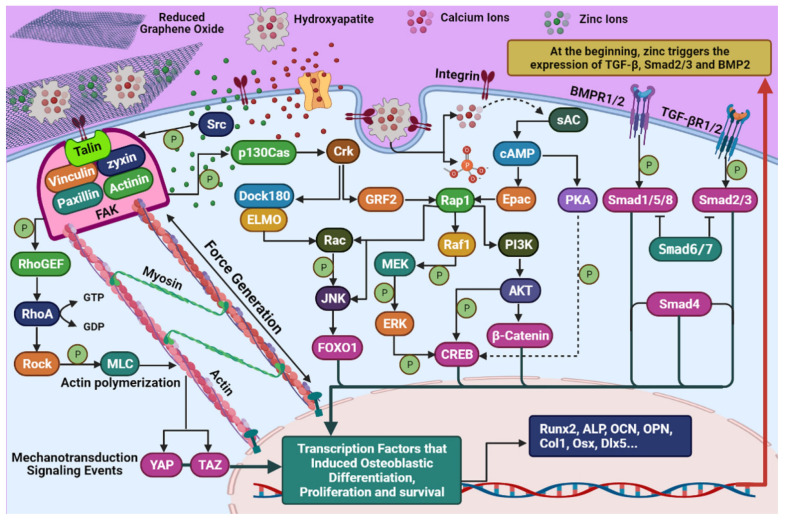
Schematic representation of ZnHA-rGO nanosystem interactions with MSC. The illustration shows the molecular mechanism of proliferation modulation and osteogenic differentiation of MSC by the ZnHA-rGO nanosystem through signaling pathways.
Figure 10
Figure 10
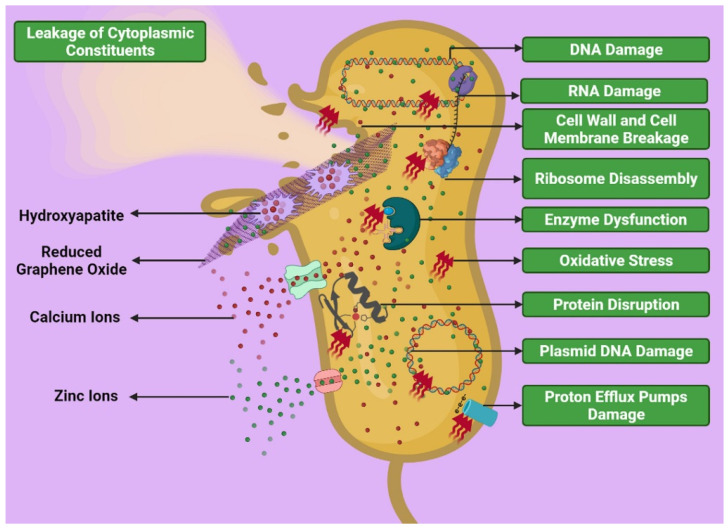
The possible interaction of the ZnHA-rGO nanosystem in the face of bacteria. The three components of the nanocomposite (HA, Zn2+, and rGO) damage the cell wall and intracellular components of bacteria.

References

    1. Ribeiro M., Monteiro F., Ferraz M.P. Infection of orthopedic implants with emphasis on bacterial adhesion process and techniques used in studying bacterial-material interactions. Biomatter. 2012;2:176–194. doi: 10.4161/biom.22905. - DOI - PMC - PubMed
    1. Arciola C.R., Campoccia D., Montanaro L. Implant infections: Adhesion, biofilm formation and immune evasion. Nat. Rev. Genet. 2018;16:397–409. doi: 10.1038/s41579-018-0019-y. - DOI - PubMed
    1. Masters E.A., Trombetta R.P., de Mesy Bentley K.L., Boyce B.F., Gill A.L., Gill S.R., Nishitani K., Ishikawa M., Morita Y., Ito H., et al. Evolving concepts in bone infection: Redefining “biofilm”, “acute vs. chronic osteomyelitis”, “the immune proteome” and “local antibiotic therapy”. Bone Res. 2019;15:1–8. doi: 10.1038/s41413-019-0061-z. - DOI - PMC - PubMed
    1. Johnson C., García A.J. Scaffold-based anti-infection strategies in bone repair. Ann. Biomed. Eng. 2014;43:515–528. doi: 10.1007/s10439-014-1205-3. - DOI - PMC - PubMed
    1. Vallet-Regí M., Lozano D., González B., Izquierdo-Barba I. Biomaterials against bone infection. Adv. Healthc. Mater. 2020;9:2000310. doi: 10.1002/adhm.202000310. - DOI - PMC - PubMed