


International Society of Sports Nutrition position stand: sodium bicarbonate and exercise performance
- PMID: 34503527
- PMCID: PMC8427947
- DOI: 10.1186/s12970-021-00458-w
International Society of Sports Nutrition position stand: sodium bicarbonate and exercise performance
Abstract
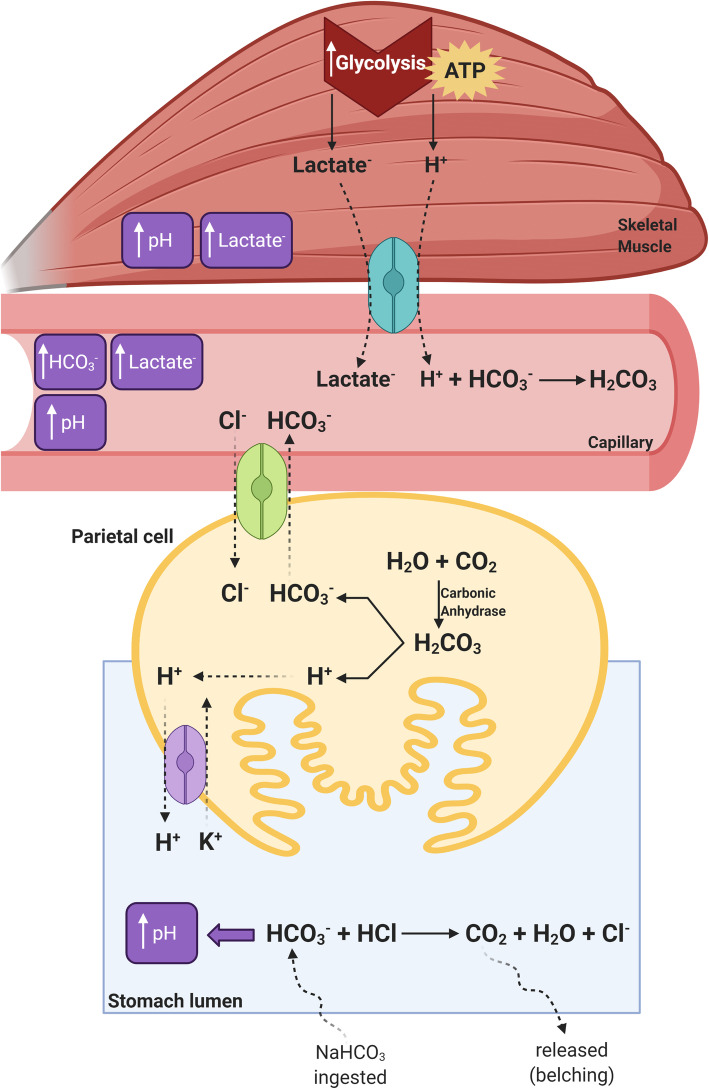
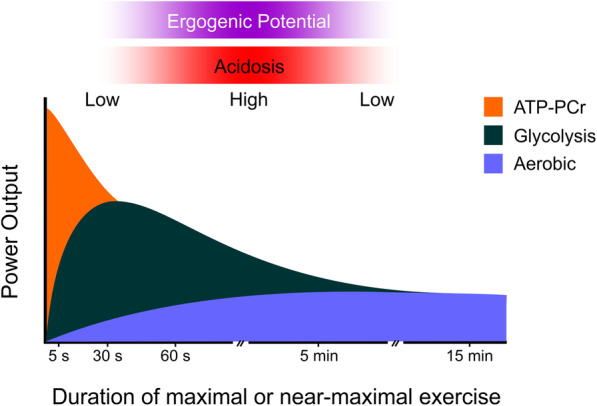
Based on a comprehensive review and critical analysis of the literature regarding the effects of sodium bicarbonate supplementation on exercise performance, conducted by experts in the field and selected members of the International Society of Sports Nutrition (ISSN), the following conclusions represent the official Position of the Society: 1. Supplementation with sodium bicarbonate (doses from 0.2 to 0.5 g/kg) improves performance in muscular endurance activities, various combat sports, including boxing, judo, karate, taekwondo, and wrestling, and in high-intensity cycling, running, swimming, and rowing. The ergogenic effects of sodium bicarbonate are mostly established for exercise tasks of high-intensity that last between 30 s and 12 min. 2. Sodium bicarbonate improves performance in single- and multiple-bout exercise. 3. Sodium bicarbonate improves exercise performance in both men and women. 4. For single-dose supplementation protocols, 0.2 g/kg of sodium bicarbonate seems to be the minimum dose required to experience improvements in exercise performance. The optimal dose of sodium bicarbonate dose for ergogenic effects seems to be 0.3 g/kg. Higher doses (e.g., 0.4 or 0.5 g/kg) may not be required in single-dose supplementation protocols, because they do not provide additional benefits (compared with 0.3 g/kg) and are associated with a higher incidence and severity of adverse side-effects. 5. For single-dose supplementation protocols, the recommended timing of sodium bicarbonate ingestion is between 60 and 180 min before exercise or competition. 6. Multiple-day protocols of sodium bicarbonate supplementation can be effective in improving exercise performance. The duration of these protocols is generally between 3 and 7 days before the exercise test, and a total sodium bicarbonate dose of 0.4 or 0.5 g/kg per day produces ergogenic effects. The total daily dose is commonly divided into smaller doses, ingested at multiple points throughout the day (e.g., 0.1 to 0.2 g/kg of sodium bicarbonate consumed at breakfast, lunch, and dinner). The benefit of multiple-day protocols is that they could help reduce the risk of sodium bicarbonate-induced side-effects on the day of competition. 7. Long-term use of sodium bicarbonate (e.g., before every exercise training session) may enhance training adaptations, such as increased time to fatigue and power output. 8. The most common side-effects of sodium bicarbonate supplementation are bloating, nausea, vomiting, and abdominal pain. The incidence and severity of side-effects vary between and within individuals, but it is generally low. Nonetheless, these side-effects following sodium bicarbonate supplementation may negatively impact exercise performance. Ingesting sodium bicarbonate (i) in smaller doses (e.g., 0.2 g/kg or 0.3 g/kg), (ii) around 180 min before exercise or adjusting the timing according to individual responses to side-effects, (iii) alongside a high-carbohydrate meal, and (iv) in enteric-coated capsules are possible strategies to minimize the likelihood and severity of these side-effects. 9. Combining sodium bicarbonate with creatine or beta-alanine may produce additive effects on exercise performance. It is unclear whether combining sodium bicarbonate with caffeine or nitrates produces additive benefits. 10. Sodium bicarbonate improves exercise performance primarily due to a range of its physiological effects. Still, a portion of the ergogenic effect of sodium bicarbonate seems to be placebo-driven.
© 2021. The Author(s).
Conflict of interest statement
J.G, Z.P, B.S, G.G.A, B.J.S, and M.J.M have no competing interests.
R.B.K. has conducted industry sponsored studies at the universities he has been affiliated with and occasionally serves as a scientific and legal consultant related to exercise and nutrition intervention studies.
J.R.S. has conducted industry-sponsored research on nutraceuticals over the past 25 years. Further, J.R.S. has also received financial support for presenting on the science of various nutraceuticals at industry-sponsored scientific conferences.
D.S.K. declares that in part, he works for a contract research company that conducts research and human clinical trials for industries including dietary supplements, medical foods, beverages, foods, pharmaceuticals and medical devices. He also sits on the Scientific Advisory Board for Dymatize Nutrition (BellRing Brands). At the time this review was developed and published, Dymatize Nutrition was not producing any supplements containing sodium bicarbonate.
S.M.A. has received grants to evaluate the effects of dietary supplements, and serves or has served on scientific advisory boards for sport nutrition companies.
D.J.B. and T.A.V. have received research grants related to dietary supplements.
H.L.L. has no conflict in terms of financial or business interests related to this manuscript. He has received grants to conduct research on dietary supplements; has served as a paid consultant for industry on Nutravigilance, post-market safety and regulatory compliance; receives royalties from the licensing of several patents in the dietary supplements industry (but not on sodium bicarbonate supplements).
T.N.Z. has no conflict in terms of financial or business interests related to this manuscript. T.N.Z. has received grants and contracts to conduct research on dietary supplements; has served as a paid consultant for industry; has received honoraria for speaking at conferences and writing lay articles about sports nutrition ingredients; receives royalties from the sale of several sports nutrition products (but not on sodium bicarbonate supplements); and has served as an expert witness on behalf of the plaintiff and defense in cases involving dietary supplements.
L.M.B. is a Director of the International Olympic Committee Diploma in Sports Nutrition.
J.A. is the CEO of the ISSN.
B.I.C. is on the scientific advisory board for Dymatize Nutrition (BellRing Brands), a manufacturer of sports supplements. At the time this review was developed and published, Dymatize Nutrition was not producing any supplements containing sodium bicarbonate
Figures
References
-
- Maughan RJ, Burke LM, Dvorak J, Larson-Meyer DE, Peeling P, Phillips SM, Rawson ES, Walsh NP, Garthe I, Geyer H, Meeusen R, van Loon L, Shirreffs SM, Spriet LL, Stuart M, Vernec A, Currell K, Ali VM, Budgett RGM, Ljungqvist A, Mountjoy M, Pitsiladis Y, Soligard T, Erdener U, Engebretsen L. IOC consensus statement: dietary supplements and the high-performance athlete. Int J Sport Nutr Exerc Metab. 2018;28(2):104–125. doi: 10.1123/ijsnem.2018-0020. - DOI - PubMed
Publication types
MeSH terms
Substances
LinkOut - more resources
Full Text Sources
Other Literature Sources
Medical
