


The cross talk between gastric cancer stem cells and the immune microenvironment: a tumor-promoting factor
- PMID: 34503571
- PMCID: PMC8428093
- DOI: 10.1186/s13287-021-02562-9
The cross talk between gastric cancer stem cells and the immune microenvironment: a tumor-promoting factor
Abstract
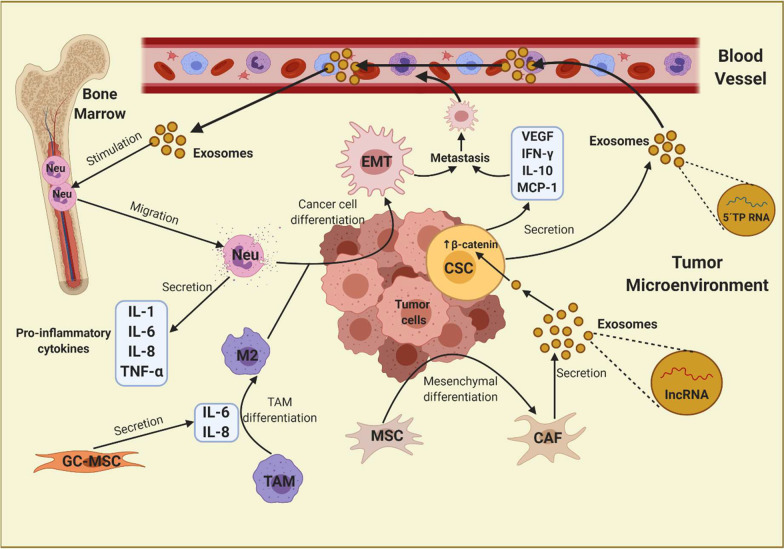
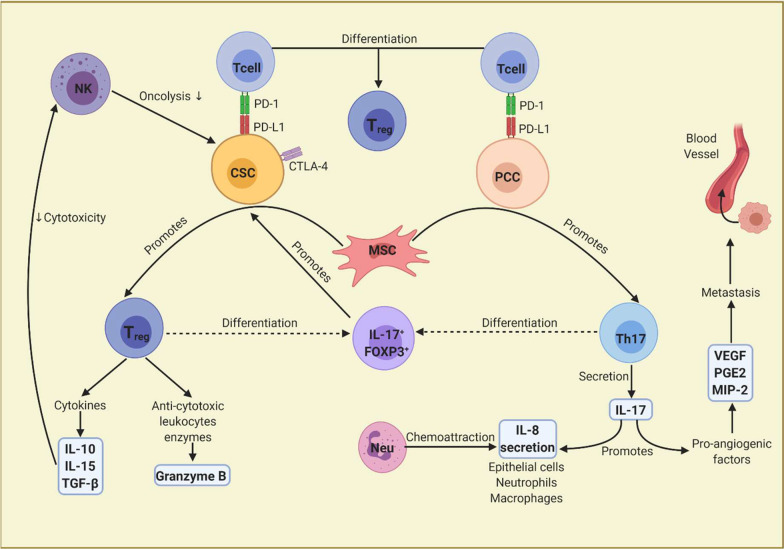
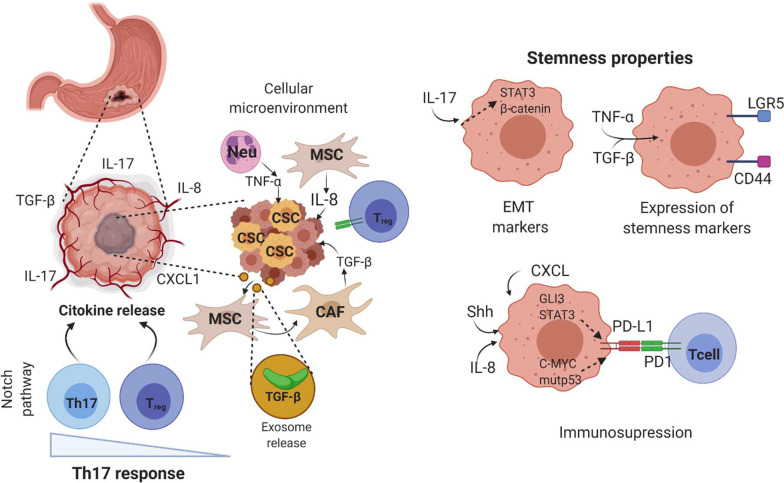
Cross talk between cancer cells and the immune system is determinant for cancer progression. Emerging evidence demonstrates that GC characteristics such as metastasis, treatment resistance, and disease recurrence are associated with a tumor subpopulation called gastric cancer stem cells (GCSCs). However, the specific interaction between GCSCs and the immune microenvironment is still under investigation. Although immune evasion has been well described for cancer stem cells (CSCs), recent studies show that GCSCs can also regulate the immune system and even benefit from it. This review will provide an overview of bidirectional interactions between CSCs and immune cells in GC, compiling relevant data about how CSCs can induce leukocyte reprogramming, resulting in pro-tumoral immune cells that orchestrate promotion of metastasis, chemoresistance, tumorigenicity, and even increase in number of cancer cells with stem properties. Some immune cells studied are tumor-associated macrophages (TAMs), neutrophils, Th17 and T regulatory (Treg) cells, mesenchymal stem cells (MSCs), and cancer-associated fibroblasts (CAFs), as well as the signaling pathways involved in these pro-tumoral activities. Conversely, although there are cytotoxic leukocytes that can potentially eliminate GCSCs, we describe mechanisms for immune evasion in GCSCs and their clinical implications. Furthermore, we describe current available immunotherapy targeting GCSC-related markers as possible treatment for GC, discussing how the CSC-modified immune microenvironment can mitigate or inactivate these immunotherapies, limiting their effectiveness. Finally, we summarize key concepts and relevant evidence to understand the cross talk between GCSCs and the immune microenvironment as an important process for effective design of therapies against GCSCs that improve the outcome of patients with GC.
Keywords: Cancer microenvironment; Cancer stem cells; Cancer-associated immune cells; Cell reprogramming; Gastric cancer; Immunoregulation; Immunotherapy.
© 2021. The Author(s).
Conflict of interest statement
The authors declare that they have no competing interests.
Figures
References
-
- Roth GA, Abate D, Abate KH, Abay SM, Abbafati C, Abbasi N, et al. Global, regional, and national age-sex-specific mortality for 282 causes of death in 195 countries and territories, 1980–2017: a systematic analysis for the Global Burden of Disease Study 2017. Lancet. 2018;392(10159):1736–1788. doi: 10.1016/S0140-6736(18)32203-7. - DOI - PMC - PubMed
-
- Global Cancer Observatory. https://gco.iarc.fr/ (2021). Accessed 14 May 2021.
Publication types
MeSH terms
Substances
LinkOut - more resources
Full Text Sources
Medical
Miscellaneous
