


Multimodal liquid biopsy for early monitoring and outcome prediction of chemotherapy in metastatic breast cancer
- PMID: 34504096
- PMCID: PMC8429692
- DOI: 10.1038/s41523-021-00319-4
Multimodal liquid biopsy for early monitoring and outcome prediction of chemotherapy in metastatic breast cancer
Abstract
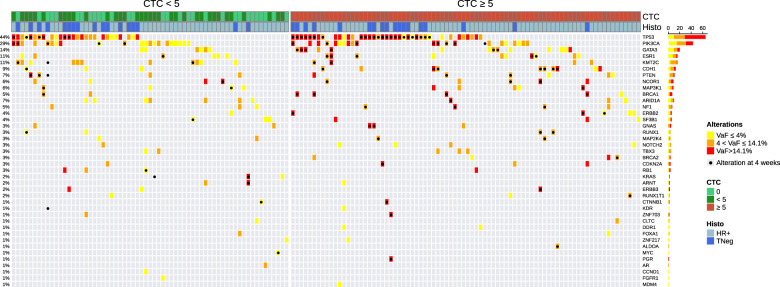
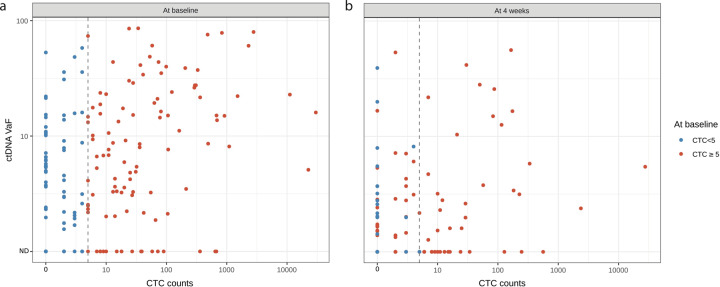
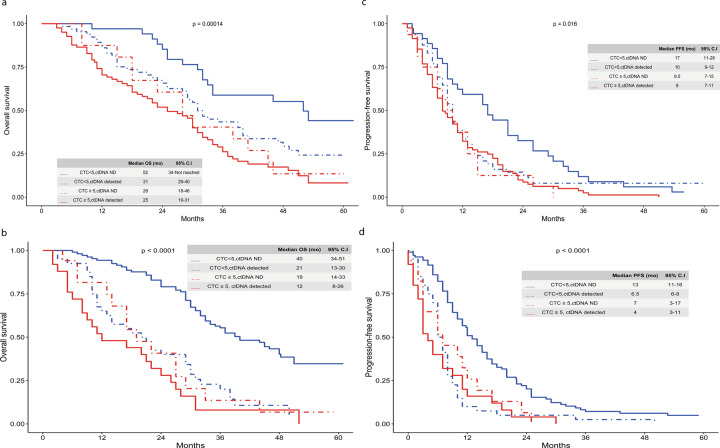
Circulating tumor cells (CTCs) and circulating tumor DNA (ctDNA) are two cancer-derived blood biomarkers that inform on patient prognosis and treatment efficacy in breast cancer. We prospectively evaluated the clinical validity of quantifying both CTCs (CellSearch) and ctDNA (targeted next-generation sequencing). Their combined value as prognostic and early monitoring markers was assessed in 198 HER2-negative metastatic breast cancer patients. All patients were included in the prospective multicenter UCBG study COMET (NCT01745757) and treated by first-line chemotherapy with weekly paclitaxel and bevacizumab. Blood samples were obtained at baseline and before the second cycle of chemotherapy. At baseline, CTCs and ctDNA were respectively detected in 72 and 74% of patients and were moderately correlated (Kendall's τ = 0.3). Only 26 (13%) patients had neither detectable ctDNA nor CTCs. Variants were most frequently observed in TP53 and PIK3CA genes. KMT2C/MLL3 variants detected in ctDNA were significantly associated with a lower CTC count, while the opposite trend was seen with GATA3 alterations. Both CTC and ctDNA levels at baseline and after four weeks of treatment were correlated with survival. For progression-free and overall survival, the best multivariate prognostic model included tumor subtype (triple negative vs other), grade (grade 3 vs other), ctDNA variant allele frequency (VAF) at baseline (per 10% increase), and CTC count at four weeks (≥5CTC/7.5 mL). Overall, this study demonstrates that CTCs and ctDNA have nonoverlapping detection profiles and complementary prognostic values in metastatic breast cancer patients. A comprehensive liquid-biopsy approach may involve simultaneous detection of ctDNA and CTCs.
© 2021. The Author(s).
Conflict of interest statement
F.-C.B. and J.-Y.P. received research and travel grants from Menarini Silicon Biosystems and Roche and received lecture fees by Roche. The authors declare no competing interests.
Figures
References
Grants and funding
LinkOut - more resources
Full Text Sources
Medical
Research Materials
Miscellaneous
