


The Human Connectome Project: A retrospective
- PMID: 34508893
- PMCID: PMC9387634
- DOI: 10.1016/j.neuroimage.2021.118543
The Human Connectome Project: A retrospective
Abstract
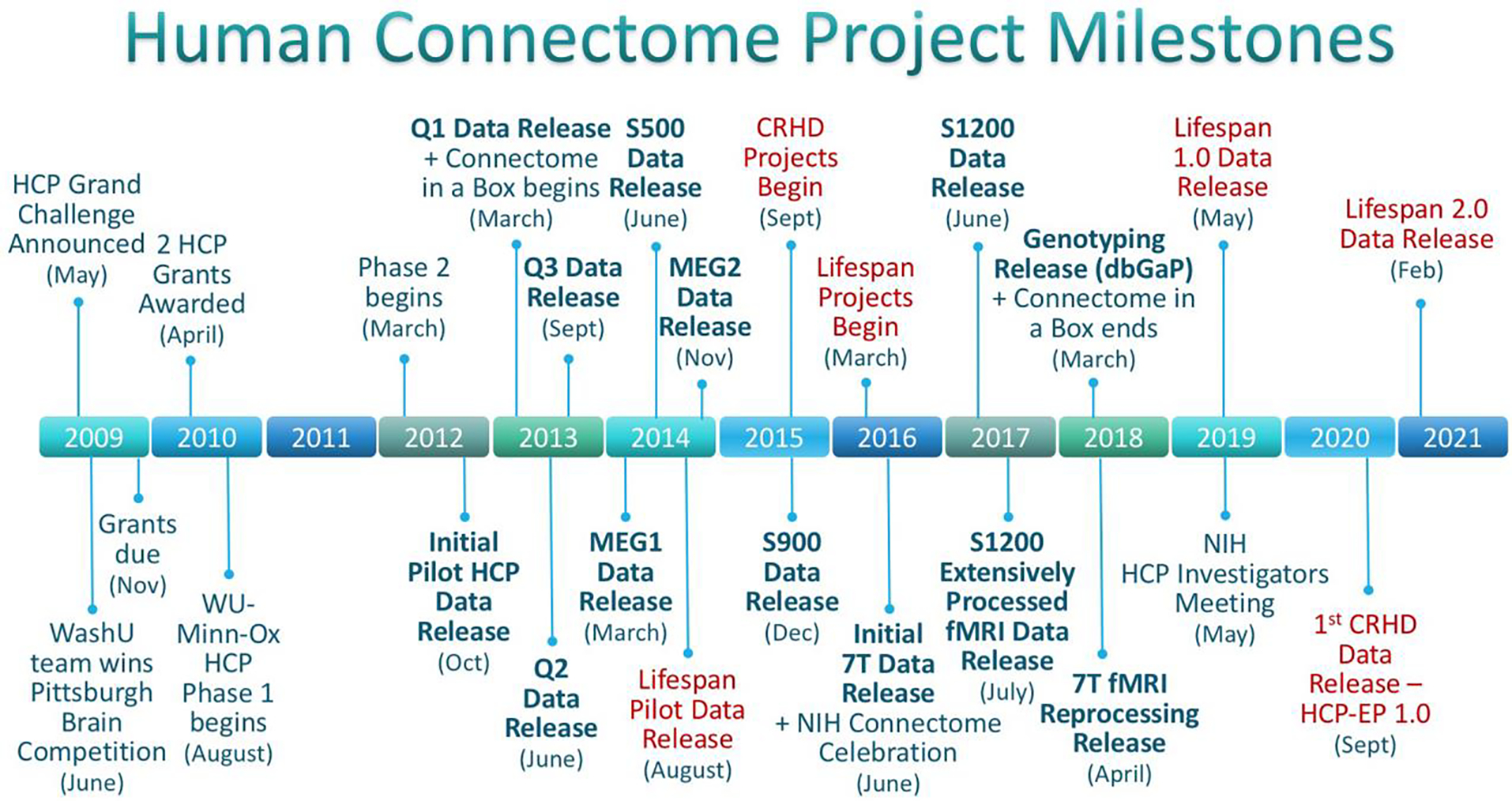
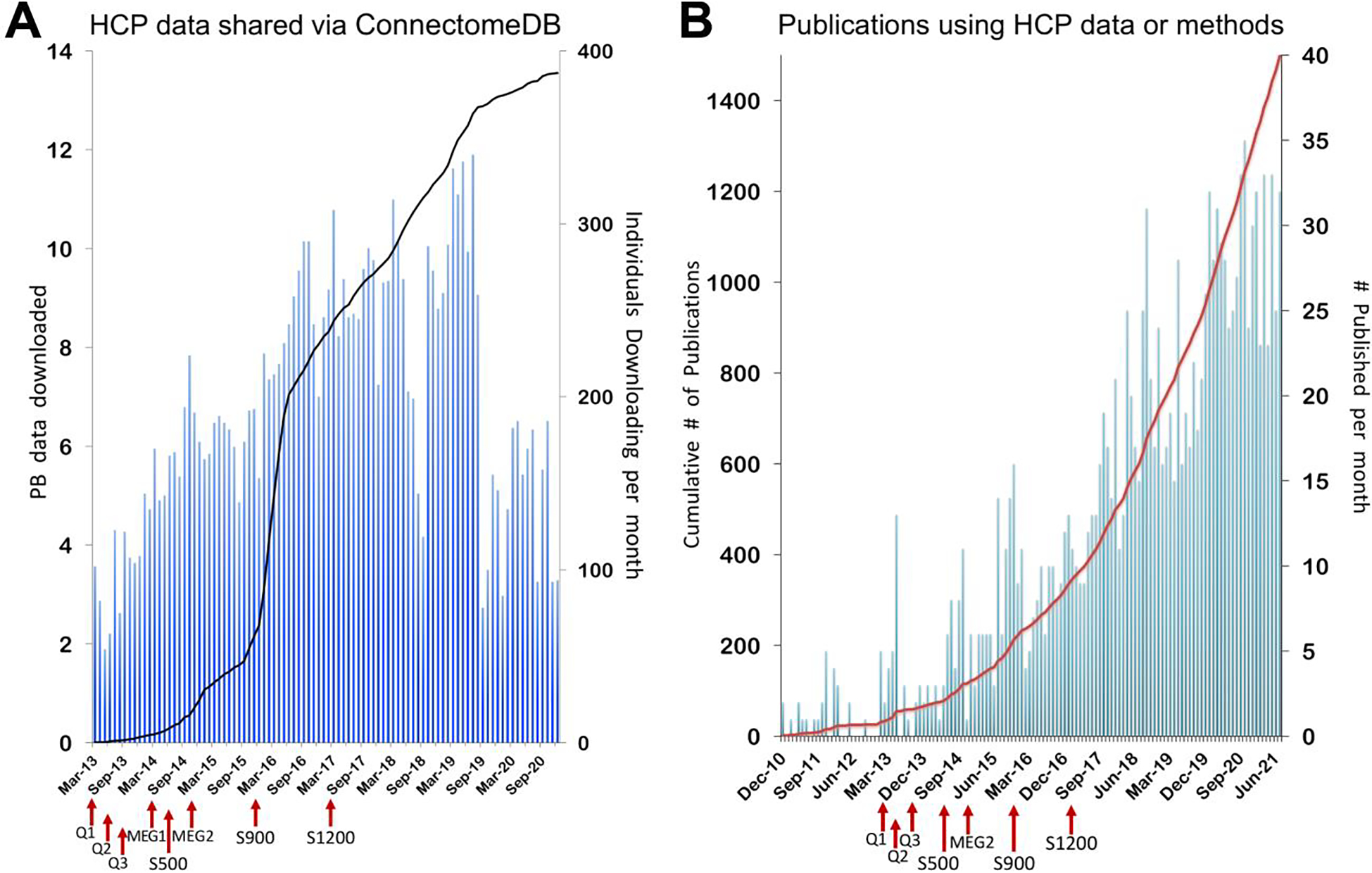
The Human Connectome Project (HCP) was launched in 2010 as an ambitious effort to accelerate advances in human neuroimaging, particularly for measures of brain connectivity; apply these advances to study a large number of healthy young adults; and freely share the data and tools with the scientific community. NIH awarded grants to two consortia; this retrospective focuses on the "WU-Minn-Ox" HCP consortium centered at Washington University, the University of Minnesota, and University of Oxford. In just over 6 years, the WU-Minn-Ox consortium succeeded in its core objectives by: 1) improving MR scanner hardware, pulse sequence design, and image reconstruction methods, 2) acquiring and analyzing multimodal MRI and MEG data of unprecedented quality together with behavioral measures from more than 1100 HCP participants, and 3) freely sharing the data (via the ConnectomeDB database) and associated analysis and visualization tools. To date, more than 27 Petabytes of data have been shared, and 1538 papers acknowledging HCP data use have been published. The "HCP-style" neuroimaging paradigm has emerged as a set of best-practice strategies for optimizing data acquisition and analysis. This article reviews the history of the HCP, including comments on key events and decisions associated with major project components. We discuss several scientific advances using HCP data, including improved cortical parcellations, analyses of connectivity based on functional and diffusion MRI, and analyses of brain-behavior relationships. We also touch upon our efforts to develop and share a variety of associated data processing and analysis tools along with detailed documentation, tutorials, and an educational course to train the next generation of neuroimagers. We conclude with a look forward at opportunities and challenges facing the human neuroimaging field from the perspective of the HCP consortium.
Keywords: Behavior; Connectivity; Diffusion imaging; Functional MRI; Magnetoencephalography; Parcellation; informatics.
Copyright © 2021 The Author(s). Published by Elsevier Inc. All rights reserved.
Conflict of interest statement
Declaration of Competing Interest The authors declare that they have no conflicts of interest in relation to this manuscript.
Figures
References
-
- Abbott LF, Bock DD, Callaway EM, Denk W, Dulac C, Fairhall AL, Fiete I, Harris KM, Helmstaedter M, Jain V, Kasthuri N, LeCun Y, Lichtman JW, Littlewood PB, Luo L, Maunsell J, Reid RC, Rosen BR, Rubin GM, Sejnowski TJ, … Van Essen DC (2020). The Mind of a Mouse. Cell, 182(6), 1372–1376. 10.1016/j.cell.2020.08.010 - DOI - PubMed
Publication types
MeSH terms
Grants and funding
LinkOut - more resources
Full Text Sources
Miscellaneous
