


Insomnia, anxiety, and depression during the COVID-19 pandemic: an international collaborative study
- PMID: 34508986
- PMCID: PMC8425785
- DOI: 10.1016/j.sleep.2021.07.035
Insomnia, anxiety, and depression during the COVID-19 pandemic: an international collaborative study
Abstract
Importance and study objective: The COVID-19 pandemic has produced unprecedented changes in social, work, and leisure activities, which all have had major impact on sleep and psychological well-being. This study documented the prevalence of clinical cases of insomnia, anxiety, and depression and selected risk factors (COVID-19, confinement, financial burden, social isolation) during the first wave of the pandemic in 13 countries throughout the world.
Design and participants: International, multi-center, harmonized survey of 22 330 adults (mean age = 41.9 years old, range 18-95; 65.6% women) from the general population in 13 countries and four continents. Participants were invited to complete a standardized web-based survey about sleep and psychological symptoms during the first wave of the COVID-19 pandemic from May to August 2020.
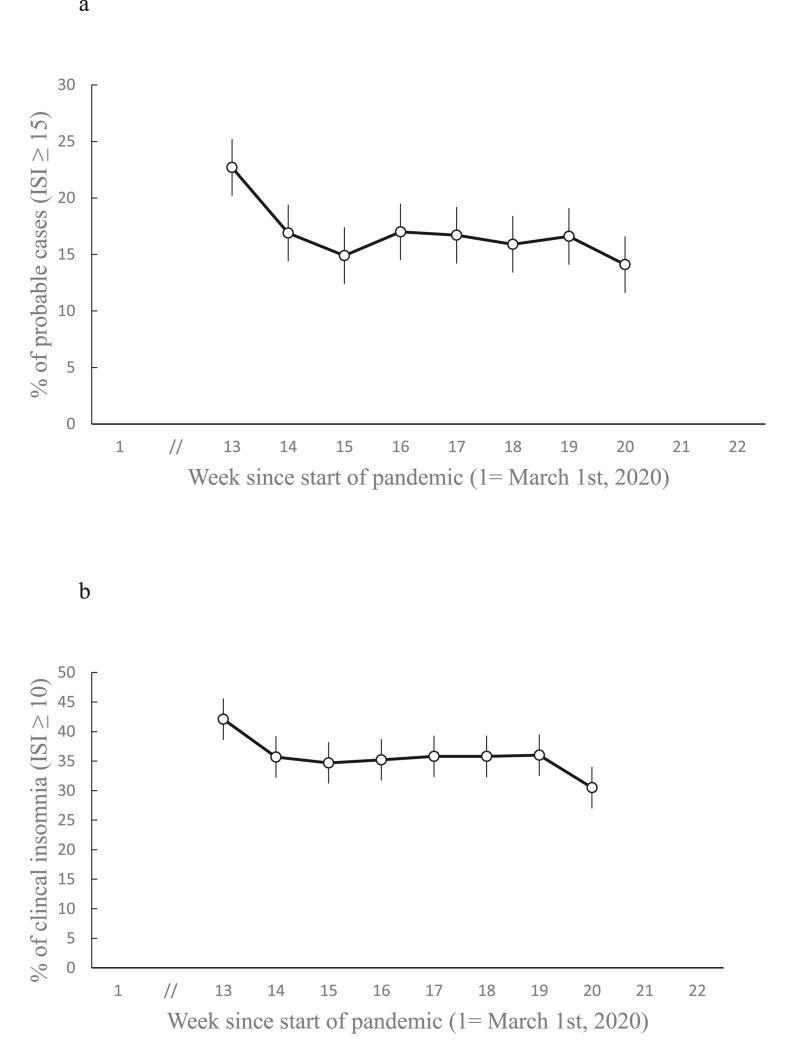
Results: Clinical insomnia symptoms were reported by 36.7% (95% CI, 36.0-37.4) of respondents and 17.4% (95% CI, 16.9-17.9) met criteria for a probable insomnia disorder. There were 25.6% (95% CI, 25.0-26.2) with probable anxiety and 23.1% (95% CI, 22.5-23.6) with probable depression. Rates of insomnia symptoms (>40%) and insomnia disorder (>25%) were significantly higher in women, younger age groups, and in residents of Brazil, Canada, Norway, Poland, USA, and United Kingdom compared to residents from Asian countries (China and Japan, 8% for disorder and 22%-25% for symptoms) (all Ps < 0.01). Proportions of insomnia cases were significantly higher among participants who completed the survey earlier in the first wave of the pandemic relative to those who completed it later. Risks of insomnia were higher among participants who reported having had COVID-19, who reported greater financial burden, were in confinement for a period of four to five weeks, and living alone or with more than five people in same household. These associations remained significant after controlling for age, sex, and psychological symptoms.
Conclusion and relevance: Insomnia, anxiety, and depression were very prevalent during the first wave of the COVID-19 pandemic. Public health prevention programs are needed to prevent chronicity and reduce long-term adverse outcomes associated with chronic insomnia and mental health problems.
Keywords: Anxiety; COVID-19; Depression; Insomnia; Pandemic; Sleep problems.
Copyright © 2021 Elsevier B.V. All rights reserved.
Conflict of interest statement
The ICMJE Uniform Disclosure Form for Potential Conflicts of Interest associated with this article can be viewed by clicking on the following link:
Figures
References
MeSH terms
LinkOut - more resources
Full Text Sources
Medical
Miscellaneous
