


Human urinary kallidinogenase in acute ischemic stroke: A single-arm, multicenter, phase IV study (RESK study)
- PMID: 34510762
- PMCID: PMC8611767
- DOI: 10.1111/cns.13724
Human urinary kallidinogenase in acute ischemic stroke: A single-arm, multicenter, phase IV study (RESK study)
Abstract
Aims: Human urinary kallidinogenase (HUK) has shown favorable efficacies in acute ischemic stroke (AIS) treatment. We sought confirmation of the safety and efficacy of HUK for AIS in a large population.
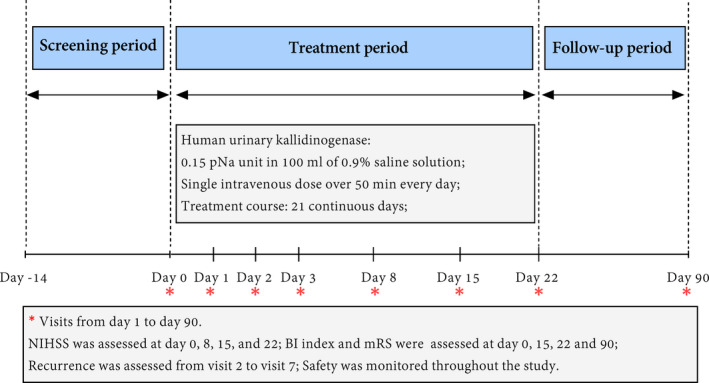
Methods: RESK study enrolled patients with AIS of anterior circulation to receive HUK infusion. The primary endpoint was the incidence of treatment-emergent adverse events (AEs). Secondary endpoints assessed neurological and functional improvements and stroke recurrent rate.
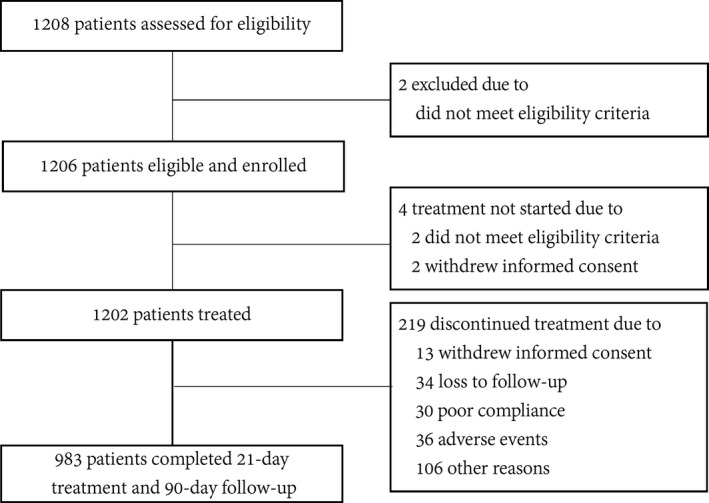
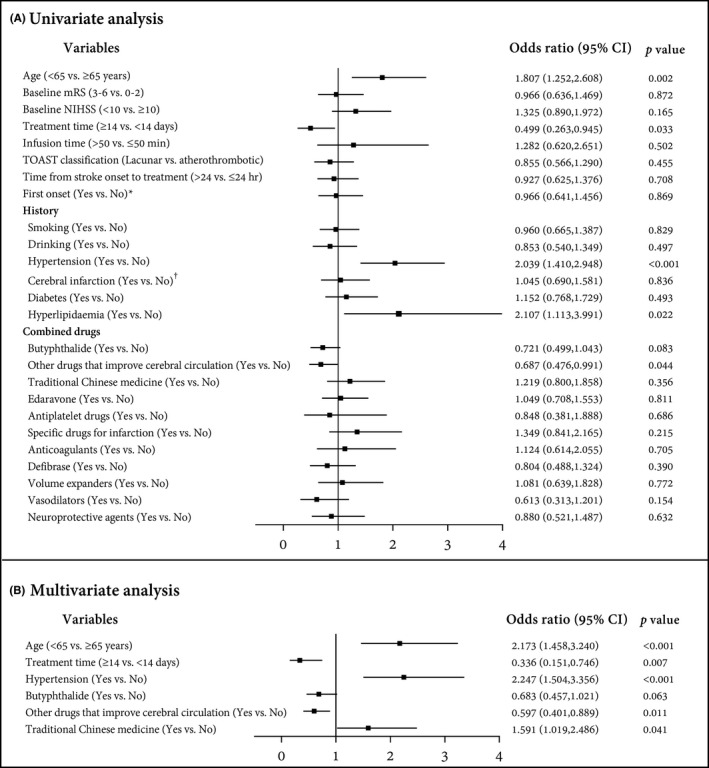
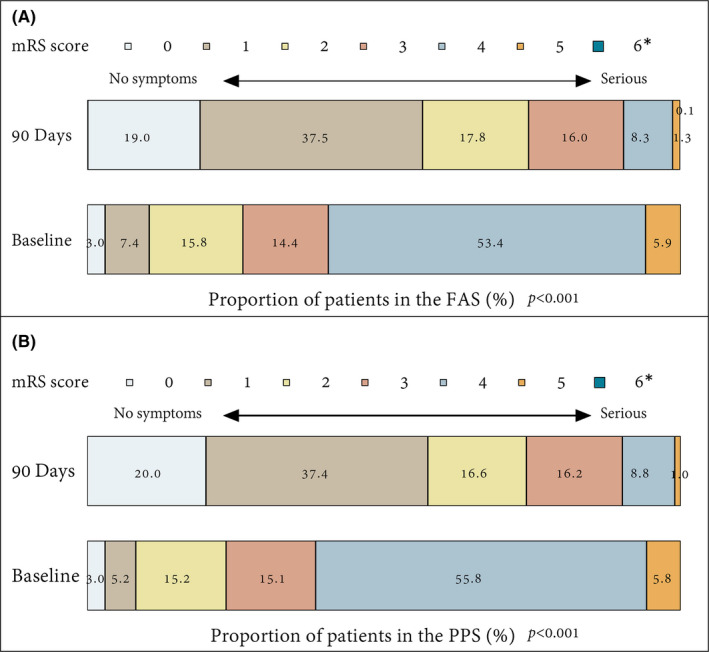
Results: Of 1206 eligible patients, 1202 patients received at least one dose of HUK infusion and 983 (81.5%) completed the study. The incidence of treatment-emergent AEs and serious AEs were 55.99% and 2.41%, respectively. Pre-specified AEs of special interest occurred in 21.71% of patients, but the majority were mild and unrelated to therapy. Hypertension, age, treatment time, and drug combination were identified to be associated with drug-related blood pressure reduction. Neurological and functional evaluations revealed favorable outcomes from baseline to post-treatment assessment. The cumulative recurrence rate of stroke was 2.50% during the 90-day assessment.
Conclusion: HUK had an acceptable safety and tolerability profile in AIS patients. Besides, HUK demonstrated the neurological and functional improvements in AIS, further confirming its clinical efficacy in a real-world large population.
Keywords: acute ischemic stroke; clinical trial; efficacy; human urinary kallidinogenase; safety.
© 2021 The Authors. CNS Neuroscience & Therapeutics published by John Wiley & Sons Ltd.
Conflict of interest statement
All authors report no conflicts.
Figures
References
-
- Molina CA. Futile recanalization in mechanical embolectomy trials: a call to improve selection of patients for revascularization. Stroke. 2010;41(5):842‐843. - PubMed
Publication types
MeSH terms
Substances
LinkOut - more resources
Full Text Sources
Medical
