


Preferred Place of Death in Adult Cancer Patients: A Systematic Review and Meta-Analysis
- PMID: 34512460
- PMCID: PMC8429937
- DOI: 10.3389/fpsyg.2021.704590
Preferred Place of Death in Adult Cancer Patients: A Systematic Review and Meta-Analysis
Abstract
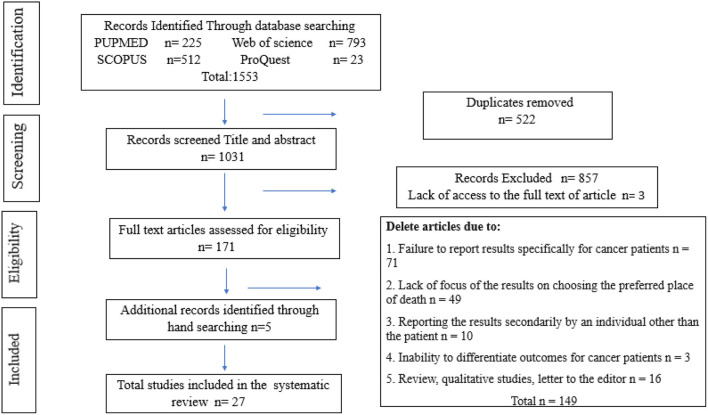
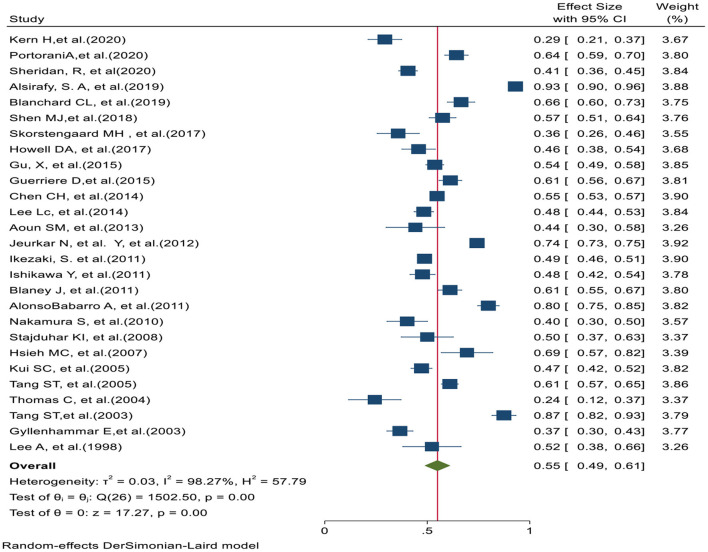
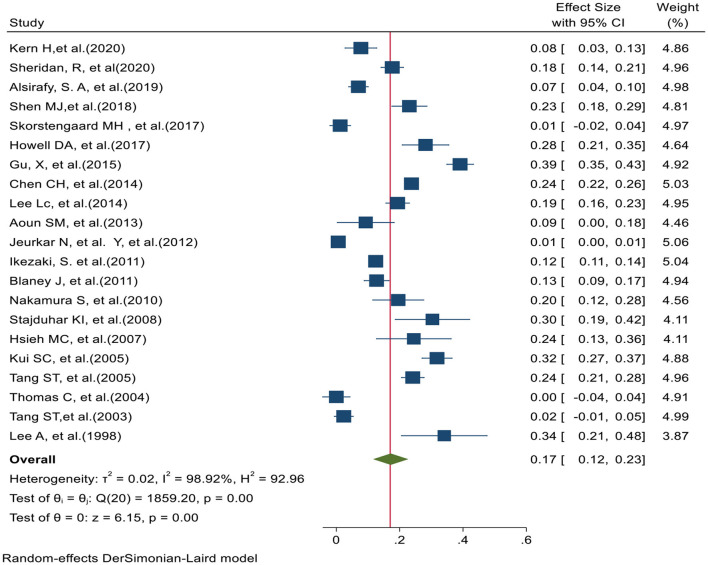
Background: Identifying the preferred place of death is a key indicator of the quality of death in cancer patients and one of the most important issues for health service policymakers. This study was done to determine the preferred place of death and the factors affecting it for adult patients with cancer. Methods: In this systematic review and meta-analysis study four online databases (PubMed, Scopus, web of science, ProQuest) were searched by relevant keywords. Quality assessment of papers was conducted using Newcastle-Ottawa (NOS) criterion. Odds ratios, relative risks, and 95% confidence intervals were determined for each of the factors extracted from the investigations. Results: A total of 14,920 participants of 27 studies were included into the meta-analysis. Based on the results, 55% of cancer patients with a confidence interval [95% CI (41-49)] preferred home, 17% of patients with a confidence interval [95% CI (-12%) 23)] preferred hospital and 10% of patients with confidence interval [95% CI (13-18)] preferred hospices as their favored place to die. Effective factors were also reported in the form of demographic characteristics, disease-related factors and psychosocial factors. Conclusions: This study showed that more than half of cancer patients chose home as their preferred place of death. Therefore, guided policies need to ensure that the death of the patients in the preferred place should be considered with priority. Systematic Review Registration:https://www.crd.york.ac.uk/prospero/display_record.php?ID=CRD42020218680, identifier: CRD42020218680.
Keywords: cancer; end of life; hospice; hospital; palliative care; preferred place of death; supportive care; terminally ill.
Copyright © 2021 Fereidouni, Rassouli, Salesi, Ashrafizadeh, Vahedian-Azimi and Barasteh.
Conflict of interest statement
The authors declare that the research was conducted in the absence of any commercial or financial relationships that could be construed as a potential conflict of interest.
Figures

References
Publication types
LinkOut - more resources
Full Text Sources
