


The Evolution of the Hallmarks of Aging
- PMID: 34512720
- PMCID: PMC8427668
- DOI: 10.3389/fgene.2021.693071
The Evolution of the Hallmarks of Aging
Abstract
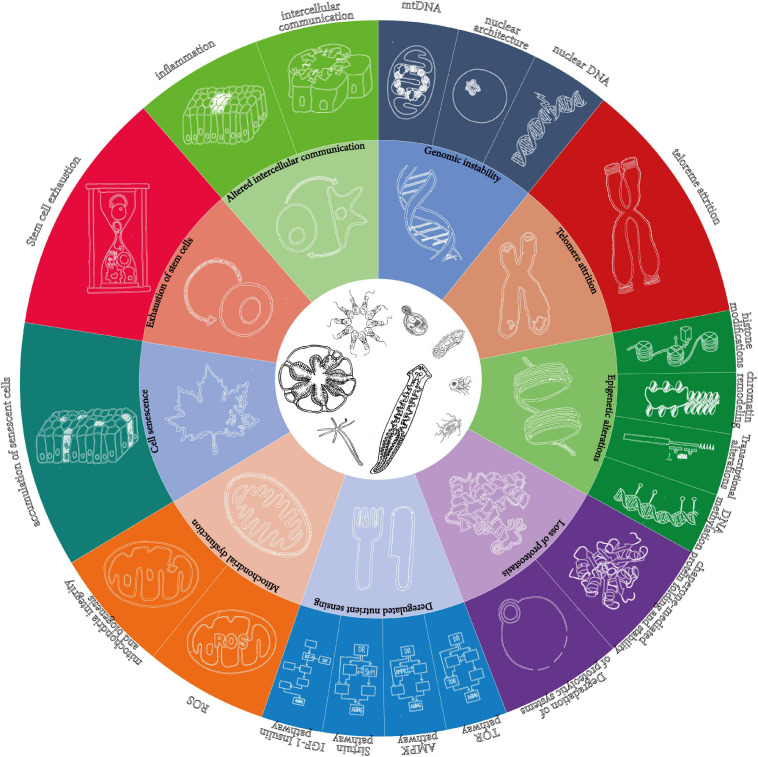
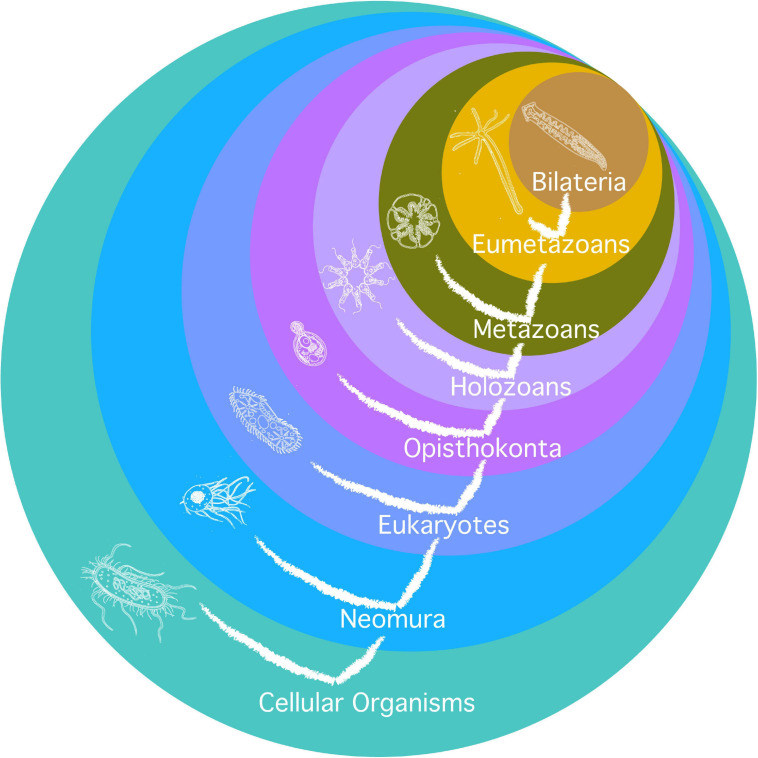
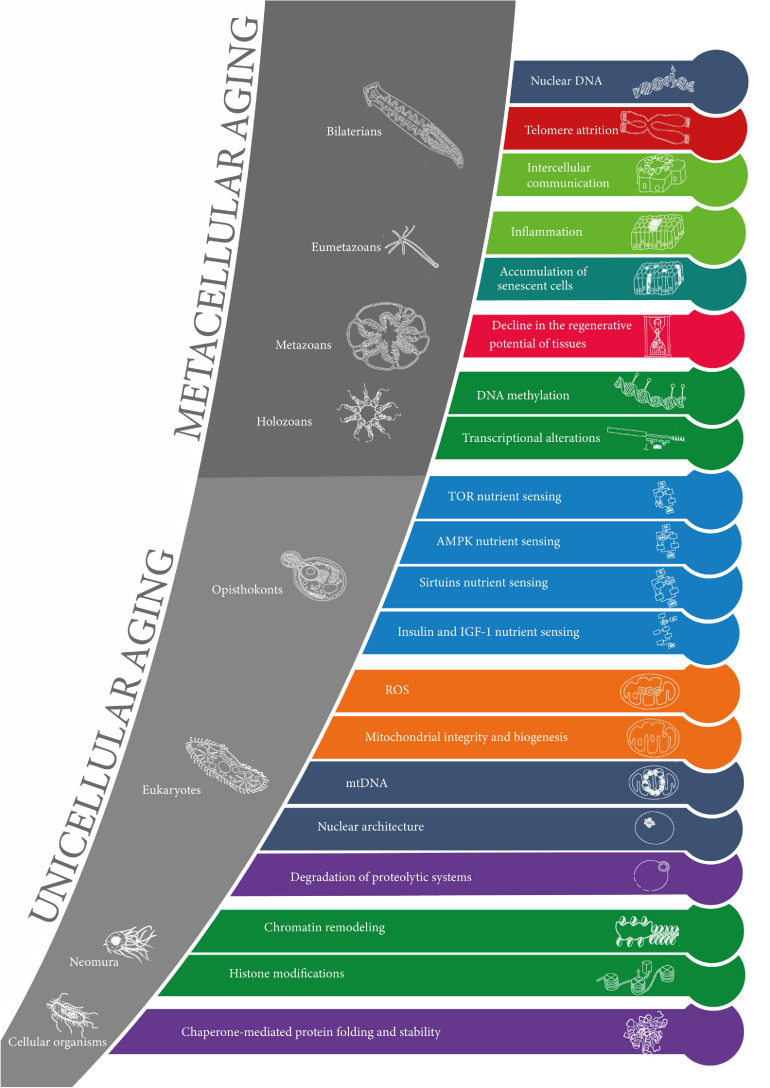
The evolutionary theory of aging has set the foundations for a comprehensive understanding of aging. The biology of aging has listed and described the "hallmarks of aging," i.e., cellular and molecular mechanisms involved in human aging. The present paper is the first to infer the order of appearance of the hallmarks of bilaterian and thereby human aging throughout evolution from their presence in progressively narrower clades. Its first result is that all organisms, even non-senescent, have to deal with at least one mechanism of aging - the progressive accumulation of misfolded or unstable proteins. Due to their cumulation, these mechanisms are called "layers of aging." A difference should be made between the first four layers of unicellular aging, present in some unicellular organisms and in all multicellular opisthokonts, that stem and strike "from the inside" of individual cells and span from increasingly abnormal protein folding to deregulated nutrient sensing, and the last four layers of metacellular aging, progressively appearing in metazoans, that strike the cells of a multicellular organism "from the outside," i.e., because of other cells, and span from transcriptional alterations to the disruption of intercellular communication. The evolution of metazoans and eumetazoans probably solved the problem of aging along with the problem of unicellular aging. However, metacellular aging originates in the mechanisms by which the effects of unicellular aging are kept under control - e.g., the exhaustion of stem cells that contribute to replace damaged somatic cells. In bilaterians, additional functions have taken a toll on generally useless potentially limited lifespan to increase the fitness of organisms at the price of a progressively less efficient containment of the damage of unicellular aging. In the end, this picture suggests that geroscience should be more efficient in targeting conditions of metacellular aging rather than unicellular aging itself.
Keywords: aging; bilaterians; evolution; geroscience; metacellular aging; unicellular aging.
Copyright © 2021 Lemoine.
Conflict of interest statement
The author declares that the research was conducted in the absence of any commercial or financial relationships that could be construed as a potential conflict of interest.
Figures
References
Publication types
LinkOut - more resources
Full Text Sources
