


Types, characteristics and anatomic location of physical signs in elder abuse: a systematic review : Awareness and recognition of injury patterns
- PMID: 34514555
- PMCID: PMC8860961
- DOI: 10.1007/s41999-021-00550-z
Types, characteristics and anatomic location of physical signs in elder abuse: a systematic review : Awareness and recognition of injury patterns
Abstract
Purpose: Elder abuse is a worldwide problem with serious consequences for individuals and society. The recognition of elder abuse is complex due to a lack of awareness and knowledge. In this systematic review, types, characteristics and anatomic location of physical signs in elder abuse were identified.
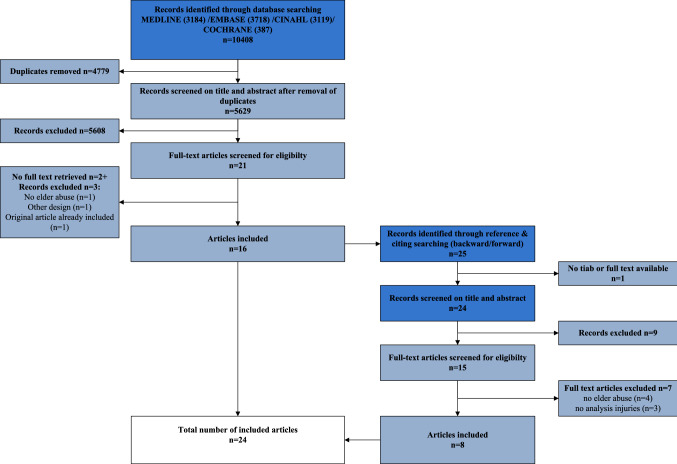
Methods: Databases of MEDLINE, COCHRANE, EMBASE and CINAHL were searched. The publication dates ranged from March 2005 to July 2020. In addition to the electronic searches, the reference lists and citing of included articles were hand-searched to identify additional relevant studies. The quality of descriptive and mixed-methods studies was assessed.
Results: The most commonly described physical signs in elder abuse were bruises. The characteristics of physical signs can be categorized into size, shape and distribution. Physical signs were anatomically predominantly located on the head, face/maxillofacial area (including eyes, ears and dental area), neck, upper extremities and torso (especially posterior). Physical signs related to sexual elder abuse were mostly located in the genital and perianal area and often accompanied by a significant amount of injury to non-genital parts of the body, especially the area of the head, arms and medial aspect of the thigh.
Conclusions: Most common types, characteristics and anatomic location of physical signs in elder abuse were identified. To enhance (early) detection of physical signs in elder abuse, it is necessary to invest in (more) in-depth education and to include expertise from a forensic physician or forensic nurse in multidisciplinary team consultations.
Keywords: Bruises; Distribution; Elder abuse; Forensics; Physical signs.
© 2021. The Author(s).
Conflict of interest statement
On behalf of all authors, the corresponding author states that there is no conflict of interest. The authors have no relevant financial or non-financial interests to disclose. The authors have no conflicts of interest to declare that are relevant to the content of this article. All authors certify that they have no affiliations with or involvement in any organization or entity with any financial interest or non-financial interest in the subject matter or materials discussed in this manuscript. The authors have no financial or proprietary interests in any material discussed in this article.
References
-
- Lindenberg L, Jansen JHLJ, Bakker L, Witkamp B, Timmermans M (2018) Aard en omvang van ouderenmishandeling—Regioplan. https://www.regioplan.nl/project/aard-en-omvang-ouderenmishandeling/. Accessed 10 Feb 2021.
Publication types
MeSH terms
LinkOut - more resources
Full Text Sources
Medical
