Simplified models to assess newborn gestational age in low-middle income countries: findings from a multicountry, prospective cohort study
- PMID: 34518201
- PMCID: PMC8438948
- DOI: 10.1136/bmjgh-2021-005688
Simplified models to assess newborn gestational age in low-middle income countries: findings from a multicountry, prospective cohort study
Abstract
Introduction: Preterm birth is the leading cause of child mortality. This study aimed to develop and validate programmatically feasible and accurate approaches to estimate newborn gestational age (GA) in low resource settings.
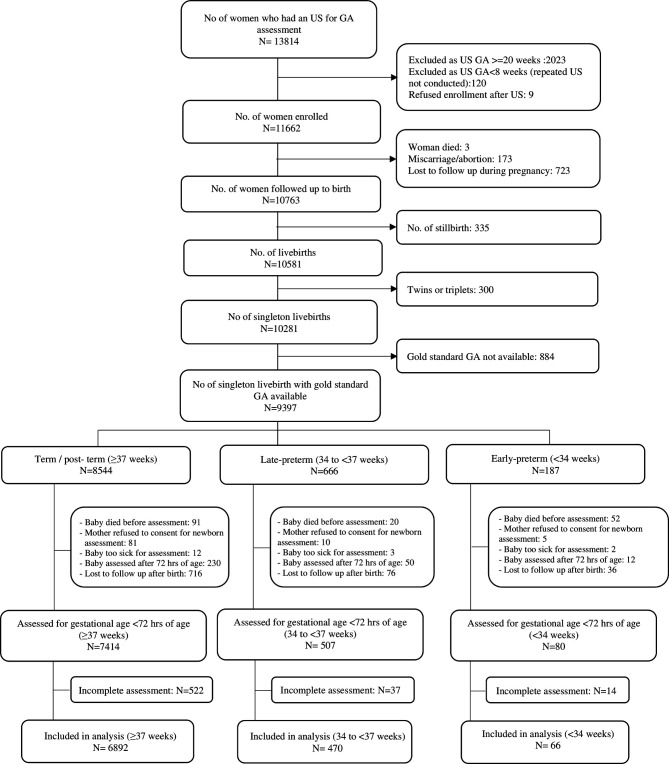
Methods: The WHO Alliance for Maternal and Newborn Health Improvement (AMANHI) study recruited pregnant women from population-based cohorts in five countries (Bangladesh, Ghana, Pakistan, Tanzania and Zambia). Women <20 weeks gestation by ultrasound-based dating were enrolled. Research staff assessed newborns for: (1) anthropometry, (2) neuromuscular/physical signs and (3) feeding maturity. Machine-learning techniques were used to construct ensemble models. Diagnostic accuracy was assessed by areas under the receiver operating curve (AUC) and Bland-Altman analysis.
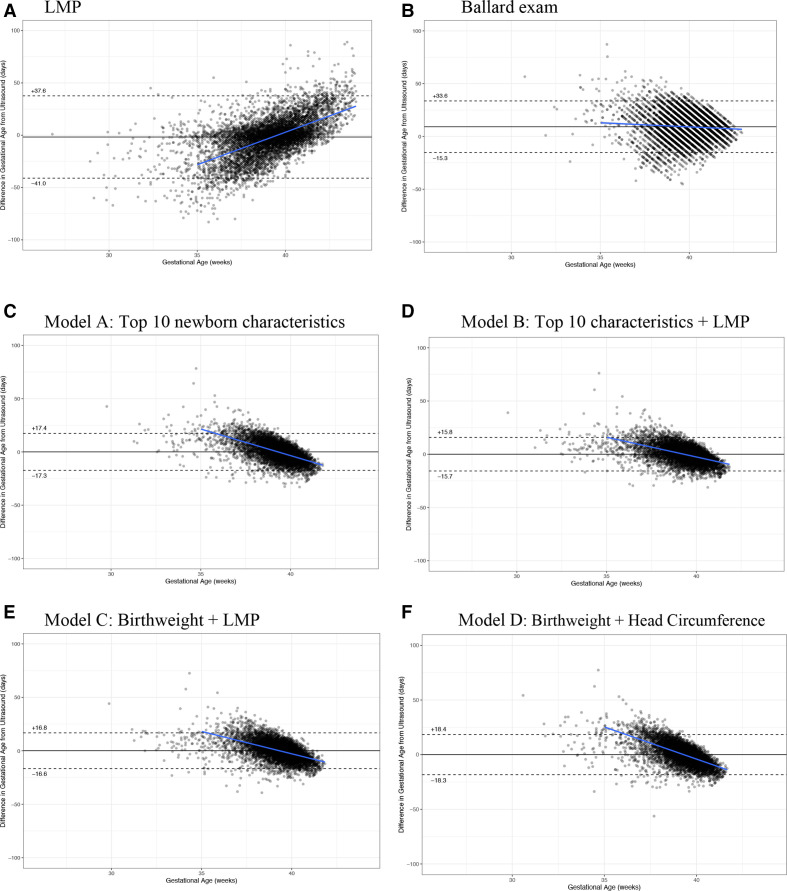
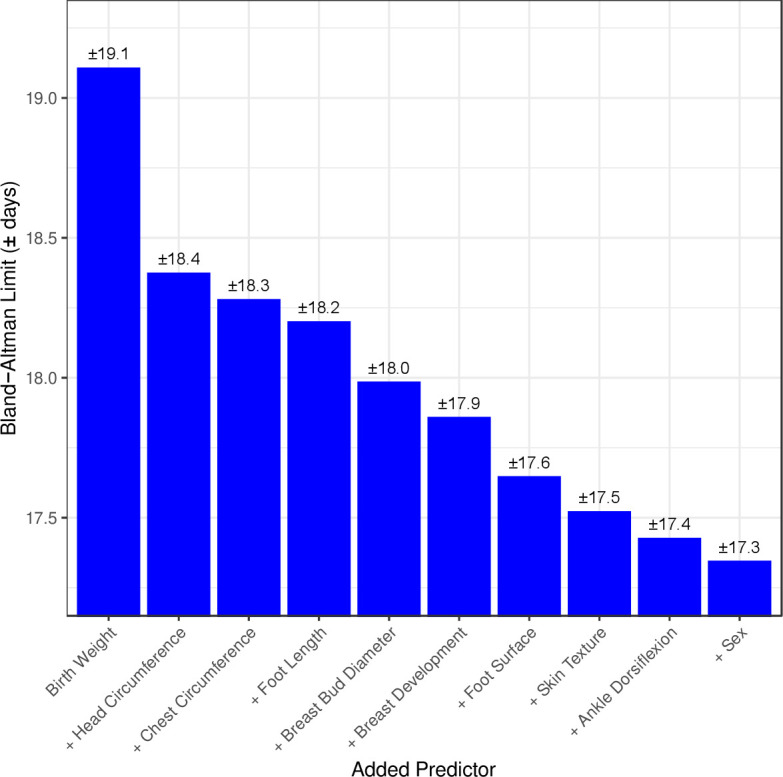
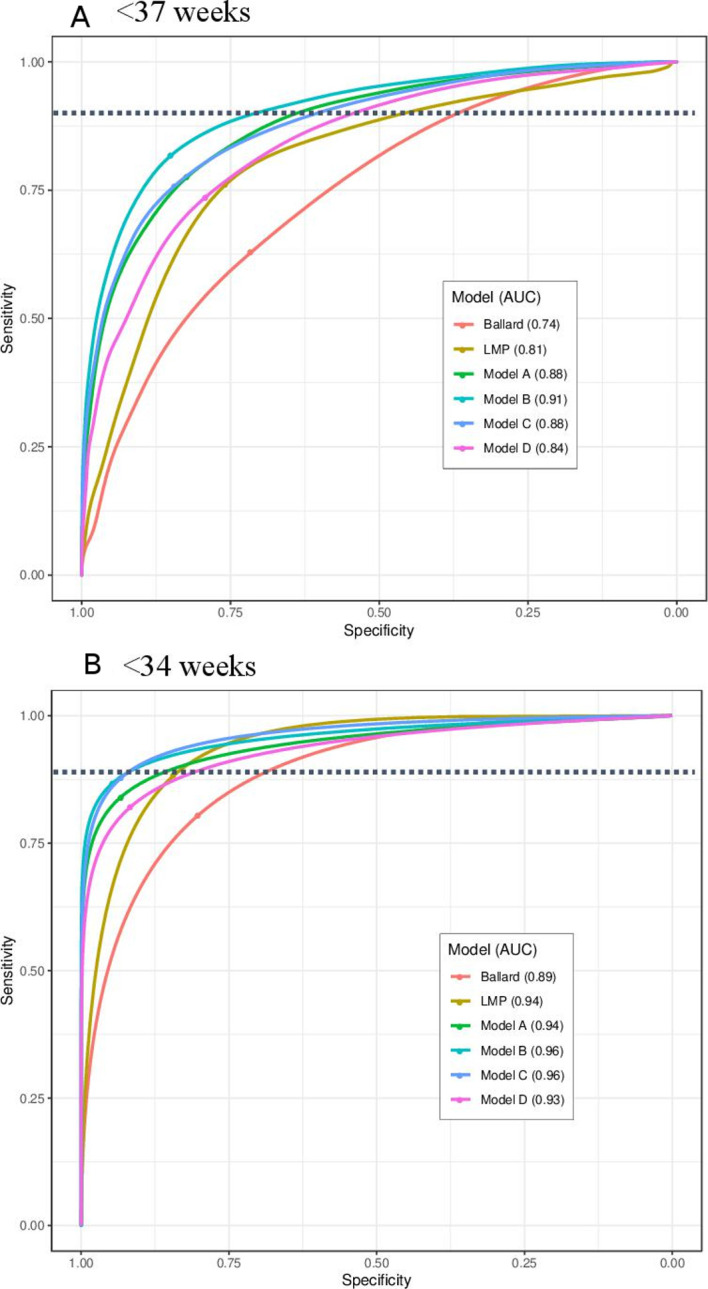
Results: 7428 liveborn infants were included (n=536 preterm, <37 weeks). The Ballard examination was biased compared with ultrasound dating (mean difference: +9 days) with 95% limits of agreement (LOA) -15.3 to 33.6 days (precision ±24.5 days). A model including 10 newborn characteristics (birth weight, head circumference, chest circumference, foot length, breast bud diameter, breast development, plantar creases, skin texture, ankle dorsiflexion and infant sex) estimated GA with no bias, 95% LOA ±17.3 days and an AUC=0.88 for classifying the preterm infant. A model that included last menstrual period (LMP) with the 10 characteristics had 95% LOA ±15.7 days and high diagnostic accuracy (AUC 0.91). An alternative simpler model including birth weight and LMP had 95% LOA of ±16.7 and an AUC of 0.88.
Conclusion: The best machine-learning model (10 neonatal characteristics and LMP) estimated GA within ±15.7 days of early ultrasound dating. Simpler models performed reasonably well with marginal increases in prediction error. These models hold promise for newborn GA estimation when ultrasound dating is unavailable.
Keywords: child health; obstetrics.
© Author(s) (or their employer(s)) 2021. Re-use permitted under CC BY. Published by BMJ.
Conflict of interest statement
Competing interests: The WHO and study sites received funding from the Bill and Melinda Gates Foundation (BMGF) to conduct this study. The statistician performing the machine learning analysis (JW) is an employee of Metrum Research Group which received funding from the Bill and Melinda Gates Foundation. BB, CBA, CG, DHH, JH, LH, MK, FM, KS, MSS and JW report research grants from the BMGF during the conduct of the study. ACL reported research grants from the NICHD and BMGF, and does consultancy to WHO.
Figures
References
Publication types
MeSH terms
Grants and funding
LinkOut - more resources
Full Text Sources