Meta-Analysis
. 2021 Sep 13;11(1):18104.
doi: 10.1038/s41598-021-96546-7.

Quadratus lumborum block for postoperative analgesia after cesarean section: a meta-analysis of randomized controlled trials with trial sequential analysis

Affiliations
Meta-Analysis

Quadratus lumborum block for postoperative analgesia after cesarean section: a meta-analysis of randomized controlled trials with trial sequential analysis

Zhigang Zhao et al. Sci Rep. .

Abstract

The aim of this study was to assess the analgesic efficacy of QLB versus controls in women undergoing cesarean section (CS). We systematically searched Cochrane Library, PUBMED, EMBASE, VIP, WANFANG, and China National Knowledge Infrastructure. Trials were eligible if parturients received QLB during CS. GRADE system was used to assess the certainty of evidence and Trial sequential analyses (TSA) were performed to determine whether the results are supported by sufficient data. Thirteen studies involving 1269 patients were included. Compared to controls, QLB significantly reduced the cumulative postoperative intravenous opioid consumption (in milligram morphine equivalents) at 24 h (MD, - 11.51 mg; 95% CI - 17.05 to - 5.96) and 48 h (MD, - 15.87 mg; 95% CI - 26.36 to - 5.38), supported by sufficient data confirmed by TSA. The postoperative pain scores were significantly reduced by QLB at 4 h, 6 h, 12 h, 24 h, and 48 h postoperatively by QLB compared with control. Moreover, the time to first request for rescue analgesic and the incidence of PONV were also significantly reduced by QLB. The quality of evidence of most results were low and moderate assessed by GRADE.


Conflict of interest statement

The authors declare no competing interests.

Figures
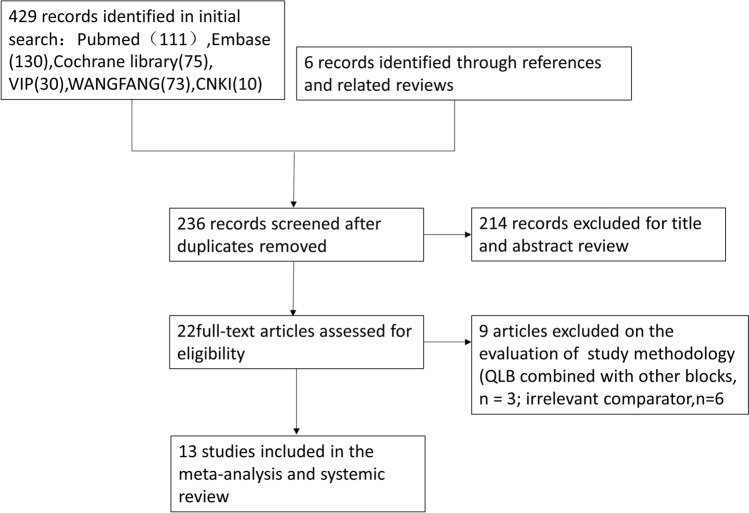
Figure 1
Figure 1
The flow diagram of the study.
Figure 2
Figure 2
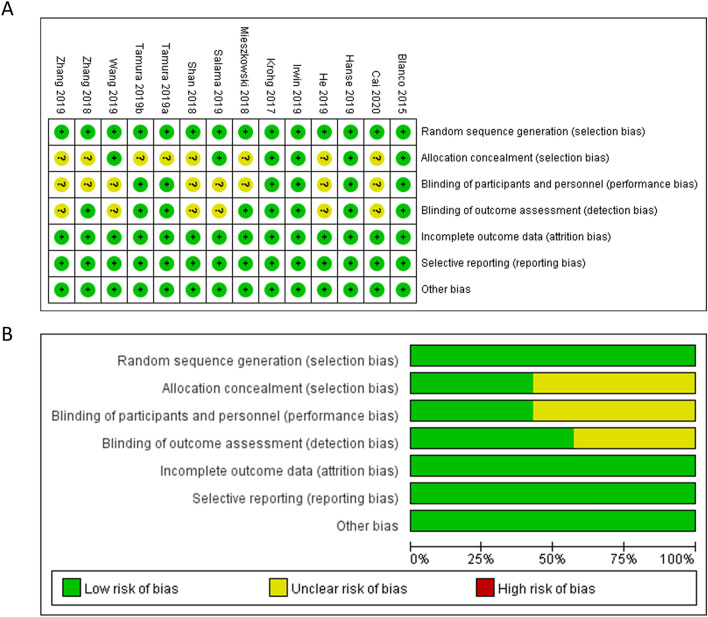
Quality assessment of included studies. The green circles indicate lack of bias; yellow circles indicate unclear bias. (A) Risk of bias for each included study. (B) The overall summary of bias of the included studies.
Figure 3
Figure 3
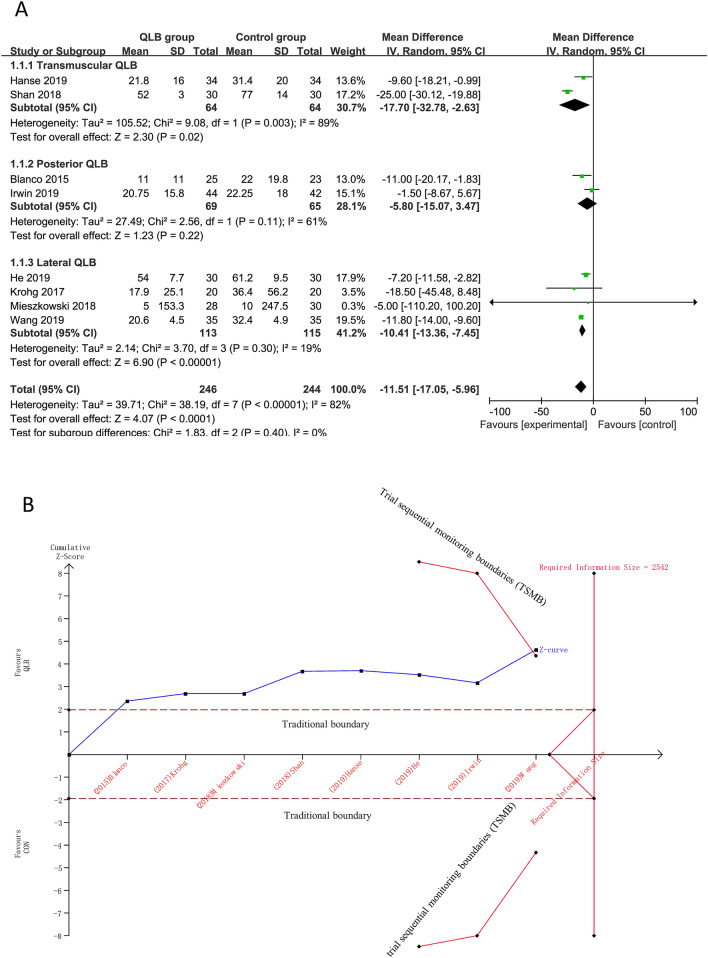
The results of meta-analysis and TSA for 24 h intravenous morphine equivalent consumption. (A) meta-analysis of cumulative 24-h morphine equivalent consumption; (B) TSA of cumulative 24-h morphine equivalent consumption.
Figure 4
Figure 4
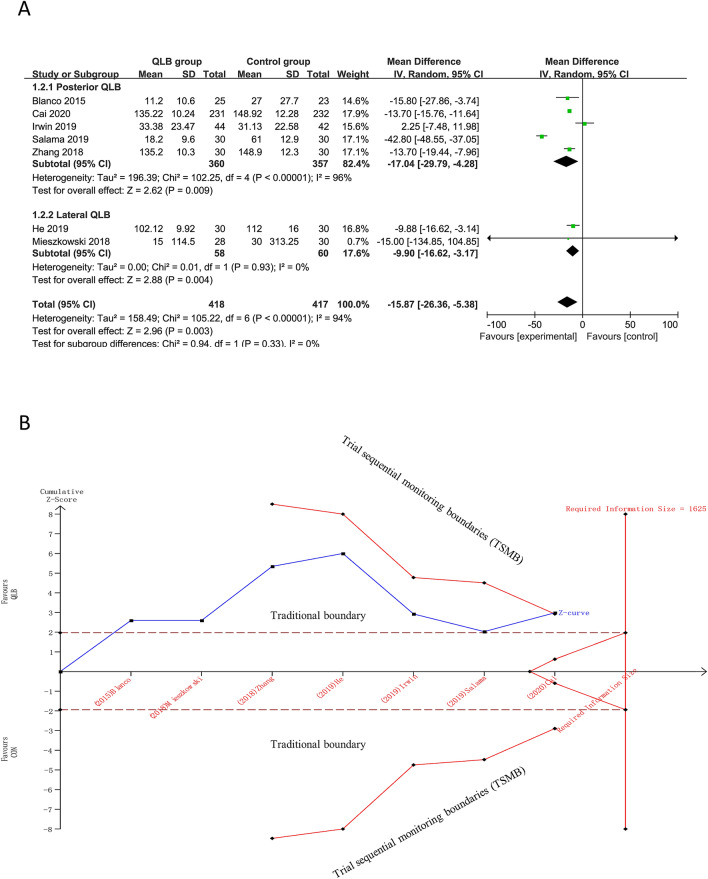
The results of meta-analysis and TSA for 48 h intravenous morphine equivalent consumption. (A) meta-analysis of cumulative 48-h morphine equivalent consumption; (B) TSA of cumulative 48-h morphine equivalent consumption.
Figure 5
Figure 5
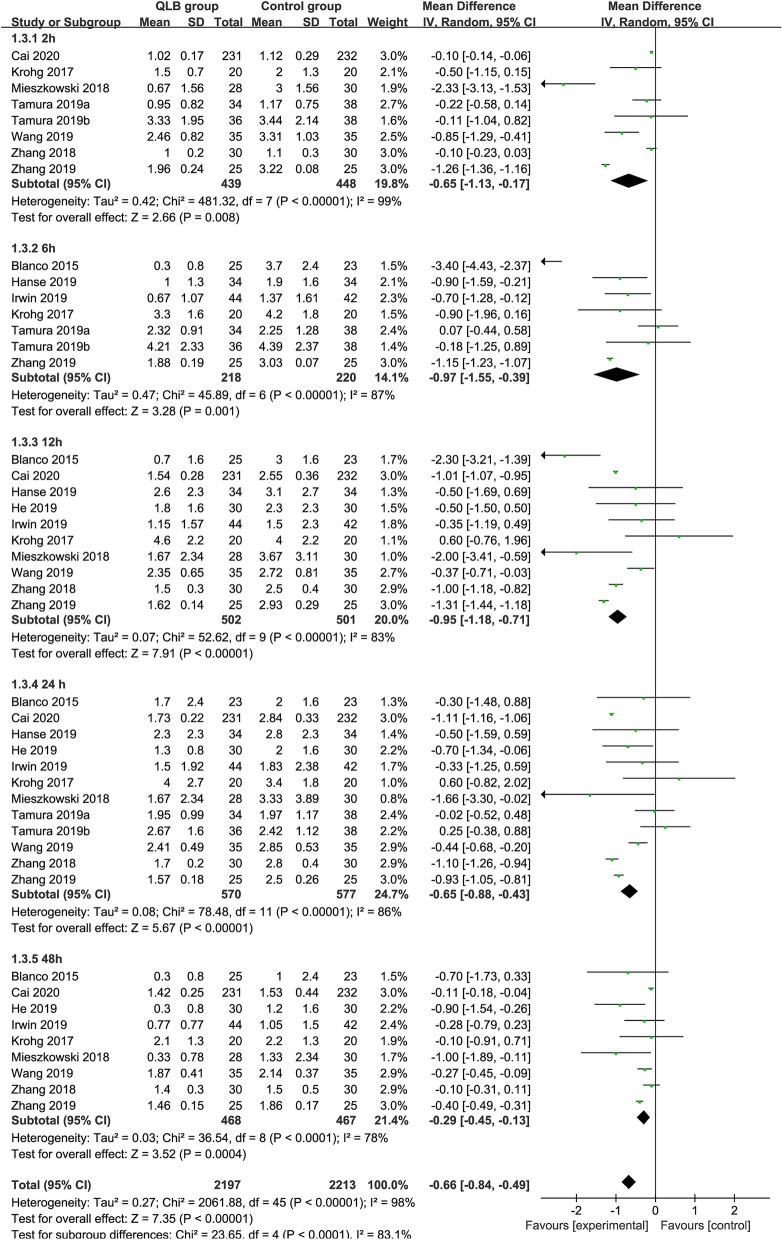
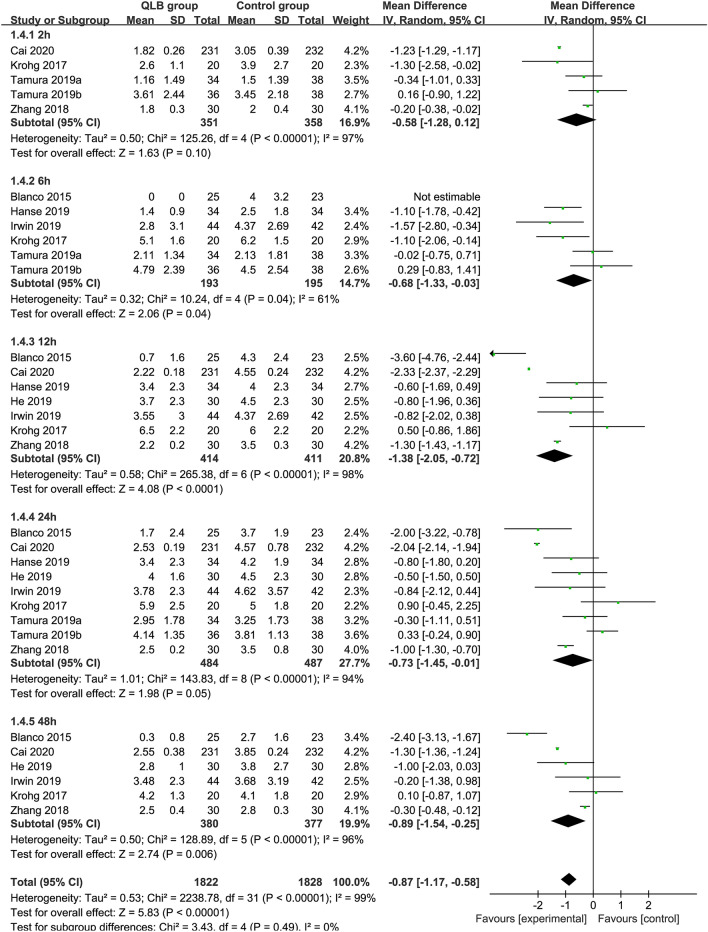
Forest plots of pain scores at rest at different time points after surgery at rest.
Figure 6
Figure 6
Forest plots of pain scores during movement at different time points after surgery.

References

    1. Betran AP, et al. Rates of caesarean section: Analysis of global, regional and national estimates. Paediatr. Perinat. Epidemiol. 2007;21:98–113. doi: 10.1111/j.1365-3016.2007.00786.x. - DOI - PubMed
    1. Gadsden J, Hart S, Santos AC. Post-cesarean delivery analgesia. Anesth. Analg. 2005;101:S62–69. doi: 10.1213/01.ane.0000177100.08599.c8. - DOI - PubMed
    1. Karlstrom A, Engstrom-Olofsson R, Norbergh KG, Sjoling M, Hildingsson I. Postoperative pain after cesarean birth affects breastfeeding and infant care. J. Obstet. Gynecol. Neonatal Nurs. 2007;36:430–440. doi: 10.1111/j.1552-6909.2007.00160.x. - DOI - PubMed
    1. Eisenach JC, et al. Severity of acute pain after childbirth, but not type of delivery, predicts persistent pain and postpartum depression. Pain. 2008;140:87–94. doi: 10.1016/j.pain.2008.07.011. - DOI - PMC - PubMed
    1. Monagle J, Molnar A, Shearer W. Oral medication for post-Caesarean analgesia. Aust. N. Z. J. Obstet. Gynaecol. 1998;38:169–171. doi: 10.1111/j.1479-828x.1998.tb02994.x. - DOI - PubMed

Publication types