Pruritus in Keloid Scars: Mechanisms and Treatments
- PMID: 34518894
- PMCID: PMC9425615
- DOI: 10.2340/00015555-3923
Pruritus in Keloid Scars: Mechanisms and Treatments
Abstract
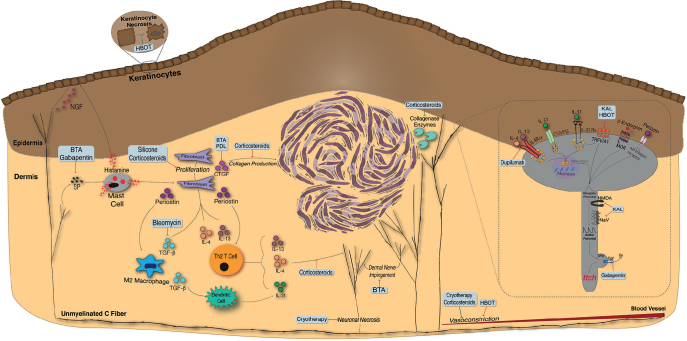
Keloids are scars that extend beyond the margins of an insulting cutaneous injury. Keloids are often thought to be primarily a cosmetic issue, as they are typically quite raised and pigmented. However, these scars also present with functional symptoms of pruritus and pain that significantly impact quality of life. The symptom of pruritus is frequently overlooked by dermatologists, and treatments are often primarily focused on the gross appearance of the scar. This review describes the prevalence and importance of pruritus in keloids. In addition, the putative mechanisms underlying the development of keloid pruritus, which include neuronal and immunological mechanisms, are discussed. Furthermore, this review describes keloid treatments that have been shown to reduce pruritus, treatments that specifically target the itch, and emerging therapies.
Figures
References
-
- Lee S-S, Yosipovitch G, Chan Y-H, Goh C-L. Pruritus, pain, and small nerve fiber function in keloids: a controlled study. J Am Acad Dermatol 2004; 51: 1002–1006. - PubMed
-
- Kouotou EA, Nansseu JR, Omona Guissana E, Mendouga Menye CR, Akpadjan F, Tounkara TM, et al. Epidemiology and clinical features of keloids in black Africans: a nested case-control study from Yaoundé, Cameroon. Int J Dermatol 2019; 58: 1135–1140. - PubMed
-
- Bijlard E, Kouwenberg CAE, Timman R, Hovius S, Busschbach J, Mureau M. Burden of keloid disease: a cross-sectional health-related quality of life assessment. Acta Derm Venereol 2017; 97: 225–229. - PubMed
-
- Kelly AP. Keloids. Dermatol Clin 1988; 6: 413–424. - PubMed
Publication types
MeSH terms
LinkOut - more resources
Full Text Sources
Research Materials