Review
. 2021 Dec;8(4):1493-1517.
doi: 10.1007/s40744-021-00365-1. Epub 2021 Sep 14.

Differentiating Psoriatic Arthritis from Osteoarthritis and Rheumatoid Arthritis: A Narrative Review and Guide for Advanced Practice Providers

Affiliations
Review

Differentiating Psoriatic Arthritis from Osteoarthritis and Rheumatoid Arthritis: A Narrative Review and Guide for Advanced Practice Providers

William Saalfeld et al. Rheumatol Ther. 2021 Dec.

Abstract

Psoriatic arthritis (PsA) is a chronic inflammatory disease that affects multiple organ systems and is characterized by skin and joint manifestations. PsA is frequently undiagnosed and/or misdiagnosed, especially because of the similarities in clinical presentation shared with other arthritic diseases, including rheumatoid arthritis (RA) and osteoarthritis (OA). An accurate and timely diagnosis of PsA is crucial to prevent delays in optimal treatment, which can lead to irreversible joint damage and increased functional disability. Patients are usually seen by a number of different healthcare providers on their path to a diagnosis of PsA, including advanced practice providers (APPs). This review provides a comprehensive overview of the characteristic features that can be used to facilitate the differentiation of PsA from RA and OA. Detailed information on clinical manifestations, biomarkers, radiologic features, and therapeutic recommendations for PsA included here can be applied in routine clinical settings to provide APPs with the confidence and knowledge to recognize and refer patients more accurately to rheumatologists for management of patients with PsA.

Keywords: Clinical presentation; Diagnosis; Osteoarthritis; Psoriatic arthritis; Rheumatoid arthritis.


Figures

Fig. 1
Fig. 1
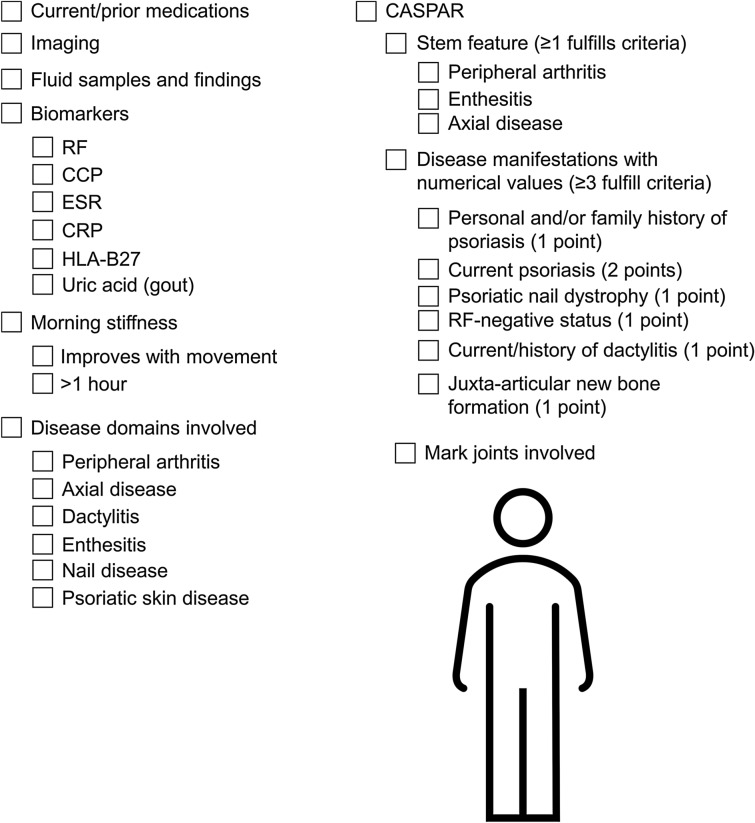
Suggested rheumatology referral checklist. CASPAR Classification for Psoriatic Arthritis, CCP cyclic citrullinated peptide, CRP C-reactive protein, ESR erythrocyte sedimentation rate, RF rheumatoid factor
Fig. 2
Fig. 2
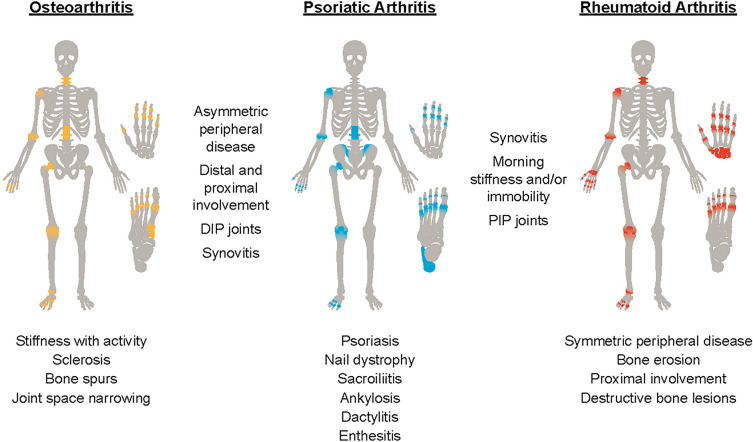
Clinical manifestations characteristic of psoriatic arthritis to differentiate from characteristics of osteoarthritis and rheumatoid arthritis. DIP distal interphalangeal, PIP proximal interphalangeal
Fig. 3
Fig. 3
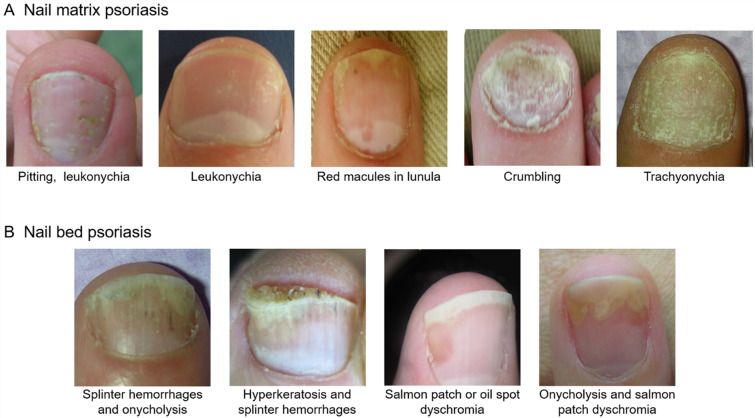
Examples of characteristic psoriatic (a) nail matrix and (b) nail bed presentations (image reprinted from Kaeley GS, et al. J Rheumatol. 2021;48(8):1208-20. 10.3899/jrheum.201471 [37])
Fig. 4
Fig. 4
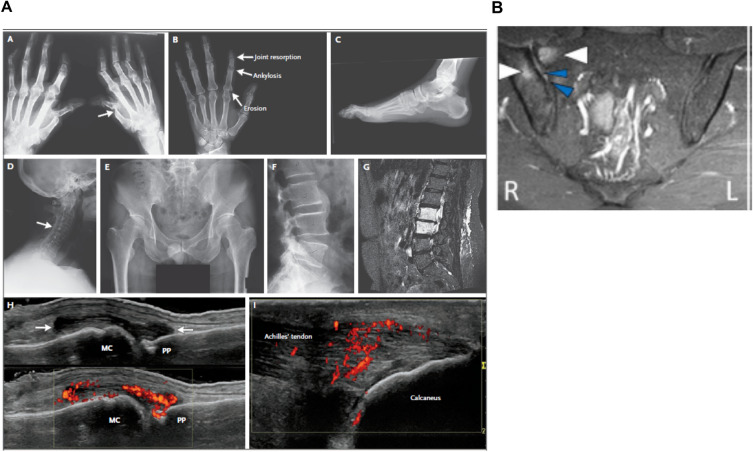
Characteristic radiographic features in PsA. Images from A Ritchlin CT, et al. N Engl J Med. 2017;376(10):957–70. 10.1056/NEJMra1505557a and B Braga MV, et al. Sci Rep. 2020;10(1):11580. 10.1038/s41598-020-68456-7b. MC metacarpal head, MRI magnetic resonance imaging, PP proximal phalanx, STIR short-tau inversion recovery. aRadiographic features of PsA: a arthritis mutilans, with pencil-in-cup deformities (arrow) and marked bone resorption (osteolysis) in phalanges of the right hand; b the hand radiograph shows joint resorption, ankylosis, and erosion in a single ray; c enthesophytes at the plantar fascia and Achilles’ tendon insertions; and d syndesmophytes involving the cervical spine, with ankylosis of facet joints (arrow); e bilateral grade 3 sacroiliitis; f paramarginal syndesmophyte bridging the fourth and fifth lumbar vertebrae; g bone marrow edema in the second and third lumbar vertebrae in a patient with severe psoriasis and new onset of back pain; h high-frequency (15 MHz) grayscale ultrasound image shows synovitis of the metacarpophalangeal joint. Distention of the joint capsule is evident (arrows). The confluent red signals (box in the lower part of the image) with power Doppler ultrasonography indicate synovial hyperemia; and i high-frequency (15 MHz) ultrasound image shows enthesitis. The confluent red signals with power Doppler ultrasonography represent hyperemia at the tendon near its insertion into the calcaneus. Normally, the tendon is poorly vascularized [76]. bUnilateral acute sacroiliitis of the sacroiliac joints that can be seen on MRI. Coronal STIR sequence: high signal intensities on the right compatible with bone marrow edema (white arrows) and enthesitis (blue arrows)[75]
Fig. 5
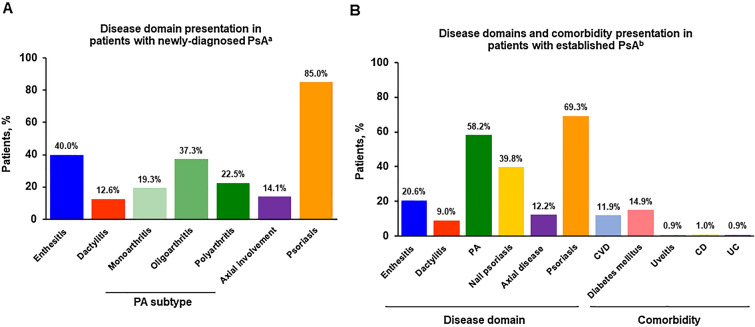
Fig. 5
Frequency of disease domains in patients with PsA. ASAS Assessment of SpondyloArthritis international Society, CBP chronic back pain, CD Crohn’s disease, CVD cardiovascular disease, IBP inflammatory back pain, LDI Leeds Dactylitis Index, LEI Leeds Enthesitis Index, PA peripheral arthritis, PASI Psoriasis Area and Severity Index, PsA psoriatic arthritis, SPARCC Spondyloarthritis Research Consortium of Canada, SJC swollen joint count, TJC tender joint count, UC ulcerative colitis, VAS visual analog scale. aDisease domains were defined as follows: (1) enthesitis: patients with LEI > 0; (2) dactylitis: determined by LDI > 0; (3) PA: disease subtype was determined at diagnosis by rheumatologist and defined by primary presentation as monoarthritis (1 joint), oligoarthritis (2–4 joints), and polyarthritis (≥ 5 joints); (4) axial involvement: patients were classified as having CBP if they reported chronic complaints of back pain for a duration of longer than 3 months at present or in the past 12 months and with onset < 45 years of age. Of these patients, fulfillment of the ASAS classification criteria for IBP was determined; (5) psoriasis: patients with PASI > 1 [142]. bDisease domains were defined as follows: (1) enthesitis: patients with SPARCC > 1; (2) dactylitis: patients with peripheral dactylitis > 1; (3) PA: patients with TJC and/or SJC > 0; (4) nail psoriasis: patients with global nail psoriasis severity VAS > 0; (5) axial disease: patients with physician-reported presence of spinal involvement at time of registry enrollment, based on clinical judgment of features thought to be representative of active inflammatory spondylitis and/or radiographs or magnetic resonance imaging (MRI) showing sacroiliitis such as sacroiliitis grade > 2 bilaterally or grades 3–4 unilaterally by x-ray, active (acute) inflammation on MRI highly suggestive of sacroiliitis associated with SpA, definite radiographic sacroiliitis according to modified New York criteria, and other evidence of sacroiliitis on imaging; and (6) skin disease: patients with > 0% body surface area affected by psoriasis

References

    1. Mease PJ, Gladman DD, Papp KA, et al. Prevalence of rheumatologist-diagnosed psoriatic arthritis in patients with psoriasis in European/North American dermatology clinics. J Am Acad Dermatol. 2013;69(5):729–735. - PubMed
    1. Ogdie A, Weiss P. The epidemiology of psoriatic arthritis. Rheum Dis Clin North Am. 2015;41(4):545–568. - PMC - PubMed
    1. Singh JA, Guyatt G, Ogdie A, et al. Special article: 2018 American College of Rheumatology/National Psoriasis Foundation Guideline for the treatment of psoriatic arthritis. Arthritis Care Res (Hoboken) 2019;71(1):2–29. - PMC - PubMed
    1. Gladman DD, Mease PJ, Healy P, et al. Outcome measures in psoriatic arthritis. J Rheumatol. 2007;34(5):1159–1166. - PubMed
    1. Orbai AM, de Wit M, Mease P, et al. International patient and physician consensus on a psoriatic arthritis core outcome set for clinical trials. Ann Rheum Dis. 2017;76(4):673–680. - PMC - PubMed