


Optimization of Nutrition And Medication (OptiNAM) for acutely admitted older patients: protocol for a randomized single-blinded controlled trial
- PMID: 34521465
- PMCID: PMC8439057
- DOI: 10.1186/s13063-021-05456-6
Optimization of Nutrition And Medication (OptiNAM) for acutely admitted older patients: protocol for a randomized single-blinded controlled trial
Abstract
Background: Internationally, older patients (≥65 years) account for more than 40% of acute admissions. Older patients admitted to the emergency department (ED) are frequently malnourished and exposed to inappropriate medication prescribing, due in part to the inaccuracy of creatinine-based equations for estimated glomerular filtration rate (eGFR). The overall aims of this trial are to investigate: (1) the efficacy of a medication review (MED intervention) independent of nutritional status, (2) the accuracy of eGFR equations based on various biomarkers compared to measured GFR (mGFR) based on 99mTechnetium-diethylenetriaminepentaacetic acid plasma clearance, and (3) the efficacy of an individualized multimodal and transitional nutritional intervention (MULTI-NUT-MED intervention) in older patients with or at risk of malnutrition in the ED.
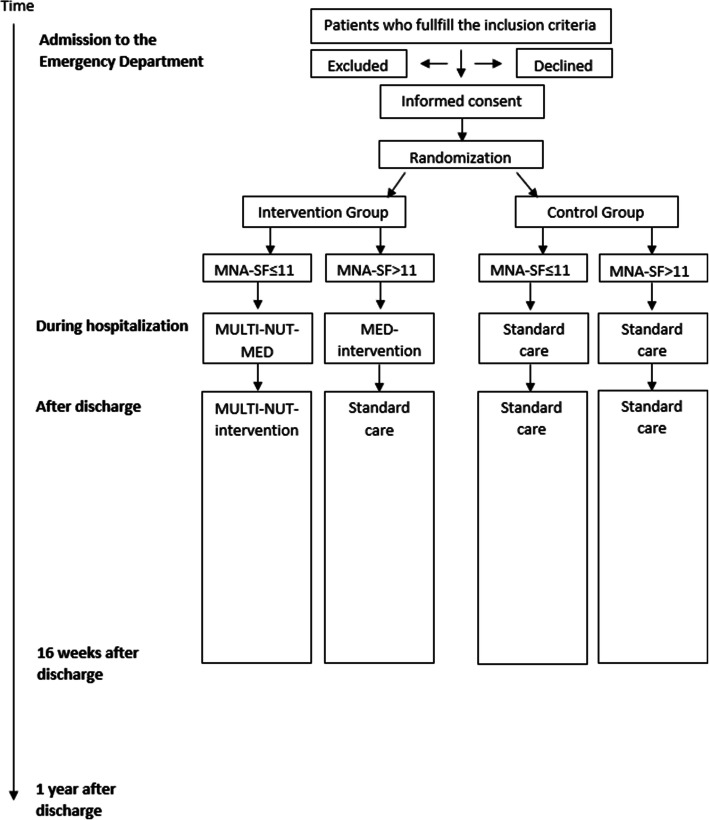
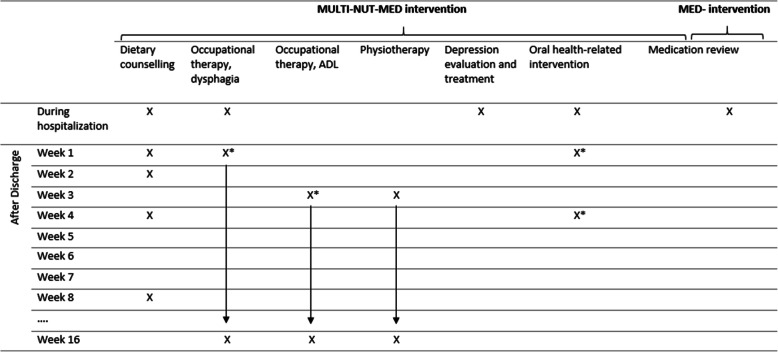
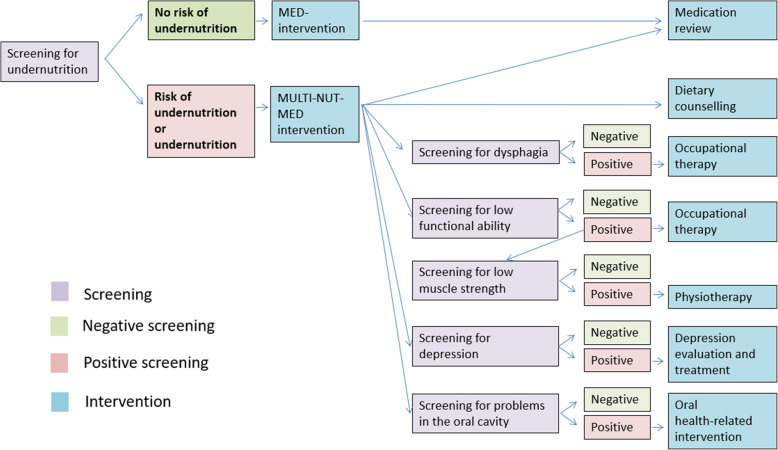
Methods: The trial is a single-center block randomized, controlled, observer-blinded, superiority and explorative trial with two parallel groups. The population consists of 200 older patients admitted to the ED: 70 patients without malnutrition or risk of malnutrition and 130 patients with or at risk of malnutrition defined as a Mini Nutritional Assessment-Short Form score ≤11. All patients without the risk of malnutrition receive the MED intervention, which consists of a medication review by a pharmacist and geriatrician in the ED. Patients with or at risk of malnutrition receive the MULTI-NUT-MED intervention, which consists of the MED intervention in addition to, dietary counseling and individualized interventions based on the results of screening tests for dysphagia, problems with activities of daily living, low muscle strength in the lower extremities, depression, and problems with oral health. Baseline data are collected upon study inclusion, and follow-up data are collected at 8 and 16 weeks after discharge. The primary outcomes are (1) change in medication appropriateness index (MAI) score from baseline to 8 weeks after discharge, (2) accuracy of different eGFR equations compared to mGFR, and (3) change in health-related quality of life (measured with EuroQol-5D-5L) from baseline to 16 weeks after discharge.
Discussion: The trial will provide new information on strategies to optimize the treatment of malnutrition and inappropriate medication prescribing among older patients admitted to the ED.
Trail registration: ClinicalTrials.gov NTC03741283 . Retrospectively registered on 14 November 2018.
Keywords: Drug utilization Review; Emergency service; Frailty; Gastrointestinal microbiome; Geriatrics; Glomerular filtration rate; Hospital; Malnutrition; Pharmacogenetics; Potentially inappropriate medication list; Quality of life.
© 2021. The Author(s).
Conflict of interest statement
The authors declare that they have no competing interests.
Figures
References
-
- Statistikbanken [Internet]. [cited 2016 Oct 21]. Available from: http://www.statistikbanken.dk/statbank5a/default.asp?w=1920.
-
- Wittenberg R, Sharpin L, McCormick B, Hurst J. Understanding emergency hospital admissions of older people. Oxford: Centre for Health Service Economics & Organisation; 2014. p. 86. Report No.: 6
-
- HCUPnet, Healthcare Cost and Utilization Project. HCUPnet-Emergency Department National Statistics [Internet]: HCUPnet; 2016. [cited 2020 Nov 4]. Available from: /
-
- Lawson-Smith L, Petersen J, Jensen PS, Sivertsen DM, Pedersen MM, Ellekilde G, et al. Nutritional risk in acutely admitted older medical patients. Am J Food Nutr. 2015;3(3):84–89.
Publication types
MeSH terms
LinkOut - more resources
Full Text Sources
Medical
Research Materials
Miscellaneous
