Review
. 2021 Sep 15;3(1):61.
doi: 10.1186/s42523-021-00121-4.

Elasmobranch microbiomes: emerging patterns and implications for host health and ecology

Affiliations
Review

Elasmobranch microbiomes: emerging patterns and implications for host health and ecology

Cameron T Perry et al. Anim Microbiome. .

Abstract

Elasmobranchs (sharks, skates and rays) are of broad ecological, economic, and societal value. These globally important fishes are experiencing sharp population declines as a result of human activity in the oceans. Research to understand elasmobranch ecology and conservation is critical and has now begun to explore the role of body-associated microbiomes in shaping elasmobranch health. Here, we review the burgeoning efforts to understand elasmobranch microbiomes, highlighting microbiome variation among gastrointestinal, oral, skin, and blood-associated niches. We identify major bacterial lineages in the microbiome, challenges to the field, key unanswered questions, and avenues for future work. We argue for prioritizing research to determine how microbiomes interact mechanistically with the unique physiology of elasmobranchs, potentially identifying roles in host immunity, disease, nutrition, and waste processing. Understanding elasmobranch-microbiome interactions is critical for predicting how sharks and rays respond to a changing ocean and for managing healthy populations in managed care.

Keywords: Bacteria; Fishes; Health; Rays; Sharks; Skates.


Conflict of interest statement

The authors declare that they have no competing interests.

Figures
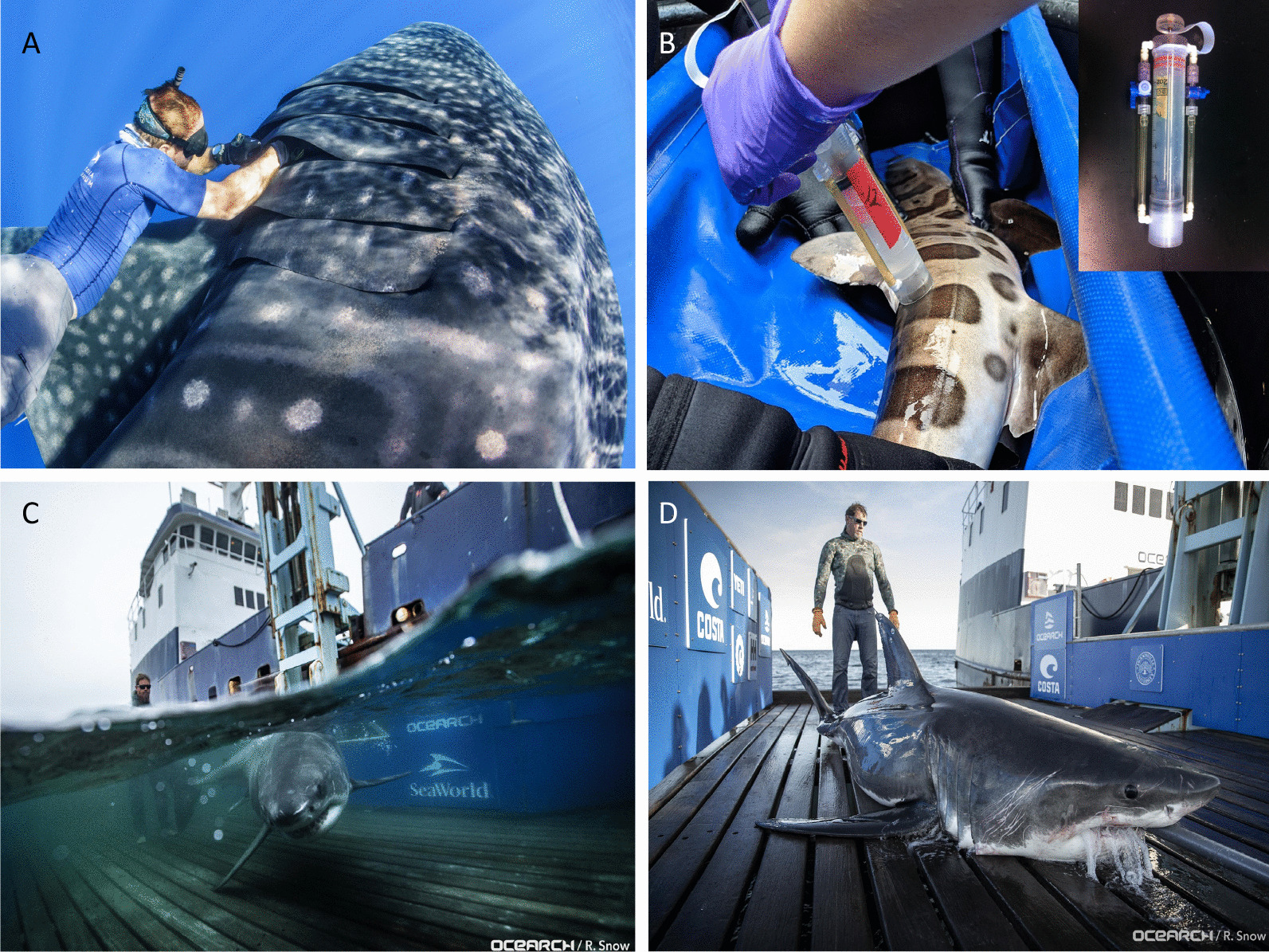
Fig. 1
Fig. 1
Sampling elasmobranch microbiomes poses physical and technical challenges. Sampling techniques vary among species, locations, and research groups. Microbiome samples have been collected by freediving and swabbing free-swimming animals (A) or immobilizing individuals out of water and collecting microbial biomass by swabbing or using custom equipment, such as modified suction devices (B with inset). Sampling large pelagic individuals may involve modified vessels equipped with platforms that raise and secure caught individuals (C, D), providing a unique opportunity to sample species that are hard to capture and restrain. Panel A Gill swab from a free-swimming whale shark (Simon Pierce, Marine Megafauna Foundation). Panel B Supersucker sampling device (inset: Michael Doane, Flinders University) being used to sample a leopard shark (Elizabeth Dinsdale, Flinders University). Panel C White shark on submerged OCEARCH platform (Robert Snow, OCEARCH). Panel D White shark on raised OCEACH platform being secured prior to sampling (Robert Snow, OCEARCH)
Fig. 2
Fig. 2
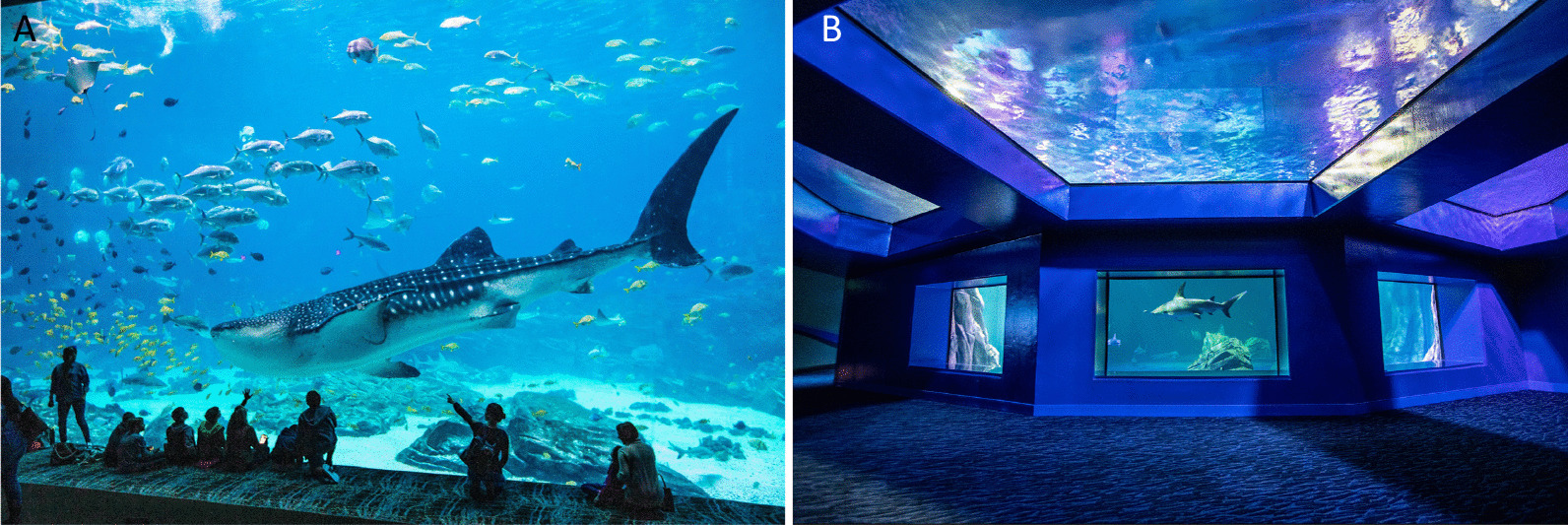
Managed care of elasmobranchs in aquariums provides a unique opportunity for sampling microbiomes over time and relative to monitored host and environmental parameters. Exhibits such as Georgia Aquarium’s Ocean Voyager (A) and Sharks: Predators of the Deep (B) are enabling studies to understand the drivers of microbiome structure and its role in host health. Panel A Whale shark swimming in Georgia Aquarium’s Ocean Voyager exhibit (Chris Duncan, Georgia Aquarium). Panel B Hammerhead shark swimming in Georgia Aquarium’s Sharks: Predators of the Deep exhibit (Chris Duncan, Georgia Aquarium)
Fig. 3
Fig. 3
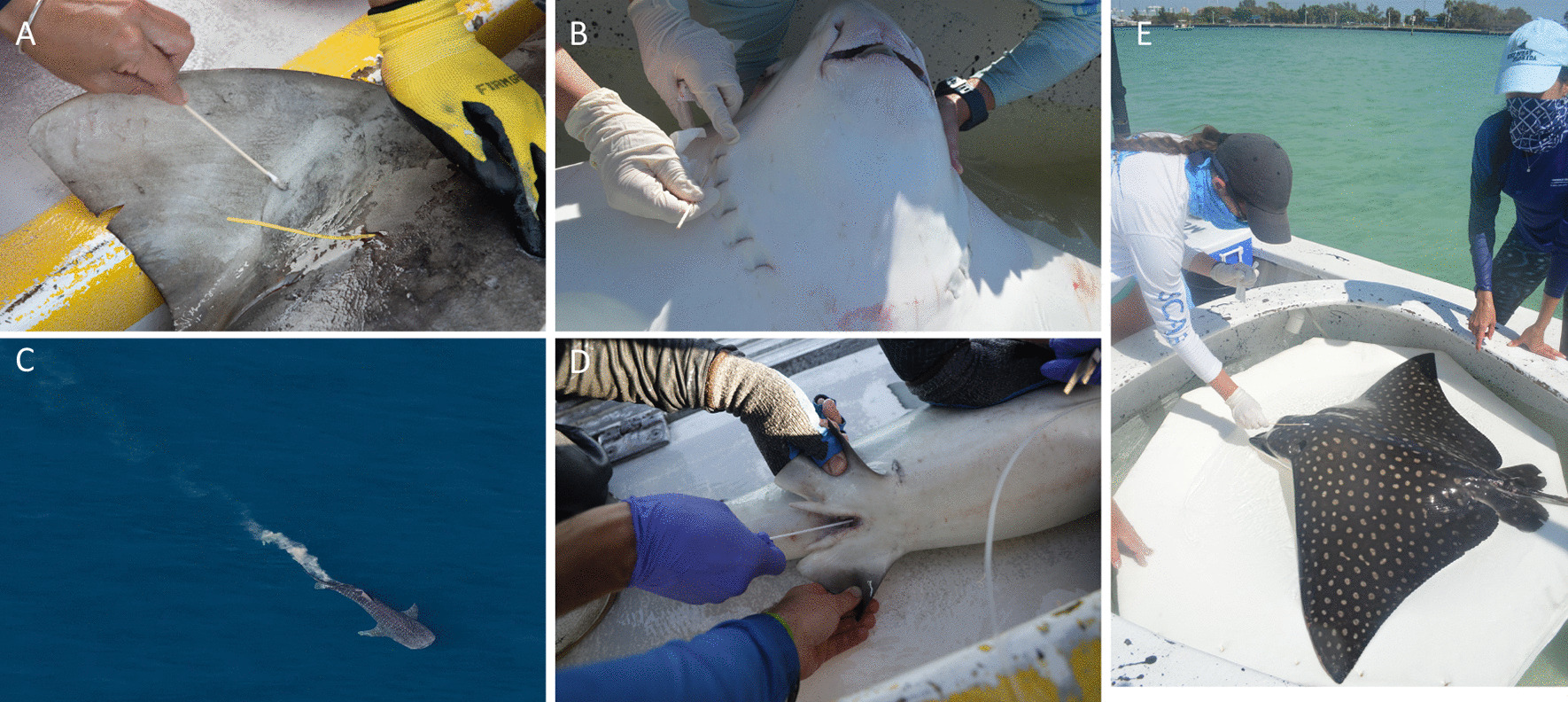
Despite the difficulty of sample collection, elasmobranch microbiomes have been sampled from diverse body niches. Swabbing of the skin/mucus (A, E) and gill (B) is relatively non-invasive and captures microbiomes reflecting both host-specific taxonomic signatures, as well as signatures of the surrounding seawater water microbiome. Host-specific signatures may be driven partly by variation in mucus content and prevalence, such as between sharks and rays. Sampling of gastrointestinal microbiomes has involved opportunistic sampling of feces (C) or swabbing of the cloaca (D), with cloacal communities representing a transition between external and internal microbiomes. Few studies have examined microbiome variation along the GI tract in dissected individuals. Diet, intestinal anatomy, and host foraging ecology may influence GI microbiome structure. Panel A Dorsal skin swab of a tiger shark (Mote Marine Laboratory). Panel B Gill swab of a spotted eagle ray (Mote Marine Laboratory). Panel C Aerial photograph of a whale shark defecating (Tiffany Klein, Ningaloo Aviation). Panel D Cloaca swab of a tiger shark (Mote Marine Laboratory). Panel E Dorsal swab of a spotted eagle ray (Mote Marine Laboratory)
Fig. 4
Fig. 4
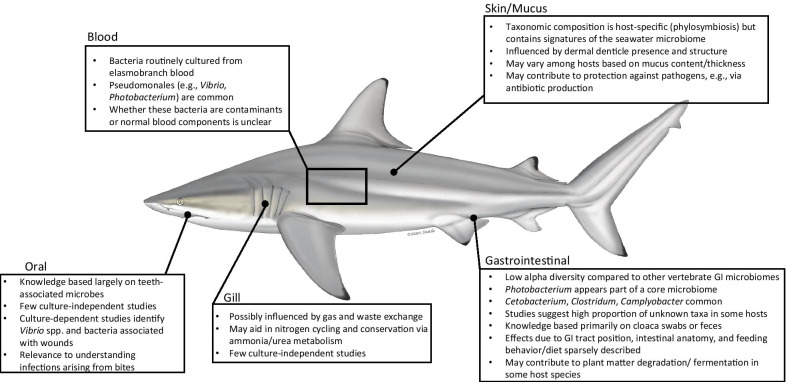
Microbiomes differ among elasmobranch body niches. (Marc Dando, Wildlife Illustrator)
Fig. 5
Fig. 5
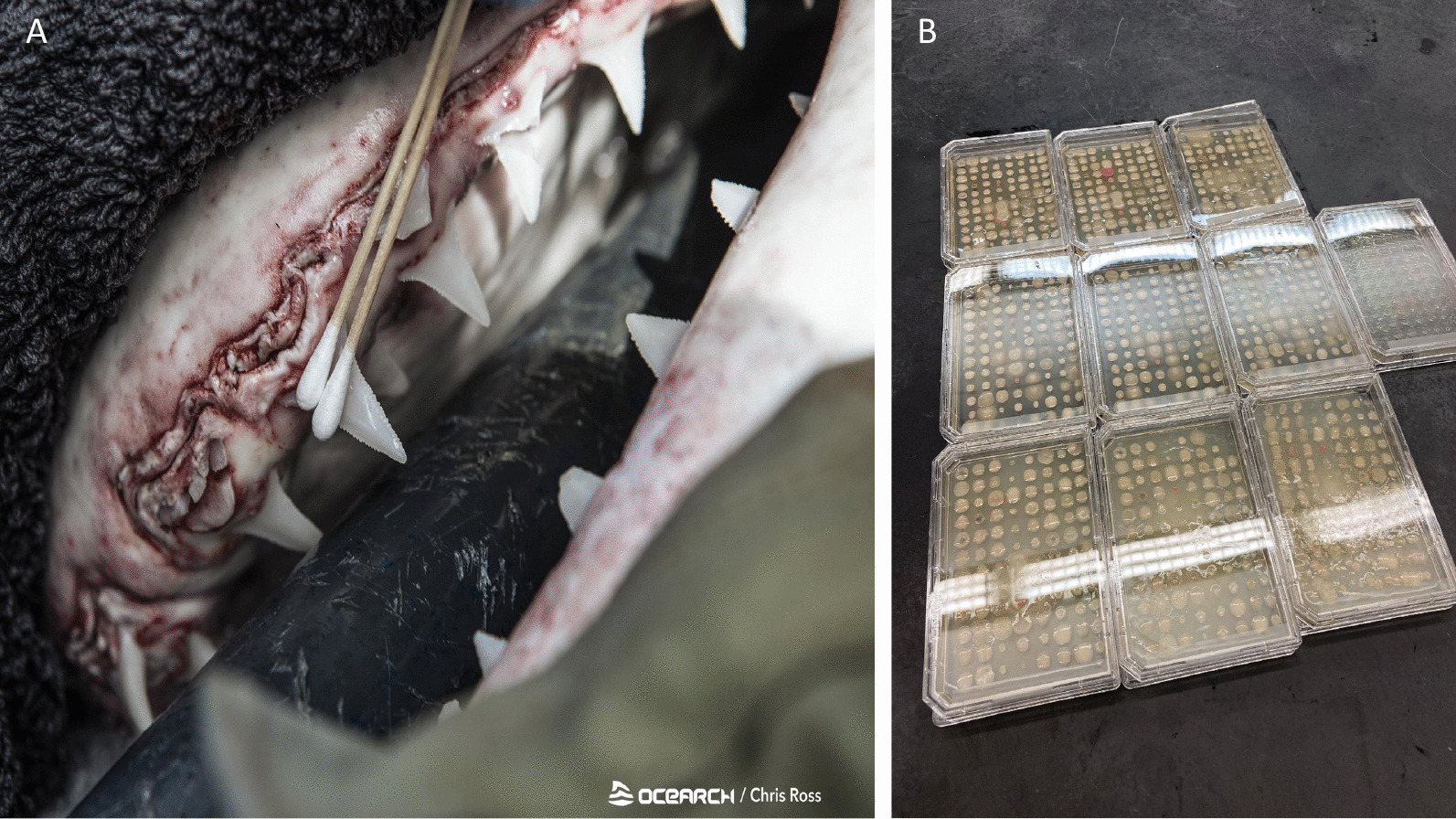
The elasmobranch tooth microbiome (A) has been of interest for medical treatment of elasmobranch bites on human swimmers, although the incidence of negative elasmobranch–human interactions is rare. Culture-based exploration (B) is an avenue for future research to examine biochemical and ecological aspects of elasmobranch-associated microbes. Panel A Oral swab being collected from a secured white shark (Chris Ross, OCEARCH). Panel B Culture plates from elasmobranch oral swabs (Kim Ritchie, University of South Carolina Beaufort)

References

    1. Weigmann S. Annotated checklist of the living sharks, batoids and chimaeras (Chondrichthyes) of the world, with a focus on biogeographical diversity. J Fish Biol. 2016;88(3):837–1037. doi: 10.1111/jfb.12874. - DOI - PubMed
    1. Dulvy NK, Fowler SL, Musick JA, Cavanagh RD, Kyne PM, Harrison LR, Carlson JK, Davidson LN, Fordham SV, Francis MP. Extinction risk and conservation of the world’s sharks and rays. Elife. 2014;3:e00590. doi: 10.7554/eLife.00590. - DOI - PMC - PubMed
    1. Mylniczenko ND, Harris B, Wilborn RE, Young FA. Blood culture results from healthy captive and free-ranging elasmobranchs. J Aquat Anim Health. 2007;19(3):159–167. doi: 10.1577/H06-039.1. - DOI - PubMed
    1. Luer C, Walsh C. Potential human health applications from marine biomedical research with elasmobranch Fishes. Fishes. 2018;3(4):47. doi: 10.3390/fishes3040047. - DOI
    1. Ritchie KB, Schwarz M, Mueller J, Lapacek VA, Merselis D, Walsh CJ, Luer CA. Survey of antibiotic-producing bacteria associated with the epidermal mucus layers of rays and skates. Front Microbiol. 2017;8:1050. doi: 10.3389/fmicb.2017.01050. - DOI - PMC - PubMed

LinkOut - more resources