


Clinical evaluation of urinary liver-type fatty acid-binding protein for the diagnosis of renal diseases in dogs
- PMID: 34526412
- PMCID: PMC8498833
- DOI: 10.1292/jvms.20-0698
Clinical evaluation of urinary liver-type fatty acid-binding protein for the diagnosis of renal diseases in dogs
Abstract
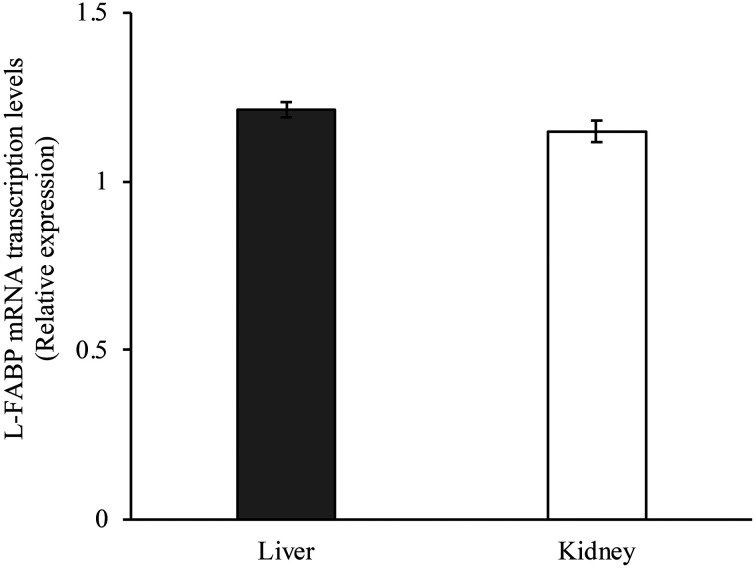
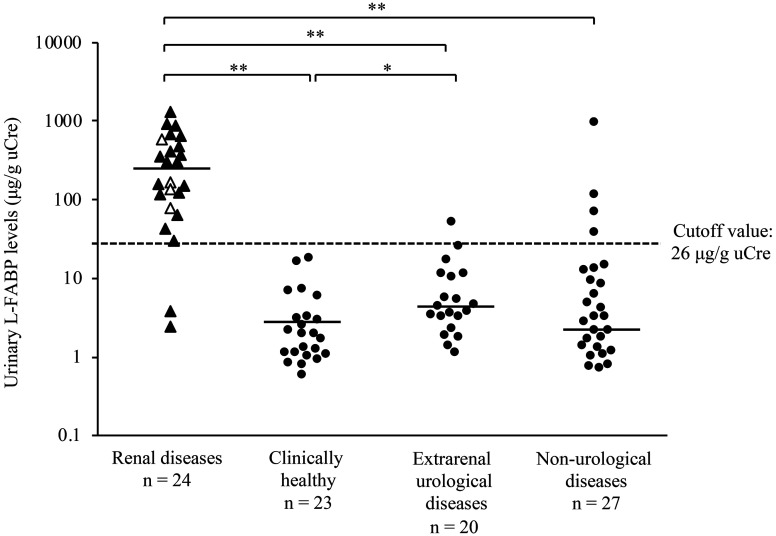
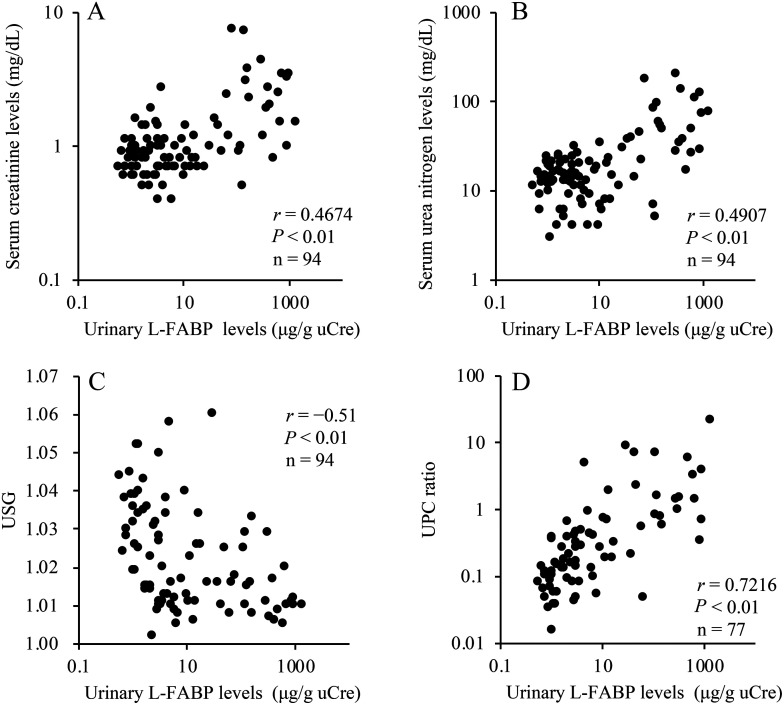
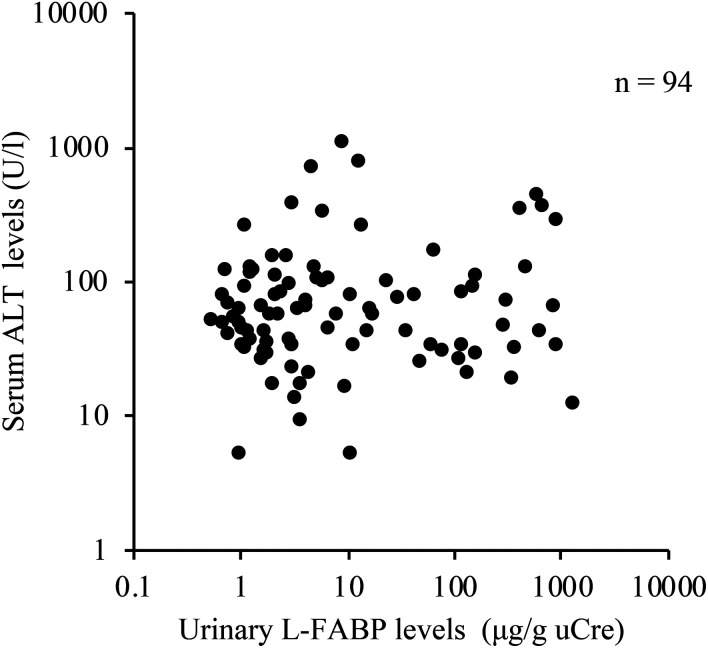
Liver-type fatty acid-binding protein (L-FABP) is a biomarker for the early detection of renal diseases in humans. L-FABP is a cytotoxic oxidation product secreted from the proximal tubules under ischemic and oxidative stress conditions. First, L-FABP gene expression in the kidney and liver was evaluated. Next, the urinary L-FABP concentrations in dogs with or without renal diseases were measured using a novel enzyme-linked immunosorbent assay kit. Urinary L-FABP was normalized relative to urinary creatinine (uCre) concentrations (µg/g uCre). Finally, the relationships between urinary L-FABP and renal biomarkers used in canine medicine or serum alanine transaminase (ALT) as an indicator of liver damage were examined. Serum and urine samples from 94 client-owned dogs including 23 dogs with renal diseases and 71 dogs without renal diseases were used for analysis. Relative L-FABP gene expression was confirmed both in the liver and kidney. Dogs with renal diseases had a significantly higher urinary L-FABP than those without, and its predictive cutoff value was 26 µg/g uCre. Urinary L-FABP was significantly correlated with serum creatinine (r=0.4674, P<0.01), urea nitrogen (r=0.4907, P<0.01), urine specific gravity (r=-0.5100, P<0.01), and urine protein/creatinine ratio (r=0.7216, P<0.01), but not with serum ALT. Hence, dogs with a high urinary L-FABP value were more likely to have renal diseases.
Keywords: dog; renal disease; urinary liver-type fatty acid-binding protein.
Conflict of interest statement
Keiichi Ohata and Tsuyoshi Oikawa are the senior scientists of CMIC Holdongs Co., Ltd. (Tokyo, Japan), a company that produces ELISA kits with high sensitivity for L-FABP analysis. They were responsible for validation analyzes and measurement of an ELISA. No other potential conflicts of interest relevant to this article are reported.
Figures
References
-
- Chew D. J., DiBartola S. P., Schenck P.2011. Chapter 7: Diseases of the glomerulus. pp. 218–239. In: Canine and Feline Nephrology and Urology, 2nd ed., Elsevier, San Diego.
