Definitions of Severity in Treatment Seeking Studies of Febrile Illness in Children in Low and Middle Income Countries: A Scoping Review
- PMID: 34526874
- PMCID: PMC8435535
- DOI: 10.3389/ijph.2021.634000
Definitions of Severity in Treatment Seeking Studies of Febrile Illness in Children in Low and Middle Income Countries: A Scoping Review
Erratum in
-
Erratum: Definitions of Severity in Treatment Seeking Studies of Febrile Illness in Children in Low and Middle Income Countries: A Scoping Review.Int J Public Health. 2021 Dec 16;66:1604518. doi: 10.3389/ijph.2021.1604518. eCollection 2021. Int J Public Health. 2021. PMID: 34975365 Free PMC article.
Abstract
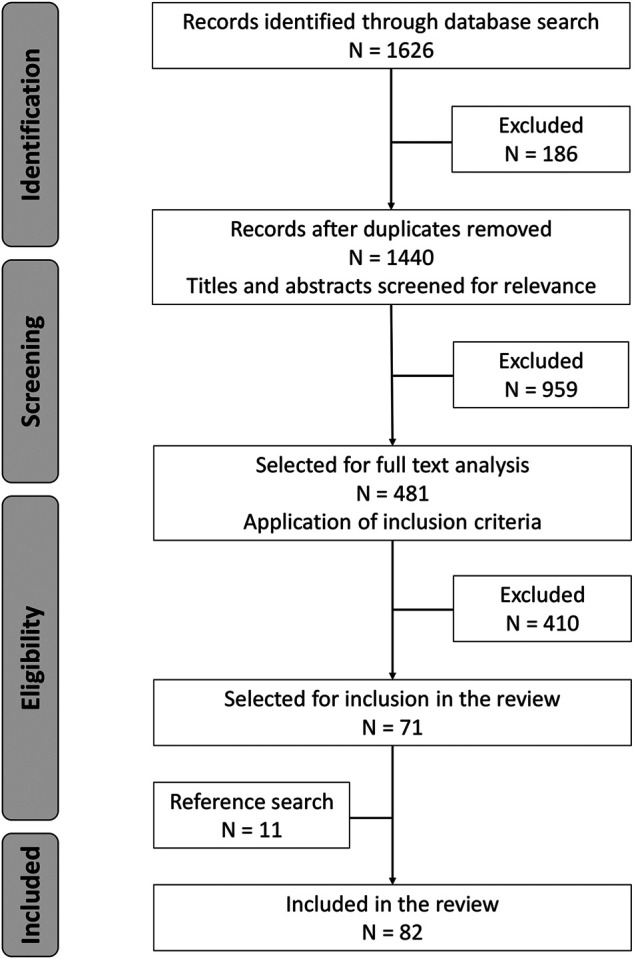
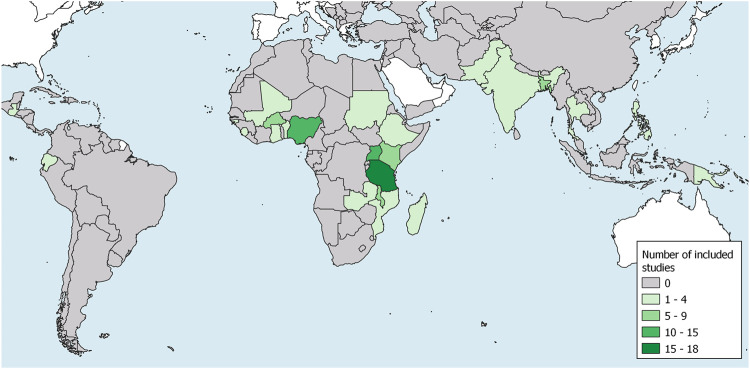
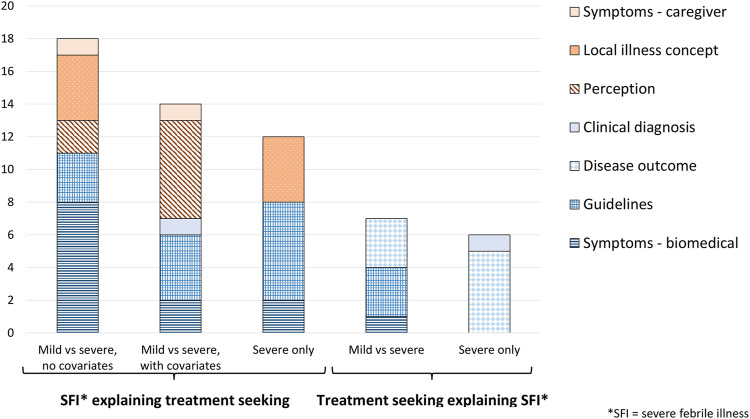
Objectives: Understanding treatment seeking for severe febrile illness (SFI) is methodologically challenging. In this scoping review, we investigate definitions of severe febrile illness in treatment seeking studies on children under 5 years of age in low and middle income countries. We analyze the association of SFI definitions with different concepts of treatment seeking and identify related research gaps. Methods: We searched Pubmed, Scopus and WHOLIS, and screened references of included publications for eligibility. Results: Definitions of SFI had either a biomedical perspective (predominantly in quantitative studies) or a caregiver perspective (predominantly in qualitative studies). In quantitative analyses of treatment seeking, severity was more often conceptualized as a determinant rather than an outcome of a treatment seeking process. The majority of quantitative analyses only included surviving children or did not explicitly mention dead children. Conclusion: Different research questions lead to diverse definitions and concepts of severity and treatment seeking outcomes, which limits the comparability of the available evidence. Systematic exclusion of dead children is likely to bias inferences on the association of treatment seeking and health outcomes of children with SFI in low and middle income countries.
Keywords: child; developing countries; fever; health behavior; severity; treatment seeking.
Copyright © 2021 Brunner, Awor and Hetzel.
Conflict of interest statement
The authors declare that the research was conducted in the absence of any commercial or financial relationships that could be construed as a potential conflict of interest.
Figures
References
-
- United Nations Inter-agency Group for Child Mortality Estimation (UN IGME). Levels & Trends in Child Mortality: Report 2020, Estimates Developed by the United Nations Inter-agency Group for Child Mortality Estimation. New York: United Nations Children's Fund; (2020).
-
- United Nations Inter-agency Group for Child Mortality Estimation (UN IGME). Levels & Trends in Child Mortality: Report 2019, Estimates Developed by the United Nations Inter-agency Group for Child Mortality Estimation. New York: United Nations Children's Fund; (2019).
-
- United Nations. Sustainable Development Goals: Goal 3 (2020). Available at: https://www.un.org/sustainabledevelopment/health/ (Accessed Jan 16, 2020).
-
- Rosenstock IM. Historical Origins of the Health Belief Model. Health Education Monogr (1974) 2:328–35. 10.1177/109019817400200403 - DOI
Publication types
MeSH terms
LinkOut - more resources
Full Text Sources
Medical